REVIEW · BAKU
Azerbaijani Cooking Class & Old City Tour & Lunch
Book on GetYourGuide →Operated by Old City Tours LLC · Bookable on GetYourGuide
Cooking in Baku’s Old City feels like magic. You get a guided loop through UNESCO-listed streets and landmarks, then roll up your sleeves for a practical Azerbaijani cooking masterclass. I like that the tour keeps moving without feeling rushed, and that it mixes Old City sightseeing with real food you’ll actually make.
I also love the hands-on format. You don’t just watch dolma, qutab, and ayran happen—you learn the steps, handle the ingredients, and sit down to eat what you cooked. One review highlighted a cheerful instructor (an older woman) who helped people pick it up fast, and another mentioned the guide Aishna for warm, clear storytelling.
One possible drawback: this is a walking-in-streets style experience. Expect some time on foot in uneven Old City areas, plus active cooking time in a restaurant kitchen—so wear comfortable shoes and dress for standing.
In This Review
- Key things you’ll notice
- How the Old City walk sets you up for the food
- Maiden Tower and the Palace of the Shirvanshahs: the stops you’ll remember
- Caravanserais, mosques, and the smaller stops that add up
- The cooking class: dolma, qutab, and ayran made hands-on
- Dolma: vine leaves, rolled by your own hands
- Qutab: thin flatbread with greens or meat
- Ayran: yogurt drink with dry mint
- What the kitchen setup feels like
- Lunch plus samovar tea: what you eat after you cook
- Price and value: is $59 worth it for 3 hours?
- Group size, pickup, and timing: how to plan your day
- Who this Azerbaijan Old City cooking class suits best
- Should you book this Old City + Azerbaijani cooking class?
- FAQ
- How long is the tour?
- Where does the tour start, and is hotel pickup available?
- What landmarks are included in the Old City part?
- What dishes will I learn to cook?
- Is lunch included?
- What languages are offered for the tour?
- What is the group format?
- Is there a cancellation window?
- Do I need to pay right away to reserve?
Key things you’ll notice
- UNESCO Old City landmarks with real context, not just photo stops
- Hands-on cooking for dolma, qutab, and ayran (with dry mint)
- Samovar tea and homemade jams/sweets at the end of the meal
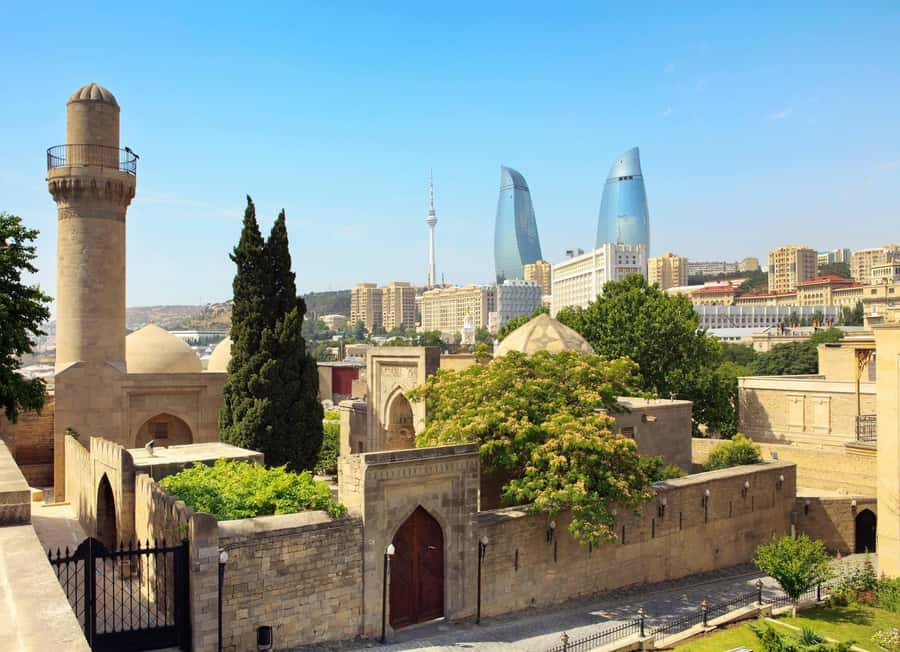
- A mix of major sights like the Maiden Tower and the Palace of the Shirvanshahs
- Small-group or private options, with optional hotel pickup
- English, Russian, or Turkish guiding depending on your group
How the Old City walk sets you up for the food
This tour is built around timing. It starts at 11:00 AM and wraps up around 2:00 PM, so you get a compact Old City experience without losing half a day to transit. You’ll meet your guide in Baku’s Old City area and begin moving through the medieval streets, where everything feels close—turn a corner and you’re at another historic stop.
That walking portion matters because it frames the cooking. When you’re standing near landmarks like the Maiden Tower and the Palace of the Shirvanshahs, the food you make afterward feels less random. Azerbaijani cuisine often reflects geography and trade routes, and the tour’s route passes sites connected to that story—like historic caravanserais—so you’re learning while you’re walking, not just sitting in a lecture.
If you like your sightseeing organized into clear segments, this one works well. You’re not just collecting snapshots; you’re getting short guided explanations and then time to pause for photos. Bring comfortable clothes and shoes. Even if you’re fine walking normally, Old City sidewalks can be uneven, and you’ll be on your feet more than you expect for a “3-hour” tour.
Maiden Tower and the Palace of the Shirvanshahs: the stops you’ll remember
The Maiden Tower is the big draw, and for good reason. You’ll do at least one dedicated time for photos and guided context, with a short stretch of walking between nearby points. The guide’s job here is to help you connect what you see to why it matters—legends, historical significance, and the way this tower fits into Baku’s Old City identity.
Then you move to the Palace of the Shirvanshahs, where the mood shifts from tall silhouette views to courtyards and architectural detail. This is the kind of place where a guide helps you look smarter. Even if you’re not an architecture fanatic, you can usually spot the difference between “pretty walls” and “this was built to function as a royal residence.” The palace courtyards and halls create a natural pause in the route, and you’ll have time for photos and casual wandering with the group nearby.
Practical tip: if you want the best photos, keep your phone ready during guided stops. The tour includes multiple photo moments, but you won’t want to fumble for your camera when everyone else is lined up. Also, wear clothes that won’t hold you back—Old City photo spots often mean turning, standing, and stepping off uneven ground.
Caravanserais, mosques, and the smaller stops that add up
One of the tour’s strengths is that it doesn’t treat the Old City like a list of only the headline attractions. You also pass by places that show how people lived, traded, and prayed.
A good example is the Bukhara Caravanserai, where you’ll have a photo stop plus guided sightseeing. Caravanserais are basically the old version of hubs—places where travelers and goods moved through. Even a short stop here can make you rethink the Old City as a working network, not just a scenery set.
You also visit a key religious site like the Juma Mosque. There’s guided explanation plus a bit of free time, so you can look around at your own pace. Free time is important on tours like this. It keeps the experience from turning into constant marching, and it lets you digest what you just learned before you jump into the cooking part.
Overall, this mix—tower, palace, caravanserai, mosque—gives you a more rounded sense of Baku’s Old City. If you only do the “big photo” spots on your own, you’ll likely miss some of the quiet structure that makes the area feel lived-in.
The cooking class: dolma, qutab, and ayran made hands-on
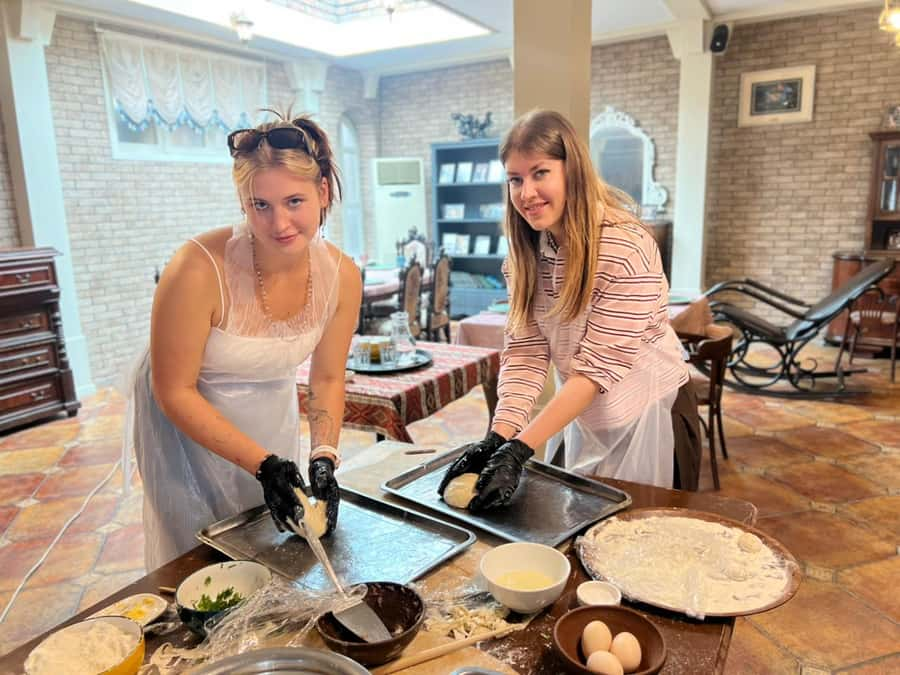
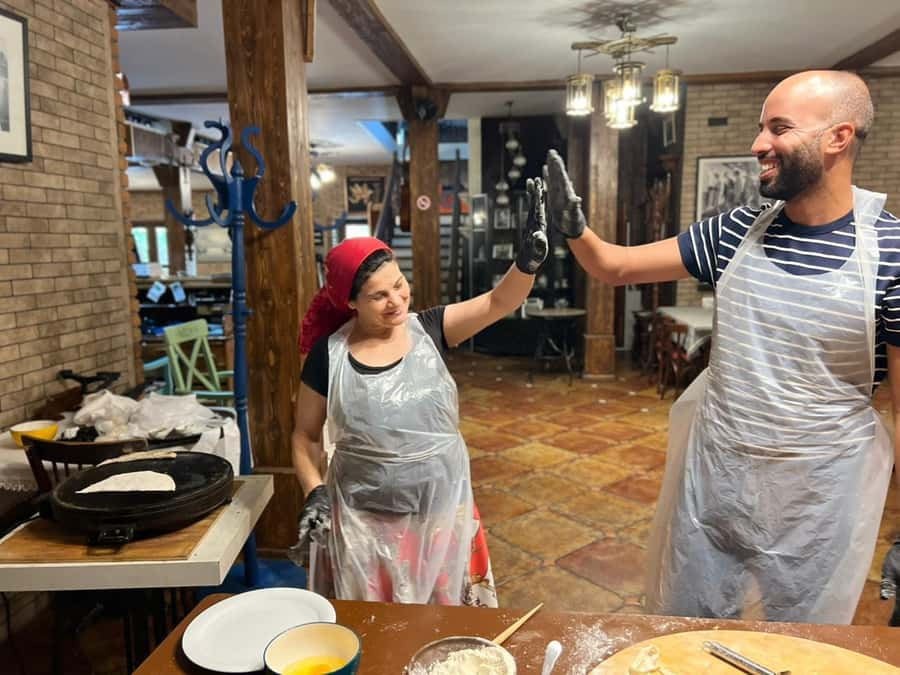
This is the heart of the experience. After the sightseeing, you enter a traditional Old City restaurant for a culinary masterclass guided by a local chef. The class is hands-on and structured, so you can follow along even if you’ve never cooked Azerbaijani food before.
Dolma: vine leaves, rolled by your own hands
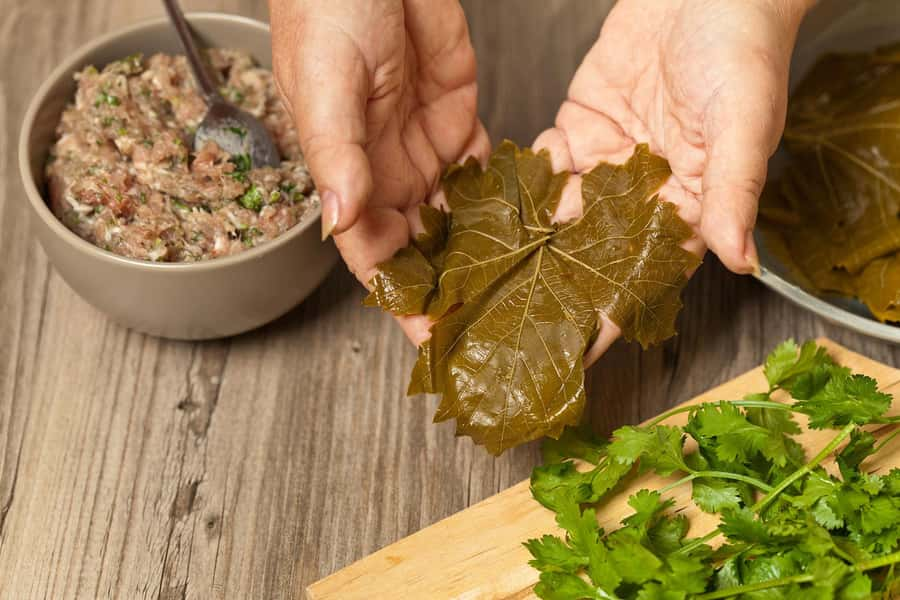
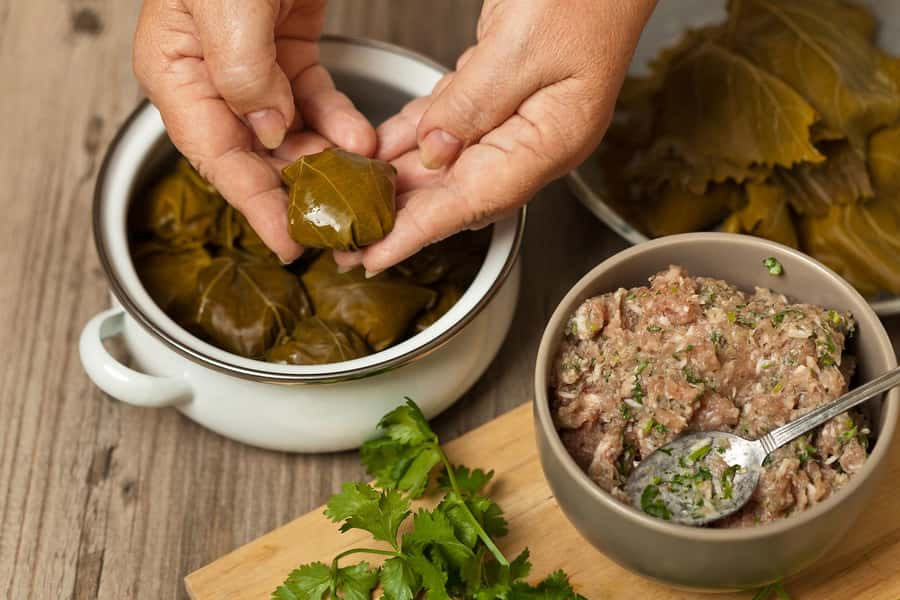
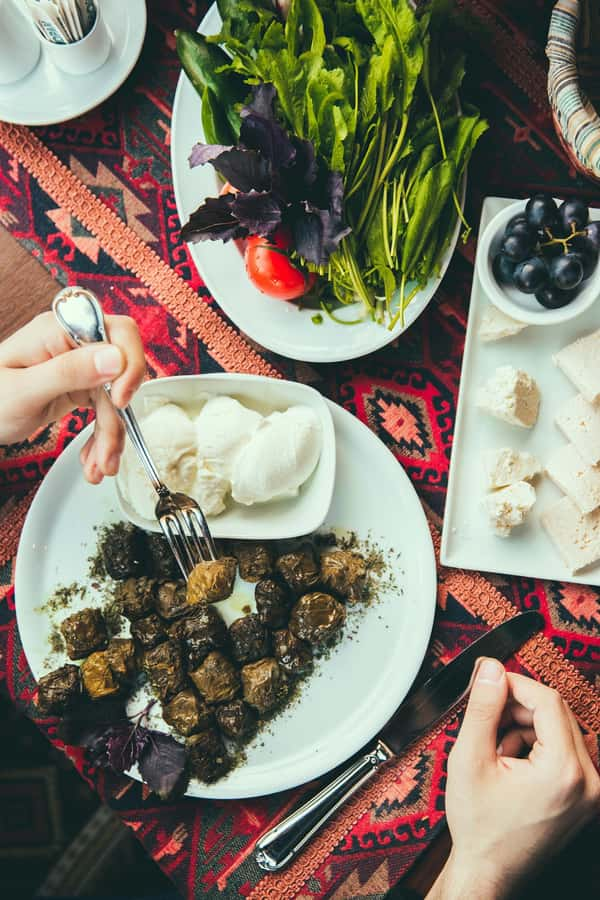
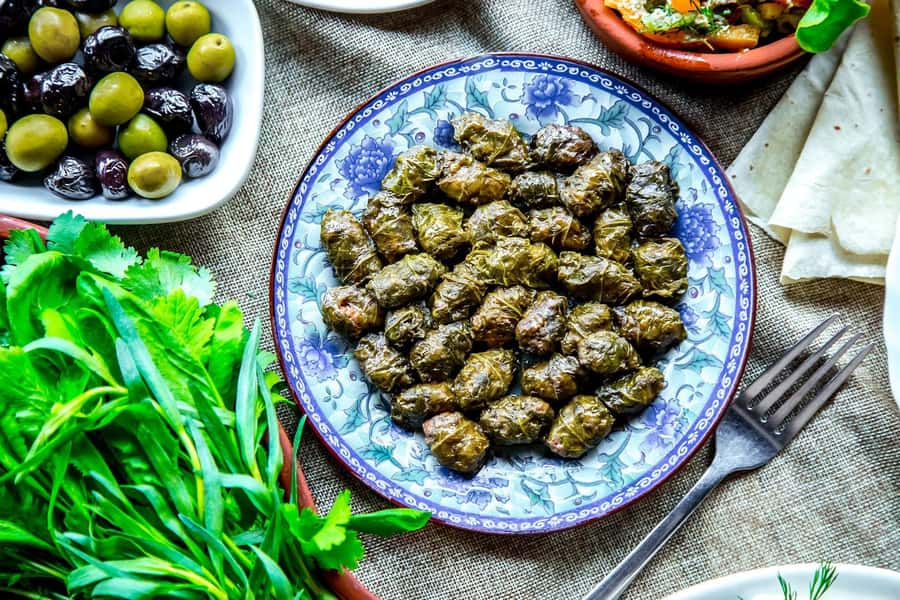
Dolma is the first big project. You’ll make it with vine leaves stuffed with a savory mixture, then roll them yourself. The value here is practical learning. You’re not just tasting flavors—you’re learning technique: how to portion, how to roll, and how the stuffing behaves.
That matters later when you’re trying to recreate it. Even if you don’t cook dolma at home right away, you’ll leave understanding what makes it work and why it tastes the way it does.
Qutab: thin flatbread with greens or meat
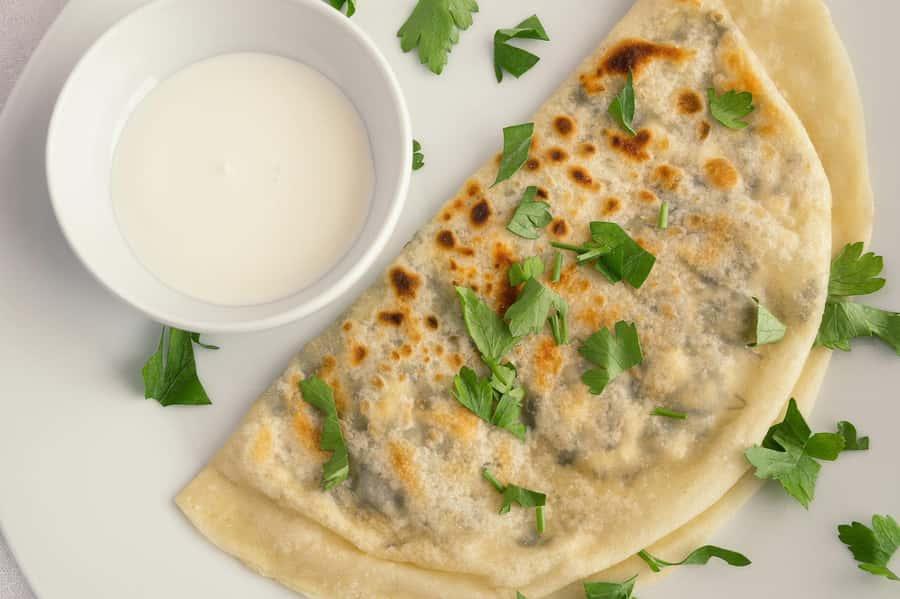
Next comes qutab. You’ll learn to make thin flatbread stuffed with greens or meat, then cook it on a griddle. This stage feels quicker and more interactive than dolma, because you get that satisfying moment of cooking something that’s flat and easy to control.
If you like food that’s fast to finish and big on flavor, qutab is often the dish that surprises people in the best way. It’s simple in concept, but getting the dough thickness and stuffing balance right takes a little care.
Ayran: yogurt drink with dry mint
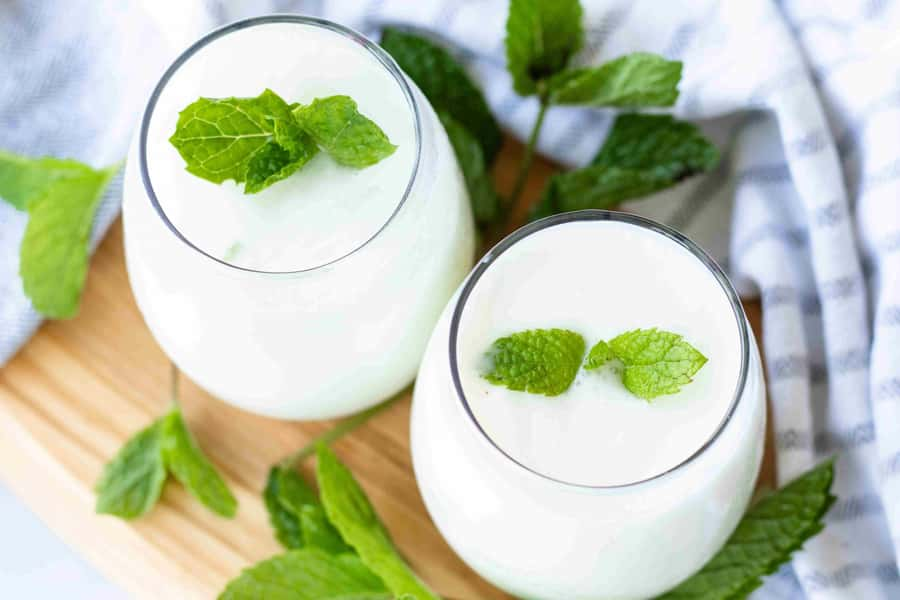
Finally, you’ll prepare ayran, a refreshing yogurt drink with an Azerbaijani twist: dry mint. This step is less about technique and more about balance. You’ll learn how the mint changes the character of the yogurt drink—cooling, aromatic, and built for cutting through richer flavors.
In a tour that involves both walking and cooking, ayran is a smart closer. It resets your taste buds right before the meal.
What the kitchen setup feels like
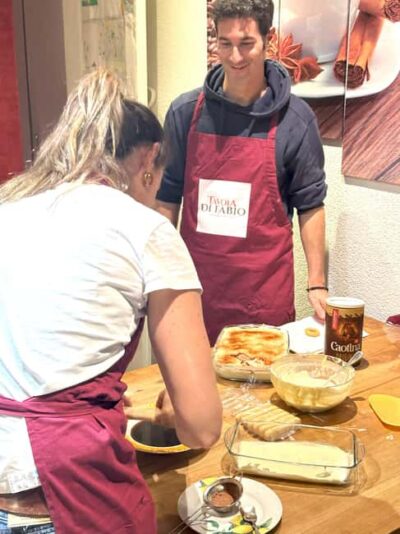
The class happens in a local restaurant setting inside the Old City. One review noted that a cheerful older instructor ran the cooking part, and that approach shows through in how the class is described: encouraging and hands-on, not intimidating.
If you’re nervous about cooking in public, don’t be. The tour includes the ingredients and equipment, and you’re guided step by step. You might get messy—rolling dolma often means it—but that’s part of the fun.
Lunch plus samovar tea: what you eat after you cook
After the cooking, you sit down and eat. Your lunch includes the dishes you prepared, plus fresh salads and bread. This is a key difference from some “watch-and-taste” experiences. You’re not just sampling; you’re eating your own work, which makes the meal feel more personal.
Then you end with a proper tea service: samovar tea served with local sweets and homemade jams. One participant specifically mentioned the enjoyment of jam (including mulberry) as part of the sweet spread. Since jams vary by day and season, think of this as a dessert-forward tea moment, not a single fixed item.
If you care about how food fits culture, tea at the end is where you feel it. It’s slower, quieter, and it gives your brain a break after both walking and rolling vine leaves.
One more practical note: the tour includes lunch as part of the 2-hour restaurant portion, so you shouldn’t plan a separate meal afterward. Plan your afternoon for recovery time instead—your feet and your stomach will both want a rest.
Price and value: is $59 worth it for 3 hours?
At $59 per person for a roughly 3-hour experience, you’re paying for three things together: guided Old City context, a hands-on cooking class with ingredients and equipment, and a full meal plus tea.
Here’s how that value usually breaks down for you:
- You’re getting a professional English-speaking guide for the history portion, plus guided time at major sights (Maiden Tower, Palace of the Shirvanshahs, and a mosque stop).
- You’re also paying for the cooking instruction and the materials needed for dolma, qutab, and ayran.
- Finally, the meal isn’t a token bite. Lunch with your prepared dishes, salads, and bread is included, followed by samovar tea and sweets/jams.
If you were to recreate this on your own—guiding for the Old City, plus a cooking course, plus lunch—that usually adds up fast. This one package format is where the price starts to make sense, especially because it compresses sightseeing and food into one morning.
Is it “cheap”? No. But it’s also not just a snack tour. For most people who want an Old City day that feels like culture and not a checklist, this strikes a good balance.
Group size, pickup, and timing: how to plan your day
The tour works best if you’re flexible for a short morning. It’s scheduled to start at 11:00 AM and ends around 2:00 PM, which makes it ideal if you want to keep the rest of your day open for museums, the Flame Towers area, or a slower walk by the waterfront.
Pickup is optional. If you want it, the tour can pick you up from hotels across Baku city. If you prefer to wander independently, you can likely meet the group in the Old City area where the tour begins.
You also have options for private or small groups, which can be a big deal if you’re traveling with friends, want more attention from the chef, or prefer fewer interruptions during the cooking steps.
What to bring:
- Comfortable shoes
- Comfortable clothes
Also, a quick mindset tip: this is not a “sit and listen” tour. You’ll walk, you’ll cook, and you’ll taste. If you like active cultural experiences, you’ll feel right at home.
Who this Azerbaijan Old City cooking class suits best
I’d point this toward you if:
- You want Old City sightseeing with explanations rather than solo roaming
- You love food that you can learn by doing, not just eating
- You’re the type who enjoys tea service and dessert spreads as part of the experience
- You want a morning activity that doesn’t swallow your whole day
It’s also a smart pick if you’re traveling with someone who likes different things. One person gets the historical landmarks and the other gets the cooking and eating. Everybody wins.
If you’re not comfortable with walking on uneven surfaces or standing for a cooking session, you might find the “hands-on” part a bit tiring. In that case, consider how much walking you usually tolerate and plan accordingly.
Should you book this Old City + Azerbaijani cooking class?
If your goal is a Baku experience that’s both cultural and edible, yes—this is the kind of tour that makes the Old City feel personal. The combination of UNESCO Old City landmarks and a real cooking masterclass is exactly the pairing that turns sightseeing into a memory you can taste.
Book it if you:
- Want dolma, qutab, and ayran done hands-on
- Prefer a structured 3-hour plan with clear stops
- Like ending with samovar tea and homemade jams
Skip it only if you’re mainly looking for a long, relaxed walking tour or you don’t want to cook at all. Otherwise, it’s a strong value way to spend a morning in Baku.
FAQ
How long is the tour?
The experience lasts about 3 hours, running from 11:00 AM to approximately 2:00 PM.
Where does the tour start, and is hotel pickup available?
You meet your guide in Baku’s Old City. Pickup is optional from hotels in Baku city.
What landmarks are included in the Old City part?
You’ll visit or stop for photos at major Old City sites including the Maiden Tower and the Palace of the Shirvanshahs, plus visits such as the Juma Mosque and sightseeing/photo time around the Bukhara Caravanserai.
What dishes will I learn to cook?
You’ll prepare Azerbaijani classics including dolma (stuffed vine leaves), qutab (stuffed flatbread cooked on a griddle), and ayran (a yogurt drink with dry mint).
Is lunch included?
Yes. Lunch includes the dishes you prepare, along with fresh salads and bread, followed by samovar tea with sweets and jams.
What languages are offered for the tour?
The live guide is available in English, Russian, and Turkish.
What is the group format?
The tour can be private or in small groups.
Is there a cancellation window?
Yes. Free cancellation is available up to 24 hours in advance for a full refund.
Do I need to pay right away to reserve?
You can reserve now and pay later, so you can book without paying immediately.