REVIEW · KO YAO YAI
Vegetarian Organic Thai Cooking Class and Market Tour in Phuket
Book on Viator →Operated by Oh-Hoo · Bookable on Viator
Cook Thailand, not just watch it. This small-group vegetarian class on Ko Yao Yai pairs a market lesson with a real open-air cooking setup in an organic tropical garden.
I love the guided market tour that teaches the herbs, vegetables, and spices behind Thai flavor, and I love that you get recipes plus a Certificate of Achievement so nothing feels like guesswork after class. The catch is pickup: it’s free only from south of Karon Beach, with extra vehicle fees for other parts of Phuket.
In This Review
- Quick hits before you go
- Ko Yao Yai’s organic-garden setup: why this class feels different
- The hotel pickup and timing that shape your day
- The market tour: herbs, vegetables, and spices with real context
- The organic garden kitchen: cooking outside in a real working space
- What you’ll cook: vegetarian dish sets and what each one teaches
- How the dishes build your skills
- Small-group format (2–4 people): why it’s not just a marketing line
- Learning with a certified Thai teacher: what you should listen for
- Eating your meal after class: warm food, no guesswork
- Transfers and extra vehicle charges: plan your pickup early
- Price and value: what $60.49 is really buying
- Who should book this class (and who might want to choose another day)
- Should you book this Vegetarian Organic Thai Cooking Class and Market Tour in Phuket?
- FAQ
- How long does the vegetarian Thai cooking class and market tour take?
- How big is the group?
- What pickup is included, and what extra charges might apply?
- What vegetarian dishes do you cook?
- Do you eat the food you make?
- Is there English instruction, and what’s provided during the class?
- What happens if weather is bad or I need to cancel?
Quick hits before you go
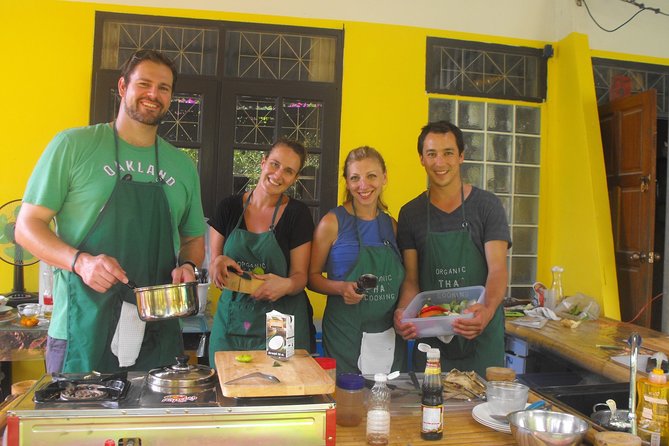
- Guaranteed small group (2–4 people) for real hands-on cooking time
- Market tour (30–45 minutes) focused on the ingredients you’ll actually use
- Organic tropical garden kitchen with a view of the garden and an open-air feel
- Hands-on cooking of 3 or 5 vegetarian dishes depending on the session
- You eat what you make, right after cooking, while it’s at its best
Ko Yao Yai’s organic-garden setup: why this class feels different
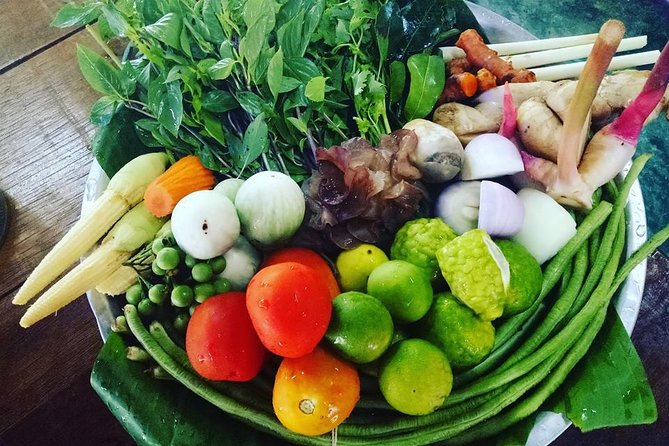
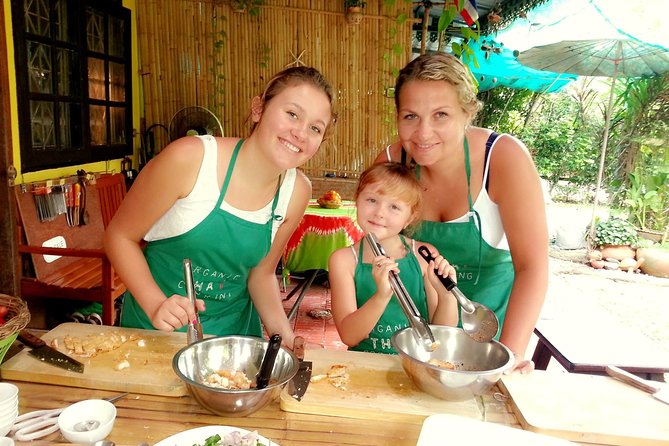
Most cooking classes in Phuket are “inside a kitchen.” This one has you working in an open setting in an organic tropical garden, with time to view the organic garden before you start cooking. That change matters, because Thai food is about freshness—herbs, aromatics, and ingredients that smell alive.
Ko Yao Yai (not the densest tourist zone) also gives the class a calmer pace. You’re not juggling traffic and crowds right after class. You’re here for the food, the smells, and the steps.
The hotel pickup and timing that shape your day
The schedule is built around pickup plus a tight flow. You get picked up about 30–50 minutes before the start time, then the day runs in a simple arc: market → cooking session → dine → return.
There are two common timing patterns based on the dish count:
- 3-dish vegetarian option
- Pickup: 12:15–12:45
- Market: 1:00
- Cooking: 2:00
- Dine: after class
- Return: 4:30
- 5-dish vegetarian option
- Pickup: 11:00–11:30
- Market: 12:00
- Cooking: 1:00
- Dine: after class
- Return: 4:30
In plain terms: the 5-dish version starts earlier and gives you more food and more practice. If you like to linger at the market or want slightly more breathing room between stations, the 3-dish option may feel easier.
The market tour: herbs, vegetables, and spices with real context
Before you cook, you get a guided Thai market tour for about 30–45 minutes. This isn’t a slow stroll where you guess what everything is. It’s structured to teach you what you’ll use in class—herbs, vegetables, and spices used in Thai food—and how to think about them as cooking tools.
Here’s what I’d watch for during your market stop:
- How Thai herbs are grouped by purpose. You’ll learn the practical role of each item, not just the name.
- How spices connect to the dish types you’ll make later (soups, curries, salads, stir-fries).
- What ingredients look like when they’re fresh. You’ll be able to spot quality differences faster once you cook them.
The market lesson also helps if you’re a vegetarian who wants flavor without frustration. Once you understand the base aromatics and how Thai dishes get their balance, it becomes easier to follow the recipes later.
The organic garden kitchen: cooking outside in a real working space
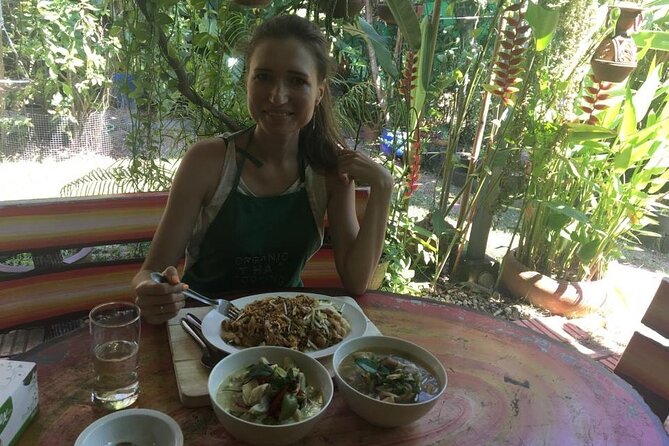
After the market, you head to the cooking school: an open kitchen in an organic tropical garden. You’ll learn in a fully equipped kitchen, but the feel is outdoor and hands-on—more like learning from a practiced home cook than a demo behind glass.
Based on the feedback, one of the most-loved parts is that you cook outside and actually participate. That matters because Thai cooking is step-by-step: chopping, grinding, tasting, adjusting. If you only watch, it’s hard to remember how each stage should look and smell.
You’ll also get:
- Tea, coffee, and filtered water during class
- A chance to view the organic garden
- An organized class setup so everyone has work to do
If you’re sensitive to heat or sun, plan for it. An open-air cooking session can feel warm even on a good day—so bring a light layer you don’t mind sweating in.
What you’ll cook: vegetarian dish sets and what each one teaches
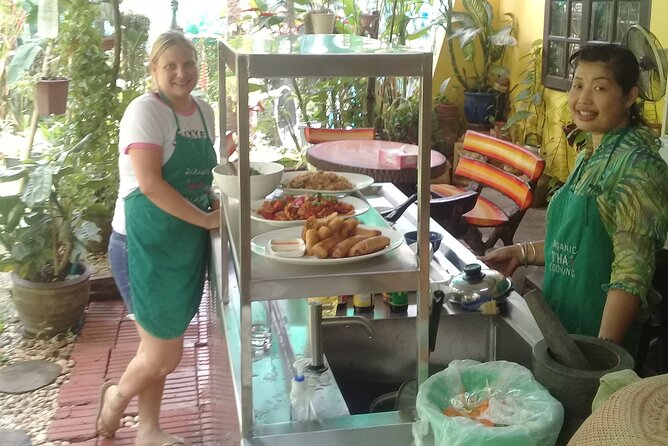
This class is vegetarian, but it’s not just “one dish and call it a day.” You cook multiple items, and you learn different techniques because the menu mixes categories: salads/sides, soups, curry-style dishes, stir-fry, and vegetable-focused cooking.
The session menu is offered in vegetarian sets, and you’ll cook dishes from the listed sets:
- Vegetarian Set 1 (3 dishes)
- Fried Noodles with prawns or egg
- Papaya Salad
- Galangal Coconut Soup
- Vegetarian Set 2 (3 dishes)
- Penang Curry
- Spicy Sour Soup
- Tofu Salad
- Vegetarian Set 3 (3 dishes)
- Spring Rolls
- Green Curry
- Red Curry Vegetables
A quick note on vegetarian expectations: Set 1 includes an option for prawns or egg. If you’re strict vegetarian, you’ll want to choose the egg option (or ask how they handle dietary needs) when you arrive.
How the dishes build your skills
Even without fancy kitchen theory, you’ll leave with a sense of patterns:
- Coconut-based soups and curries teach the role of aromatics and how richness develops.
- Papaya salad and tofu salad teach balancing flavor in fresh dishes.
- Curry dishes (Penang, green, red) train you to think about curry paste as a foundation.
- Spring rolls and fried noodles add texture and timing—when to cook fast, and when to stop.
If you want one big takeaway, it’s this: the class doesn’t just hand you recipes. It connects ingredients to outcomes. That’s why the recipes feel usable after you’re back home.
Small-group format (2–4 people): why it’s not just a marketing line
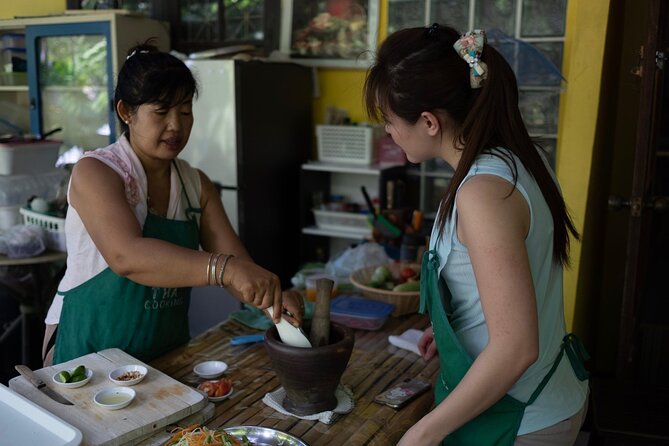
This is a guaranteed small-group class with a maximum of 4 travelers. When a class caps at 4 people, you get something rare: fewer waiting gaps.
In a group this size, you’re more likely to:
- Finish your chopping and prep at the pace you need
- Get corrections while your dish is still forming
- Participate in more than one station (especially in an open-air kitchen)
It also supports the vibe people love most: everyone takes part, then you sit down and eat. No awkward feeling of being stuck watching while someone else gets all the hands-on time.
Learning with a certified Thai teacher: what you should listen for
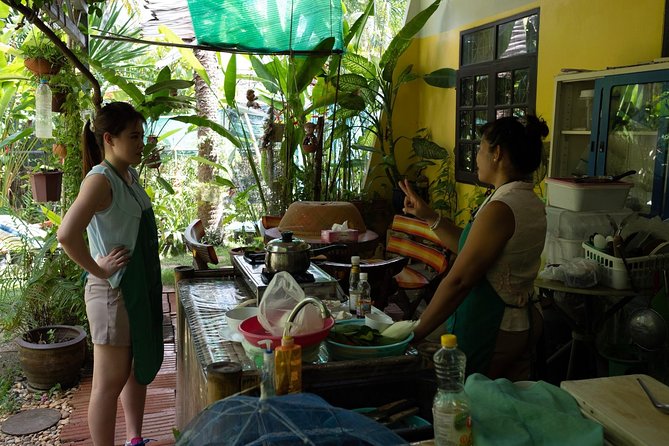
You’ll cook with a certified Thai teacher, and English instructions are available. The point of having an instructor isn’t just language—it’s translation from Thai cooking logic into something you can reproduce.
As you cook, pay attention to:
- Tasting checkpoints. Thai food changes with small adjustments, and teachers usually highlight when to check flavor.
- Texture cues. Fried noodles, curry vegetables, and spring rolls all have distinct doneness signs.
- Aromatics order. Even a small change in timing can shift the final taste.
You’ll also get recipes of all dishes learned, so you’re not relying on memory for the measurements and steps.
Eating your meal after class: warm food, no guesswork
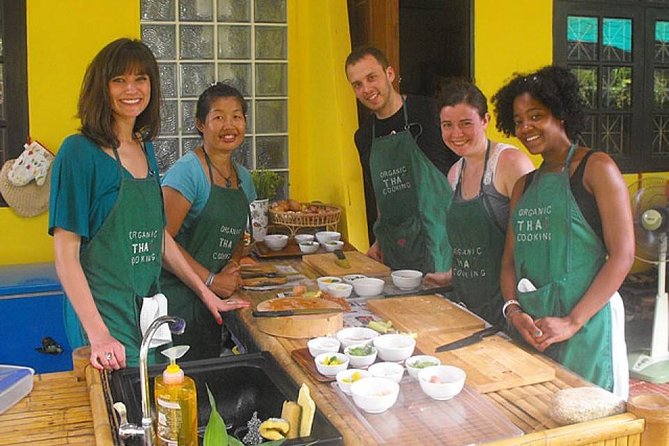
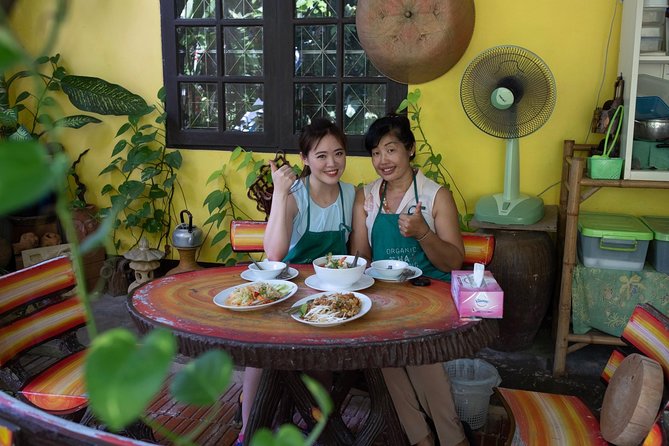
After cooking, you dine on your creations. That’s more than a nice bonus. It’s part of learning, because you can taste what the instructions were aiming for.
This is where you’ll notice:
- Whether your paste base tastes balanced (curry and soup items)
- Whether fresh components in salads feel sharp enough (papaya/tofu salad)
- Whether fried items have the right crunch and sauce grip
And because you’ll have recipes, you can treat the meal as feedback: what you loved, and what you’ll tweak next time.
You’ll also receive a Certificate of Achievement. It’s not life-changing, but it’s a satisfying touch that makes the class feel official and real.
Transfers and extra vehicle charges: plan your pickup early
Pickup is included only from south of Karon Beach. If your hotel is outside that zone, there are extra transfer charges per vehicle, such as:
- Phuket Town, Patong, Cape Panwa: 400 Baht/vehicle
- Kamala Beach: 700 Baht/vehicle
- Surin Beach: 800 Baht/vehicle
- Nai Yang: 900 Baht/vehicle
If you’re comparing this to other cooking classes, include that cost in your real budget. The class price is attractive, but pickup fees can change the math depending on where you’re staying.
Price and value: what $60.49 is really buying
The price listed is $60.49 per person, with an average booking window of about 30 days in advance. For that, you get:
- Market tour with guided ingredient education
- A cooking session with an instructor in a fully equipped kitchen
- All ingredients
- Tea/coffee/filtered water
- Recipes
- A certificate
- And you eat the meal you make
What makes it good value is the combo of market + cooking + meal. A single-dish cooking demo doesn’t teach you enough to cook again. Here, you leave with multiple dishes and the written recipes to repeat them.
The small-group size also boosts value. You’re not paying for a crowded classroom vibe. You’re paying for time, attention, and practical technique.
Who should book this class (and who might want to choose another day)
This tour fits best if you:
- Want vegetarian Thai food that feels structured, not improvised
- Like the idea of learning ingredients first, then cooking with confidence
- Enjoy hands-on cooking where everyone gets to do work
- Want to take recipes home and recreate the dishes later
It might be less ideal if:
- You’re very sensitive to heat and sun (it’s open-air cooking)
- You’re in a hurry and can’t handle a half-day schedule
- You’re far from south of Karon Beach and don’t want to deal with extra pickup costs
Also, the experience requires good weather. If it’s canceled due to poor weather, you’ll be offered a different date or a full refund.
Should you book this Vegetarian Organic Thai Cooking Class and Market Tour in Phuket?
If you want a Phuket cooking experience that feels practical—market knowledge leading straight into cooking—this is a strong choice. The small-group setup, the organic garden setting, and the fact that you cook outside and then eat your meal all point to an experience built for doing, not just watching.
Book it if you’re vegetarian and you want multiple dishes plus real recipes. Consider your pickup location first, since free transfers only cover south of Karon Beach. If you’re nearby and you can handle open-air cooking, this one offers clear value for the money.
FAQ
How long does the vegetarian Thai cooking class and market tour take?
The experience runs about 4 hours. The market tour is about 30–45 minutes, and the cooking lesson is 2 or 3 hours, followed by dining and then a return to your hotel around 4:30pm.
How big is the group?
It’s a guaranteed small-group class with between two and four students, and there’s a maximum of 4 travelers.
What pickup is included, and what extra charges might apply?
Free pickup transfer is included from south of Karon Beach. If you’re picked up elsewhere, there’s an extra transfer charge per vehicle, including 400 Baht for Phuket Town/Patong/Cape Panwa, 700 Baht for Kamala, 800 Baht for Surin, and 900 Baht for Nai Yang.
What vegetarian dishes do you cook?
The class offers vegetarian sets, including:
- Fried noodles with prawns or egg, papaya salad, and galangal coconut soup
- Penang curry, spicy sour soup, and tofu salad
- Spring rolls, green curry, and red curry vegetables
Which set you cook depends on the session you book.
Do you eat the food you make?
Yes. After the cooking session, you dine on your creations.
Is there English instruction, and what’s provided during the class?
English instructions are available. You’ll also have all ingredients, tea, coffee, and filtered water during class, plus recipes of all dishes learned and a Certificate of Achievement.
What happens if weather is bad or I need to cancel?
The experience requires good weather. If it’s canceled due to poor weather, you’ll be offered a different date or a full refund. You can also cancel for a full refund up to 24 hours before the experience starts.