REVIEW · GIANYAR
Ubud: Balinese Cooking Class with Traditional Dishes
Book on GetYourGuide →Operated by Travel Bali · Bookable on GetYourGuide
A cooking class in Ubud hits different when it’s village-style. This one takes you into a traditional Balinese kitchen, then back out to learn how local ingredients and flavors actually come together. You cook your own menu (vegetarian or non-veg), and you finish by savoring a full meal you made yourself.
What I like most is the way it feels personal. Families and a friendly team help you through the steps, and the class rhythm makes it more than just watching a demonstration.
One thing to consider: it’s marketed as 2 hours, but it can run closer to 2.5 depending on the group and pace. If you’re on a tight schedule, keep a little buffer after pickup.
In This Review
- Key things you’ll care about before you go
- Why Laplapan Village and a Traditional Kitchen Matter in Ubud
- From hotel pickup in Ubud to a village-style start
- The market visit and meeting farmers (what it teaches you)
- How Balinese cooking works: spices, plants, and technique
- Your menu choice: vegetarian or non-vegetarian
- The cooking timeline: what “2 hours” really feels like
- What you’ll actually eat at the end (and why it’s included)
- Price and value: is $30 in Ubud a fair deal?
- Practical tips so you get the most out of it
- Should you book this Ubud Balinese cooking class?
- FAQ
- How long is the Balinese cooking class in Ubud?
- Does this class offer both vegetarian and non-vegetarian options?
- What’s included in the price?
- Where does the class take place?
- Is pickup available outside of Ubud?
- Are there any restrictions on what I can bring or consume?
Key things you’ll care about before you go
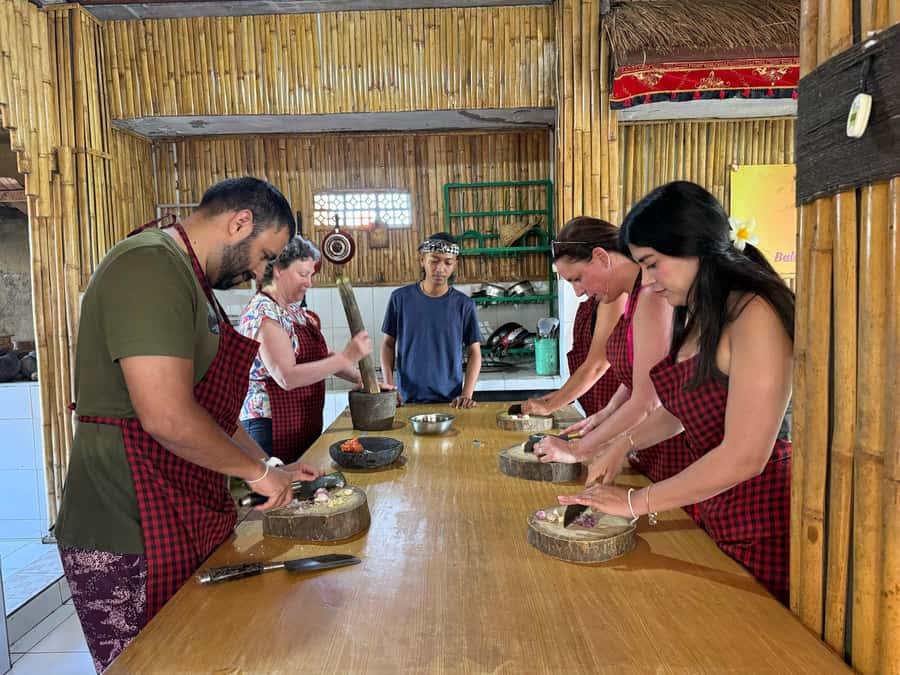
- Laplapan Village kitchen setting: true village-style cooking space, not a showroom kitchen.
- Market + rice-growing learning: you don’t just cook blind; you see where ingredients come from.
- Two menu paths: choose vegetarian or non-vegetarian before you start.
- Fresh, local ingredients: you’ll cook with produce, roots, herbs, and spices that define Balinese flavor.
- You eat what you make: lunch is included, and it can leave you full for the rest of the day.
- English-speaking help: guides explain in English, and they’re there while you cook.
Why Laplapan Village and a Traditional Kitchen Matter in Ubud
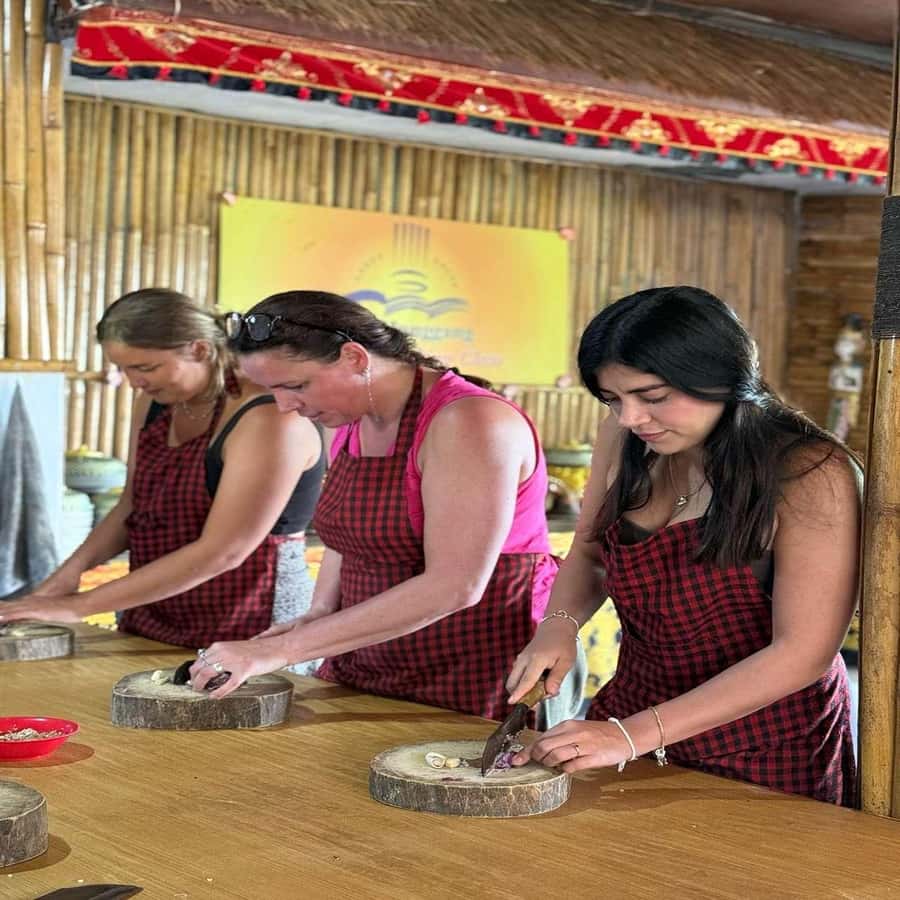
Ubud is full of cooking classes, but the ones worth your time usually have two things: real food culture and a real place to cook it. This experience is set in Laplapan Village in a traditional Balinese-style kitchen similar to what you’d find in Balinese neighborhoods.
That setting changes the whole feel. You’re not standing in a glossy tourist kitchen. You’re working in the kind of environment where cooking is part of daily life and flavor comes from spices, plants, and technique—not shortcuts.
You’ll also learn what makes Balinese food distinct. Spices play a major role, and the local approach uses tropical plants, roots, and herbs that are easier to understand once you’ve seen them up close.
From hotel pickup in Ubud to a village-style start
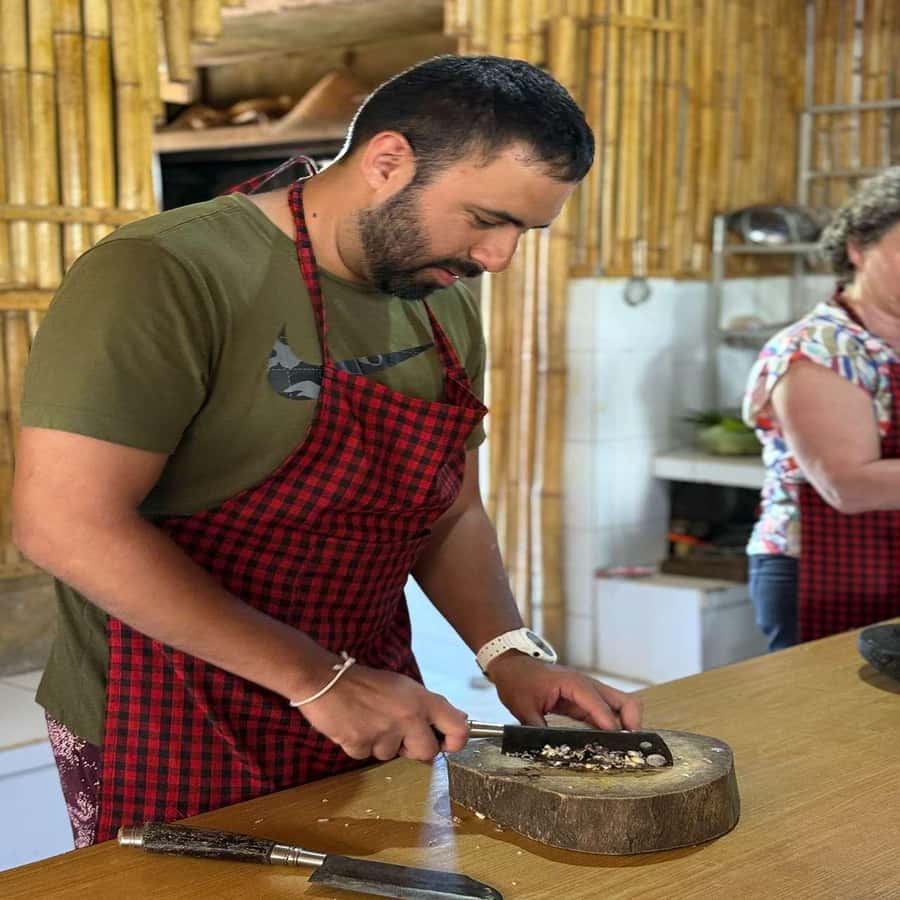
Pickup is included from hotels in the Ubud area. The plan is simple: you wait in your hotel lobby about 10 minutes before your scheduled pickup time, then you go together to the village area.
This is the easiest style of logistics—no bus transfers you need to figure out, no driving stress. And since the guides are English-speaking, you’re not left guessing what happens next.
If you’re staying just outside the official Ubud pickup area, note that extra charges may apply. It’s not a deal-breaker, but it’s worth checking so you don’t get surprised by the final total.
The market visit and meeting farmers (what it teaches you)
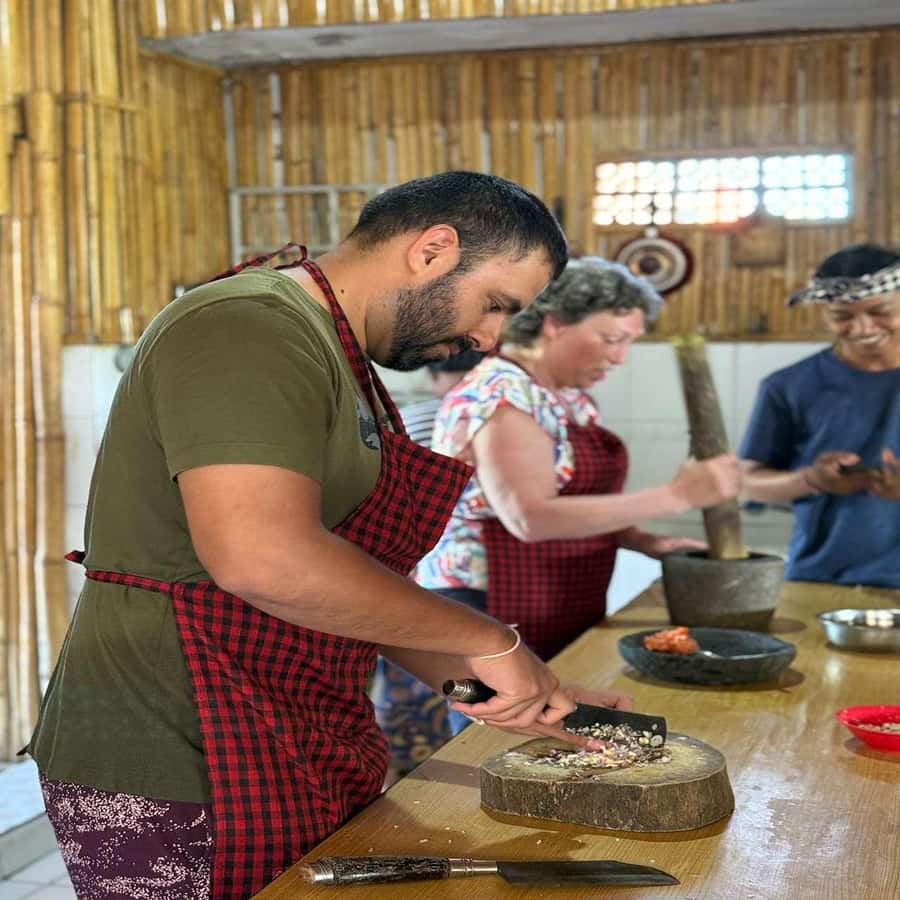
A big part of this class is learning the ingredients before you cook. The experience includes time to explore a local or traditional market and meet farmers connected to local growing practices—especially rice.
You won’t just buy ingredients. You’ll see the logic behind how Balinese dishes are built: what’s fresh, what local plants taste like, and how rice fits into the daily food picture.
Why this matters for you: once you understand where items come from, your cooking stops being mechanical. You start tasting with intention. Even if you’re a beginner, you’ll pick up the role of aromatics, the idea that certain roots and herbs aren’t optional, and how spices create depth rather than just heat.
How Balinese cooking works: spices, plants, and technique
Balinese cooking has a specific character, and that character comes from spices plus fresh tropical ingredients. In class, you learn the traditional methods for preparing Balinese food using tropical plants, roots, and herbs from the Island of the Gods.
You’ll cook alongside an English-speaking instructor and support team. The pace is practical: you get coaching through the steps, then you move on to the next dish.
This hands-on approach is what makes the class stick. If you only watch, you might remember flavors but not process. If you cook, you learn why something tastes right—because you did the work that produces it.
Also, the class structure includes multiple dishes. The goal isn’t just one “main dish.” It’s a whole menu built from authentic recipes and ingredients so you leave with a sense of how Balinese meals are composed.
Your menu choice: vegetarian or non-vegetarian
Before you start, you choose one of two menu routes: vegetarian or non-vegetarian. That choice keeps the class organized and ensures you’re cooking with ingredients that match your preference from the beginning.
I like that the option exists because it means you’re not forced into one standard menu. The guidance is also designed so you can still complete a full, satisfying meal at the end.
In the same spirit, the experience has been described as accommodating for different dietary requirements. The most important practical step is to tell the team your needs clearly at the start so they can guide you within the chosen menu.
The cooking timeline: what “2 hours” really feels like
The scheduled activity duration is listed as 2 hours, but in real life this sort of class often runs a bit longer as you finish cooking, then sit down to eat. One key detail is that you’re not rushed at the end—you have time to savor what you made.
You can think of it in phases:
- getting oriented and learning what you’re making,
- cooking multiple dishes yourself,
- taking breaks for explanations and adjustments,
- then finishing with a meal that’s meant to fill you up.
This is not a quick one-recipe stop. It’s built around a full menu experience, and the goal is that you leave with both knowledge and food.
If you’re scheduling other plans right after, I’d keep a cushion. Your appetite will likely need time to settle, and you’ll want to enjoy the meal without rushing out mid-flavor.
What you’ll actually eat at the end (and why it’s included)
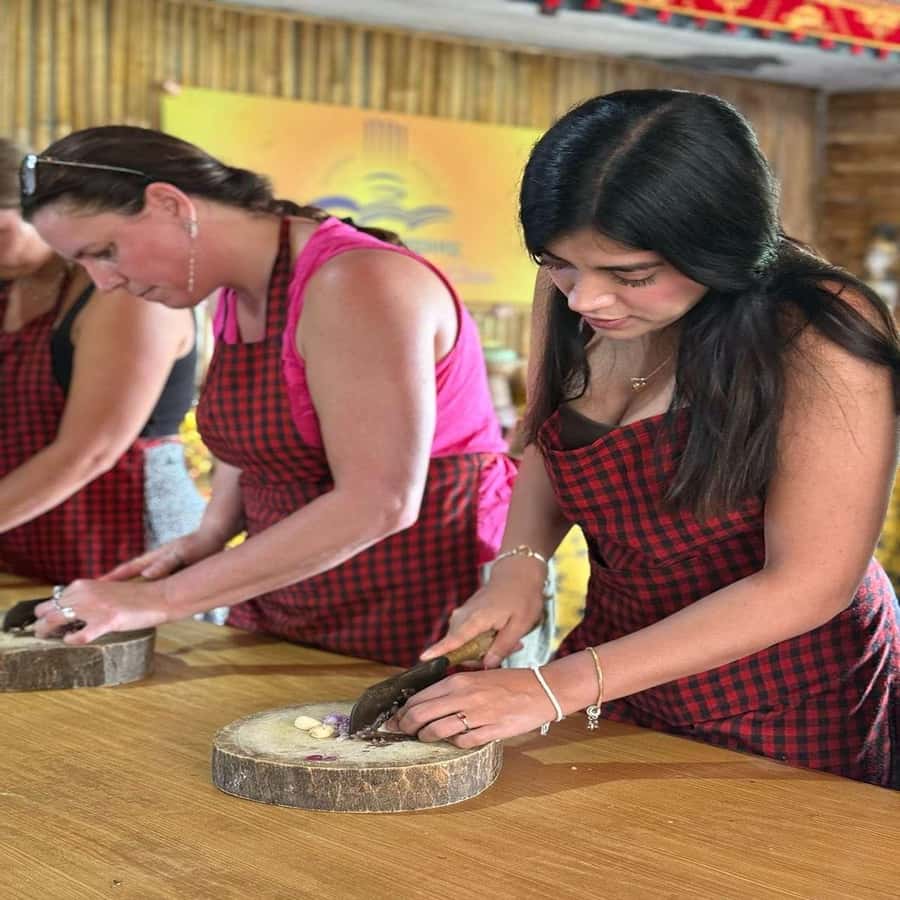
Lunch is included, plus a welcome drink. That matters because you’re paying for an experience, not just a cookbook moment.
When the class ends, you’ll have an actual meal you prepared. Many people come into cooking classes hoping for something tasty; the difference here is that you finish with a proper, filling spread rather than a small sampler.
The “why” is simple: you’re learning Balinese cooking as a whole-meal practice. In other words, the dishes aren’t random. They’re connected through ingredients, spices, and the way flavors balance across a menu.
And if rain or heat messes with your day, you still get a solid activity. The kitchen work continues regardless of weather, and the end result is something you can’t fake at home: food made in a village-style cooking rhythm with local ingredients.
Price and value: is $30 in Ubud a fair deal?
At $30 per person for about a 2-hour class with pickup, a welcome drink, lunch, and recipes, this is the kind of value that makes sense for many budgets.
Here’s how I judge value on experiences like this:
- Transportation included: pickup and drop-back remove the biggest cost and hassle factor.
- You eat what you cook: lunch isn’t a small add-on; it’s part of the core experience.
- Learning + ingredients: market time, farmer/rice context, and cooking steps are all included.
- Recipes at the end: you’re not just tasting once—you’re leaving with a way to recreate dishes later.
If you love food and want more than a one-time taste, the recipe handout and the hands-on menu cooking are the big wins. If you’re expecting a fancy “food show,” you might find it less polished and more straightforward—but that’s often the point.
Practical tips so you get the most out of it
If you want this to feel smooth from minute one, a few habits help.
First, arrive on time for pickup. Wait in the lobby about 10 minutes early like they ask. It’s the simplest way to avoid delays.
Second, wear clothes you don’t mind getting a little messy. You’ll be cooking, handling ingredients, and moving through a village kitchen environment.
Third, come with a clear dietary choice. Vegetarian vs. non-vegetarian is part of the structure, so decide ahead of time. If you have other limitations, communicate them early so the team can guide you within the menu option.
Finally, plan your evening like a foodie. Even though it’s a short class, you end with a full meal. You’ll likely be set for a good chunk of your day.
Should you book this Ubud Balinese cooking class?
Book it if you want a hands-on Balinese food experience in Ubud that goes beyond eating. The Laplapan Village kitchen setting, market and rice/farmer learning, and the fact that you finish with a filling meal you made yourself are the core reasons this is worth it.
Skip it (or reconsider the timing) if you’re extremely tight on schedule. The activity is listed at 2 hours, but the full experience can stretch a bit as you cook and eat.
If your goal is authentic, practical cooking knowledge—how Balinese spices and tropical plants work together—this is a strong match. You’ll leave not just fed, but with recipes and instincts you can use long after the cooking class is over.
FAQ
How long is the Balinese cooking class in Ubud?
The duration is about 2 hours. In practice, plan for a little extra time if the meal and pacing run slightly longer.
Does this class offer both vegetarian and non-vegetarian options?
Yes. You choose either a vegetarian or non-vegetarian menu option when you book.
What’s included in the price?
Pickup and drop-back from hotels in the Ubud area are included, along with lunch and a welcome drink.
Where does the class take place?
The cooking classes are conducted in Laplapan Village, in a traditional Balinese-style kitchen.
Is pickup available outside of Ubud?
Pickup is included only from the Ubud area. Locations outside of Ubud area may require an extra charge.
Are there any restrictions on what I can bring or consume?
Alcohol and drugs are not allowed. Also, the experience is not suitable for babies under 1 year.