REVIEW · TEGALLALANG
Ubud: Authentic Traditional Balinese Village Cooking Class
Book on GetYourGuide →Operated by BBF · Bookable on GetYourGuide
You smell the spices before you even cook. This Ubud-area day turns Delodsema Village life into a practical, hands-on Balinese cooking class. You start with garden ingredients, cook like a local family, and end with lunch you actually help prepare.
I especially love that it is village-based, not a staged kitchen show. With hosts like Kadek and Sangayu, you get guided steps through the real work: from mixing spice pastes to cooking classics, then eating what you make.
One thing to plan for: part of the day is outdoors and in walking areas, and transportation from central Ubud or Tegallalang is only included if you pick that option. You also meet at a specific point after you arrive: look for the Bali Cococnut Oill sign.
In This Review
- Key things that make this class worth your time
- Delodsema Village cooking: what makes it feel real
- Starting at the organic farm and spice garden
- Open-air kitchen time: hands-on from spice paste to satay
- Lunch on the ground: how to eat like local
- Temple visit and Delodsema village details you can actually notice
- Taro rice terrace: irrigation systems and field participation
- Price and value: why $30 can add up to a full day of real skills
- Practical logistics: transport, timing, and where to meet
- Who should book this Balinese village cooking class?
- Should you book? My call
- FAQ
- How long is the Balinese village cooking class?
- Is it a private class?
- What is included in the price?
- What about transportation from Ubud or Tegallalang?
- Where is the meeting point?
- What language is the instructor?
- Is there a vegetarian option?
- Is there a cancellation policy?
Key things that make this class worth your time
- Delodsema Village scale: the area is described as a small community of around 60 families
- Garden and organic farm ingredients: herbs and spices are introduced before you start cooking
- Open-air cooking setup: you cook with family-style help in an outdoor kitchen
- Hands-on meals: you do the prep and the cooking, not just watch
- Lunch on the ground: you get guidance on how locals eat together
- Taro rice-terrace add-on: learn irrigation systems and sometimes join light field work
Delodsema Village cooking: what makes it feel real
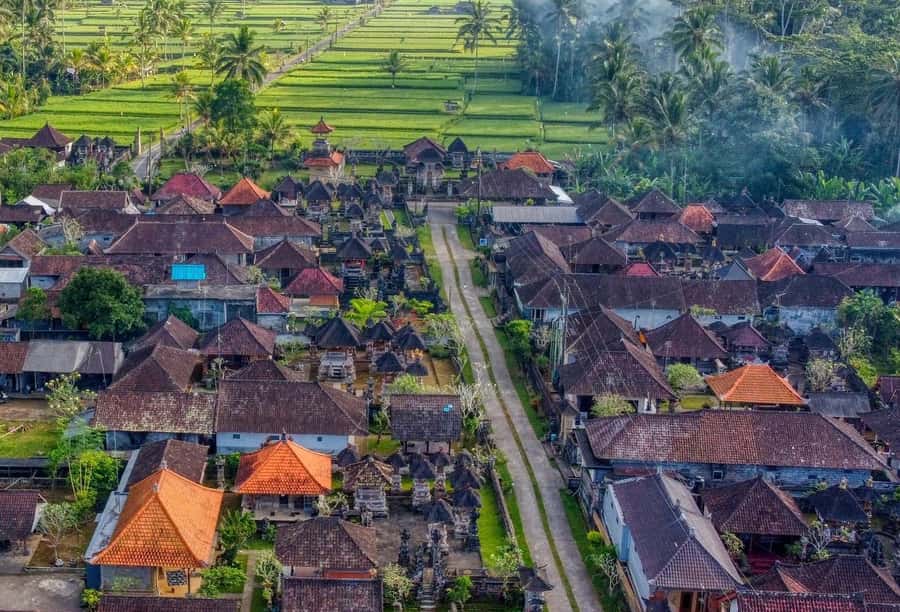
This experience feels different because it is built around everyday life in a traditional Balinese village. The visit to Delodsema Village centers on a small community (about 60 families), so you’re not just passing through a performance space. You’re there with a family setting the tone: welcome drink, garden ingredients, and shared time at the kitchen.
You also get a clear sense of the food ecosystem. They explain spices and traditional herbs, and you see where ingredients come from before the cooking begins. That order matters. When you can connect a flavor to a plant, the recipes stop being vague. You understand what you’re aiming for when you go home.
The class is private, so you move at a calm pace with an English instructor and family hosts. The focus stays on food, technique, and safety, with healthy practices treated as a priority.
Starting at the organic farm and spice garden
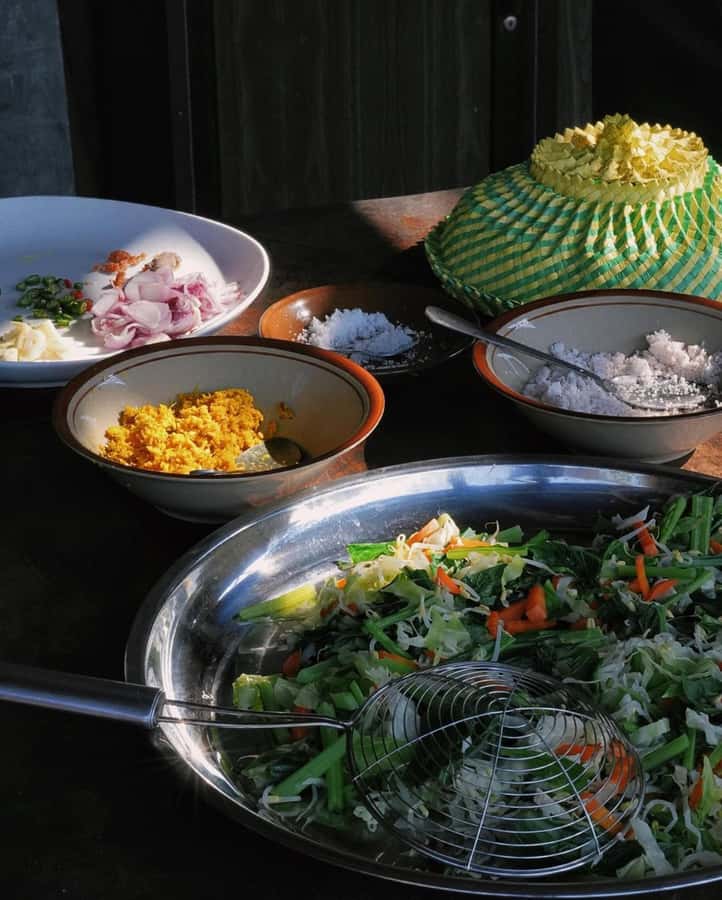
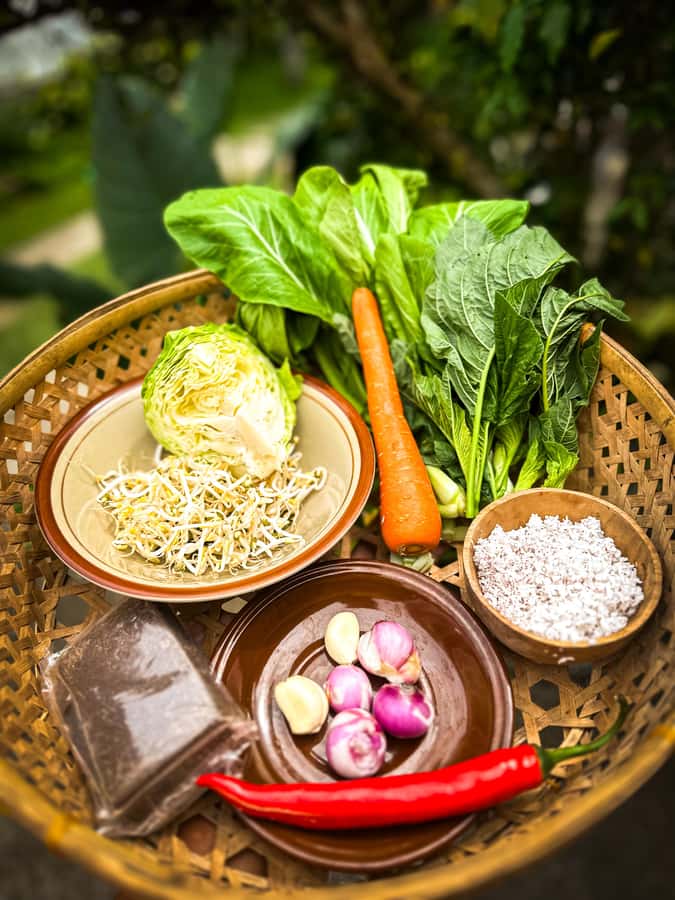
The day begins with a trip to an organic farm area, followed by an ingredient briefing. You’ll get hands-on exposure to spices, traditional herbs, and the garden context behind the meal. This is one of the smartest parts of the schedule because it gives you a mental map.
Instead of only hearing the name of an ingredient, you get to handle fresh components you’ll later cook with in the village. You also walk through the village environment itself, which helps you understand why certain ingredients show up again and again in Balinese dishes: they are local, seasonal, and practical to grow and process.
You’ll also be welcomed with Balinese tea and coffee, and in some sessions you may receive coconut water fresh. These small touches are not just “nice.” They help you slow down and pay attention, and they set expectations for the cooking style: simple tools, fresh products, and clear instruction.
Open-air kitchen time: hands-on from spice paste to satay
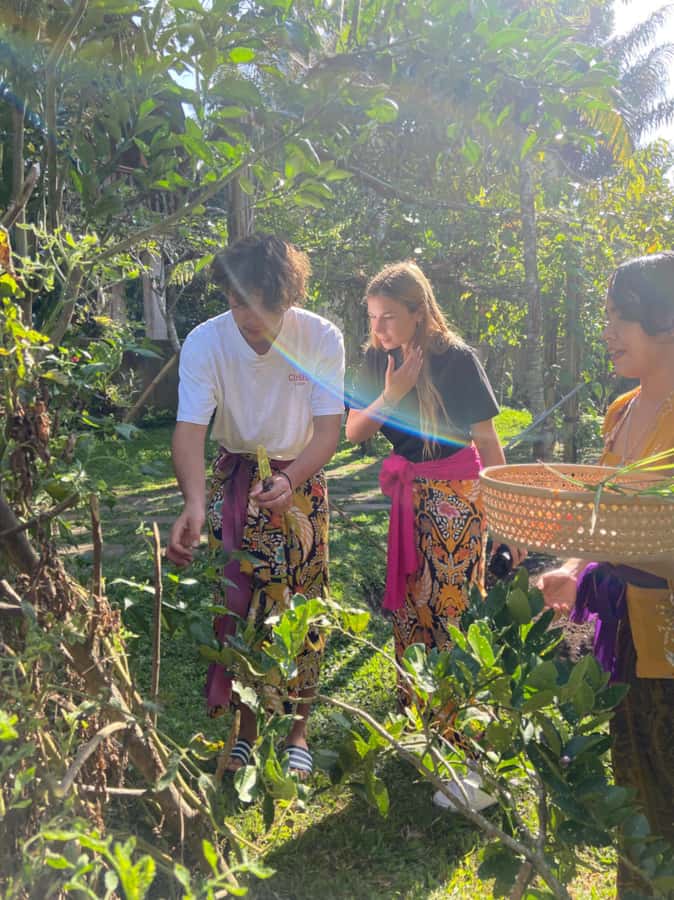
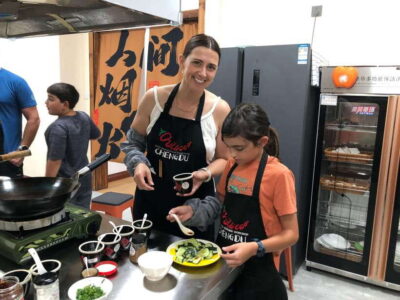
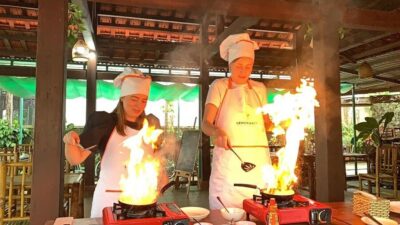
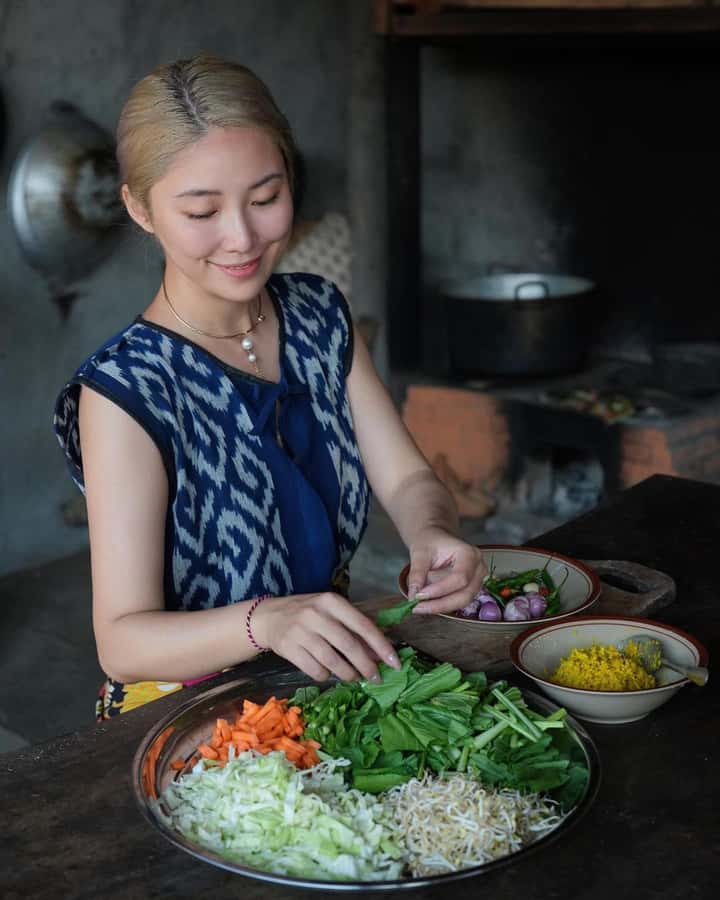
The cooking happens in an open-air kitchen with the family. This matters because open-air cooking changes how you work—heat, airflow, and shared space all play a role. You’re not in a sterile classroom. You’re in a functional kitchen where people cook for daily life.
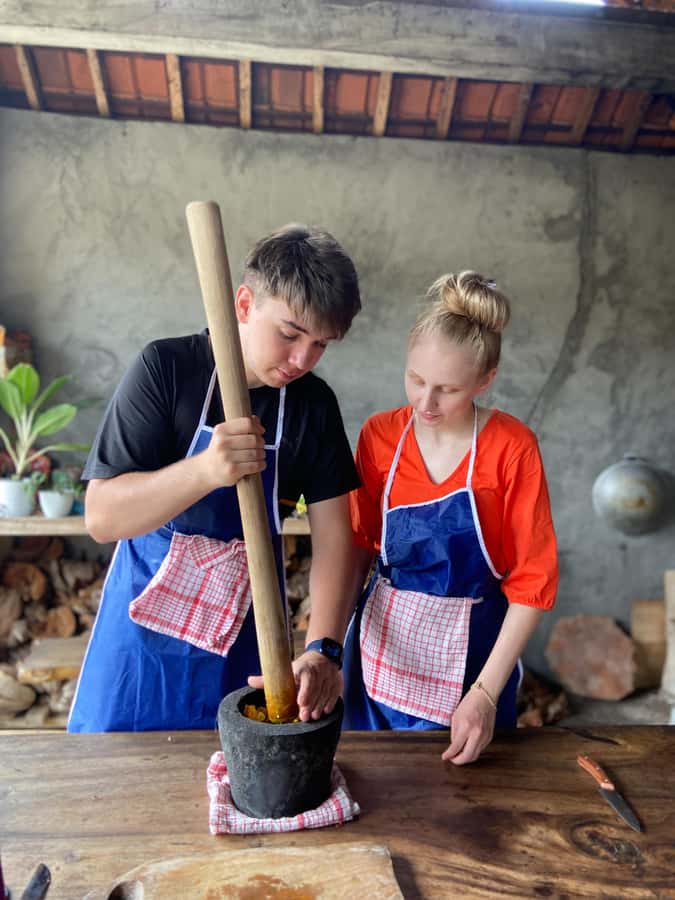
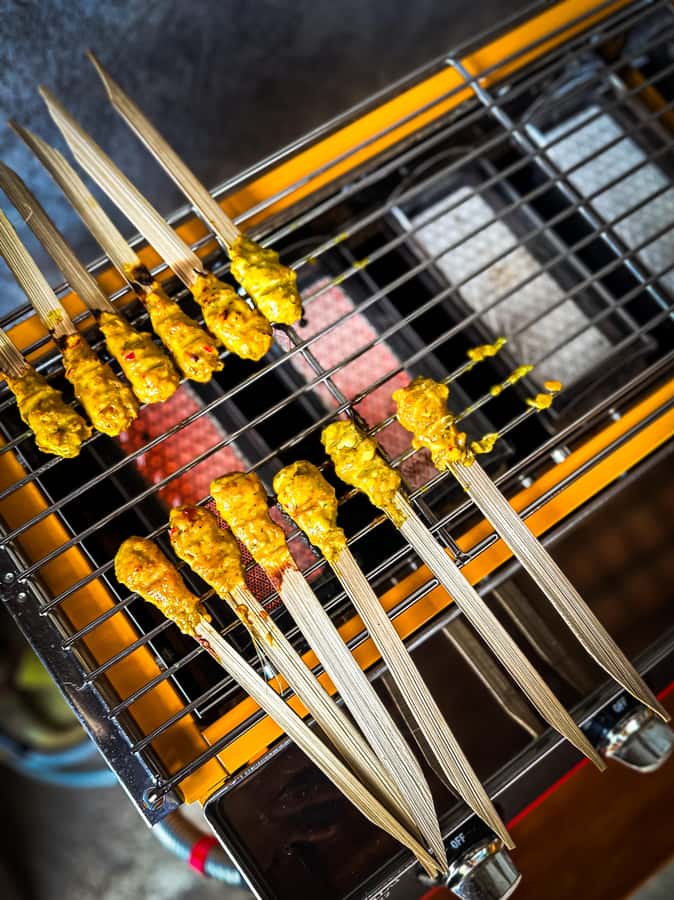
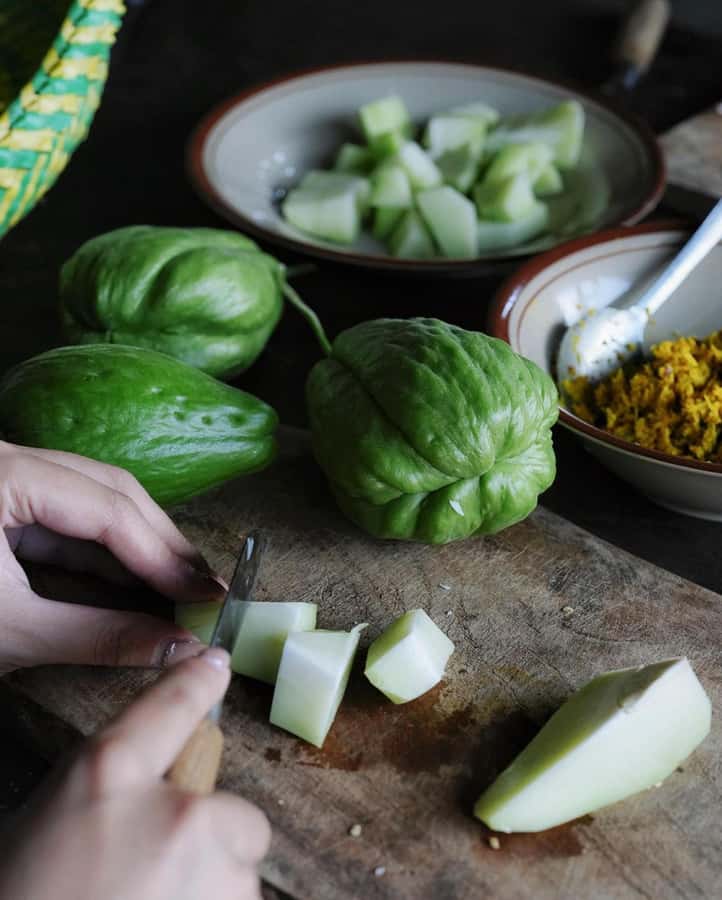
A big theme is actually technique. The class includes help for each step, and you’re involved from ingredient prep through cooking. Many sessions include making spice paste for curry and preparing items like chicken satay. One of the clean wins here is that you see the process, not just the final plate.
If you are vegetarian, pay attention: in one session, chicken satay was swapped for tofu in a banana leaf. That is a strong sign they can adjust dishes when needed, so if you have dietary requirements, confirm them when you book.
From the reviews and the structure of the class, two host styles show up often:
- Very step-by-step teaching, with frequent ingredient explanations.
- A relaxed pace where you get to do the work while the hosts guide you.
Even if you’ve cooked before, you’ll probably learn something new about Balinese flavor structure—especially how spices become paste and how that paste drives the sauce.
Lunch on the ground: how to eat like local
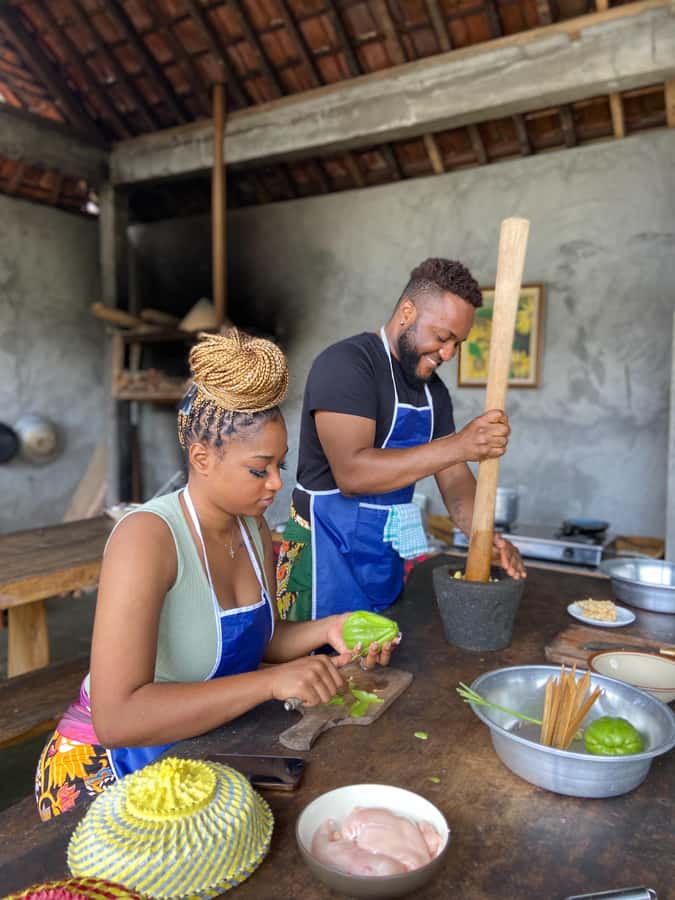
After cooking, lunch is set up with the food presented on the ground. Then you’re shown how to eat like locals. This part isn’t just a cute photo moment. Eating from a ground arrangement changes how you share, how you portion, and how you move through a multi-dish meal.
You’ll also get explanations for the foods you prepared, which helps if you’re trying to recreate these dishes later. And since you cooked them yourself, you’re not guessing. You know the smell, you know the texture you aimed for, and you can connect the taste to what you did at the stove.
You’ll sample a variety of dishes at the end of the experience, including items you cooked during the session. This is ideal if you want more than one taste of Balinese home cooking in a short time.
Temple visit and Delodsema village details you can actually notice
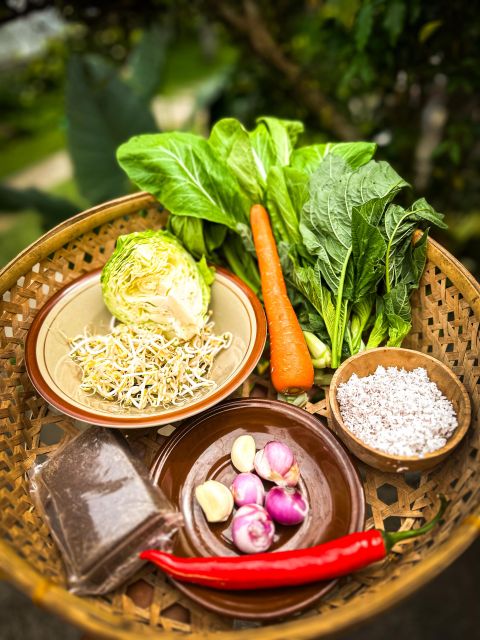
The day continues with a visit around the traditional parts of the village, including a temple. This gives the cooking class more meaning. Food in Bali isn’t separated from daily routine and spiritual life, and the tour format reflects that by letting you see the village environment alongside the meals.
You’ll be able to look around and understand how the community is organized. Because Delodsema is described as a small village of about 60 families, the feel is intimate. You’re not fighting crowds, and you’re more likely to notice practical details—spaces used for work, cooking, and offerings—rather than just scenic viewpoints.
In at least some sessions, you may even be invited to join or watch offerings preparation. One review mentioned helping make offerings, and another described taking part in an offering ritual. If you’d rather keep things strictly food-focused, you can use this as a chance to ask what participation looks like for your group.
Taro rice terrace: irrigation systems and field participation
After the village portion, the schedule shifts to the Taro rice terrace area. Here you learn about the local irrigation water system, which is one of the most interesting “hidden” skills in Balinese agriculture. It’s not just pretty farmland—it’s a working system that supports the rice cycle.
Sometimes you can join in with locals to harvest rice or plant new rice. The word sometimes matters. Don’t assume you’ll definitely do fieldwork, but do expect that the hosts may invite you depending on timing and conditions.
For most people, this is a satisfying add-on because it connects directly back to your food. You cook with ingredients that come from the broader local farming world. Then you step into the visible part of that system—terraces, water management, and rice cultivation rhythms.
Price and value: why $30 can add up to a full day of real skills
At about $30 per person for roughly 2 hours to 150 minutes, the value is mostly about what’s included and what you do with your time.
You get:
- A private cooking class
- Cooking equipment and all ingredients
- Balinese tea and coffee
- Lunch
- Recipes with a PDF
- English instruction
That’s a lot to be bundled in a short session. The key value is that you don’t just receive the recipe—you also get the process. If you want to bring Balinese cooking home, that PDF helps, but the bigger win is muscle memory: chopping, grinding or paste-making steps, and how the cooking stage changes the flavors.
One more value point: safety and healthy practices are said to be a first priority. That’s important when you’re cooking with fresh ingredients and in open-air kitchens. You can still expect a hands-on experience, but the structure signals they care about doing it the right way.
Practical logistics: transport, timing, and where to meet
The class runs about 2 hours to 150 minutes, and it’s in a private group format. If you’re staying in Ubud Central or the Tegallalang area, transportation is optional and included only if you select that pickup option.
If you choose not to take pickup, you’ll need to get yourself to the meeting location. The stated meeting point is after you arrive at Delodsema Traditional Village—look for the Bali Cococnut Oill sign.
Because part of the day is outdoors (open-air kitchen and rice terraces), wear comfortable shoes you don’t mind getting a little dusty. Bring sun protection, and be ready for heat and humidity. Also consider modest clothing for the temple area—keep it simple and respectful so you can focus on learning.
Who should book this Balinese village cooking class?
This is a strong match if you want:
- A hands-on Ubud cooking class, not a watch-and-snack tour
- Real village context in Delodsema, including a temple visit
- A chance to connect food to garden and farming
- A meal you helped cook, with multiple dishes sampled
It’s especially good for couples and small groups because it’s private and guided. If you’re traveling solo, it can still be a great choice since you’re paired closely with hosts rather than getting lost in a larger group.
You might want to choose something else if you hate walking, dislike outdoor cooking, or want a highly structured, classroom-style experience. This day is family-run in spirit and open-air in practice.
Should you book? My call
Book it if you care about process, not just taste. This experience gives you ingredient context, step-by-step cooking help, and lunch in a format that feels like daily life. The small village setting, the garden-to-plate approach, and the recipe PDF make it more than a one-time meal.
Skip it only if outdoor heat and village walking would ruin your comfort level. Otherwise, the mix of cooking skills plus village and rice-terrace learning makes it a smart use of a morning or afternoon in Ubud.
FAQ
How long is the Balinese village cooking class?
The experience runs about 2 hours to 150 minutes.
Is it a private class?
Yes. It is described as a private group cooking class.
What is included in the price?
It includes cooking equipment, Balinese tea and coffee, the cooking lesson, all ingredients, lunch, and recipes with a PDF. Private cooking class is also included.
What about transportation from Ubud or Tegallalang?
Transportation is not included unless you select the option. If you don’t choose pickup, you’ll meet at the Delodsema Traditional Village area by finding the Bali Cococnut Oill sign.
Where is the meeting point?
After you arrive at Delodsema Traditional Village, look for the Bali Cococnut Oill sign to find the start point.
What language is the instructor?
The instructor is English.
Is there a vegetarian option?
Vegetarian needs are not detailed in the main activity description, but one session mentioned tofu replacing chicken satay for a vegetarian preference. If this matters, confirm your dietary needs when booking.
Is there a cancellation policy?
Free cancellation is offered up to 24 hours in advance for a full refund, and you can also reserve now and pay later.