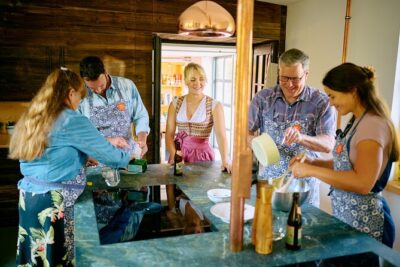
Vienna tastes different when you cook it yourself. This shared cooking class turns a real apartment on Neumanngasse into a hands-on lesson in Austrian comfort food. I especially like how personal it feels, with family recipes and the sense you are learning the way someone actually cooks at home.
I love the food focus: crispy chicken schnitzel, a classic Old Viennese-style potato soup, and a homemade apple strudel you get to serve at the table. It’s also built for participation, so you do real cooking, not just watching. The class is in English, and guides like Lena, Nina, and Leah are described as organized and welcoming while still letting you take the lead.
One consideration: it’s inside someone’s apartment, and the building has no elevator. If stairs are a problem for you, plan carefully. Also, with small groups, you might each get assigned specific tasks so the whole thing doesn’t drag.
In This Review
- Key highlights
- A Vienna Apartment Kitchen, Not a Cookie-Cutter Studio
- The Menu in Plain Terms: Soup, Schnitzel, and Apple Strudel
- Old Viennese Potato Soup: Comfort Food With a Purpose
- Schnitzel That Stays Crispy (And How to Keep It That Way)
- Apple Strudel: A Dessert Lesson You Can Rebuild
- What Happens During the Meal: Cook, Then Eat Together
- English-Language Teaching With Real Human Warmth
- Value for Money: Why $144.18 Feels Fair
- Who Should Book This Cooking Class (And Who Should Think Twice)
- Should You Book This Shared Cooking Class?
- FAQ
- Is this cooking class beginner-friendly?
- How long is the class and what do I get to eat?
- Where does the class take place?
- What dishes are typically included?
- Can the class accommodate dietary restrictions?
- What language is the class taught in?
- Is the building accessible by elevator?
- What is the cancellation policy?
Key highlights
- Home-apartment setting in an older building tied to local family stories
- Crispy schnitzel and apple strudel taught with a hands-on approach
- Old Viennese potato soup as a comforting starter you can recreate
- Small groups (max 6) where you actually get cooking time
- English instruction with a guide who can also speak German
- Dietary options by request (vegetarian, lactose-free, gluten-free possible; vegan and gluten-free strudel not possible)
A Vienna Apartment Kitchen, Not a Cookie-Cutter Studio
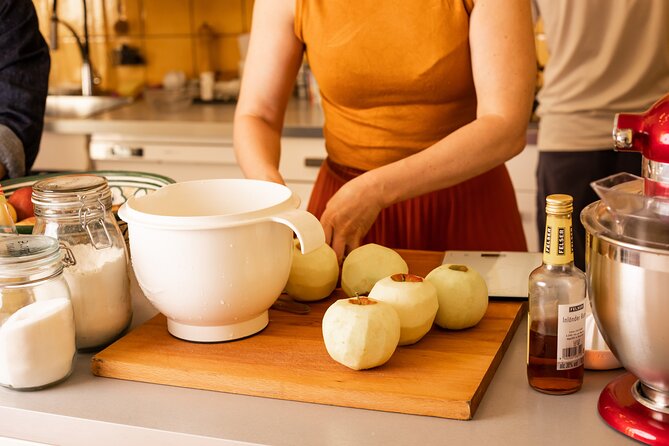
There’s a big difference between a cooking class and a cooking in Vienna. Here, you’re in a real apartment at a real address—Neumanngasse 7 in the 1040 district. That matters, because the whole experience feels like you are stepping into someone’s everyday world, not touring a theme kitchen.
The apartment setting also changes the pace. You’ll learn what matters for these dishes in practical ways: how to move around a kitchen space, how to time tasks, and how to plate so everything lands hot. You can feel the care in the details, including the fact that this is the kind of place where generations lived.
Keep one thing in mind: the building has no elevator. If you’re traveling with heavy bags, strollers, or mobility limits, you’ll want to be ready for stairs. Service animals are allowed, and the meeting point is near public transportation, which helps a lot if you don’t want to wrestle with taxis.
You can also read our reviews of more tours and experiences in Vienna.
The Menu in Plain Terms: Soup, Schnitzel, and Apple Strudel
The class centers on traditional Austrian dishes, and most of the menu includes meat. Your exact course count can be 2 or 3 depending on how many people are in the group, but the core favorites usually show up as starter, main, and dessert.
The sample menu is:
- Starter: my grandmother’s Old Viennese potato soup
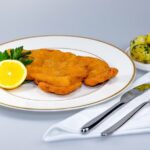
- Main: chicken schnitzel with cucumber salad and potato salad, served with lingonberry jam and lemon
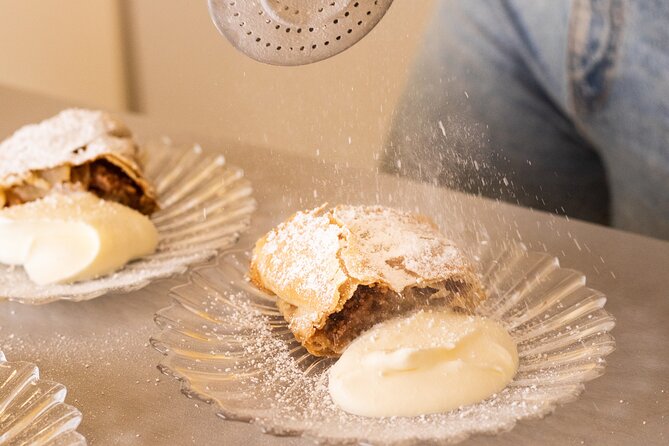
- Dessert: apple strudel with home made pastry and whipped cream
That combination is a smart teaching lineup. Soup gives you a feel for Austrian comfort flavors. Schnitzel is the technique lesson—crisp outside, juicy inside. Strudel is the dough-and-assembly lesson, with that classic apple filling and a pastry you can re-create later.
If you’re hoping for a vegan class, you should know it’s not possible here. If you need gluten-free, a gluten-free option can be arranged, but gluten-free apple strudel cannot be made. If you’re lactose-free, that can be arranged too. The key is to flag needs early so the guide can plan accordingly.
Old Viennese Potato Soup: Comfort Food With a Purpose
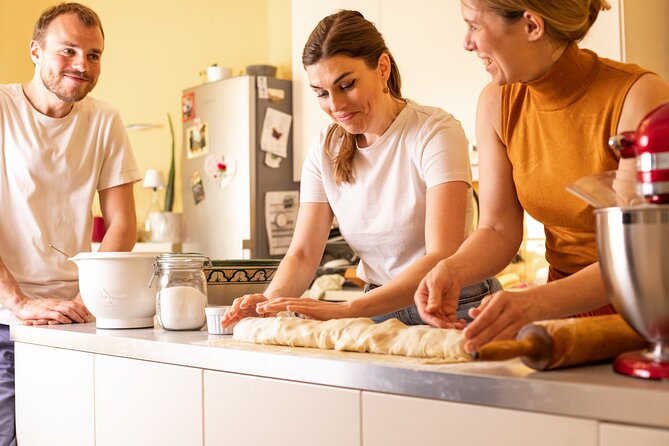
The potato soup is more than a starter you eat fast and move on from. It’s a first taste of the Austrian approach to comfort food—warm, hearty, and grounded in simple ingredients treated with care.
In practice, this is a great entry point if you are a beginner. It’s usually easier to jump into than a showy dish, and it helps you learn the basics of timing while the kitchen stays calm. You’ll also get a sense of why Austrian home cooking often feels both sturdy and gentle at the same time.
What I like about starting with soup is that it sets expectations for the rest of the class. The schnitzel and strudel both depend on people being ready to work steadily. Soup keeps you grounded at the beginning, and then you scale up to hands-on technique.
Schnitzel That Stays Crispy (And How to Keep It That Way)
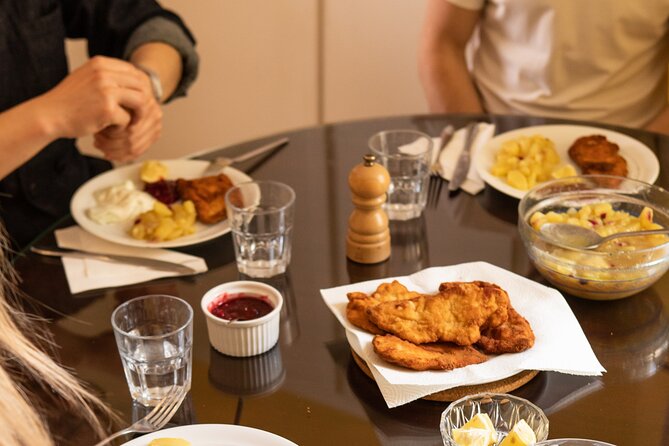
Chicken schnitzel is the star of the main course. The class is specifically about learning the guide’s secret for crispy schnitzels and juicy results. That focus matters because schnitzel can go wrong in predictable ways—coating that turns soggy, food that dries out, or oil that isn’t behaving how you want.
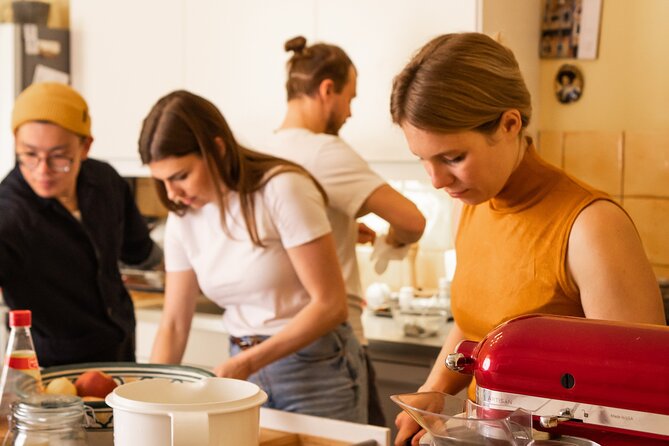
Here’s the teaching value: you learn by doing. The guide makes sure every participant cooks as much as possible, so you can practice the steps instead of just observing. In small groups, that hands-on approach is what turns the experience from a fun meal into something you can repeat at home.
The plate is also classic. Your schnitzel is served with cucumber and potato salad, plus lingonberry jam and a slice of lemon. That’s a useful detail because it teaches you how Austrians balance flavors:
- Jam adds a sweet-tart angle
- Lemon sharpens and lifts
- Salads cool the richness and add crunch
If you’ve only had schnitzel in restaurants, this setup is a good reality check. It’s not just the meat. It’s the full meal rhythm.
One small practical note: because the class is shared, you may not do every tiny step from start to finish if the group is larger on your day. That doesn’t mean it’s less valuable—it just means you’ll likely get assigned key parts. It’s still interactive, and the goal is that you walk away confident enough to cook again.
Apple Strudel: A Dessert Lesson You Can Rebuild
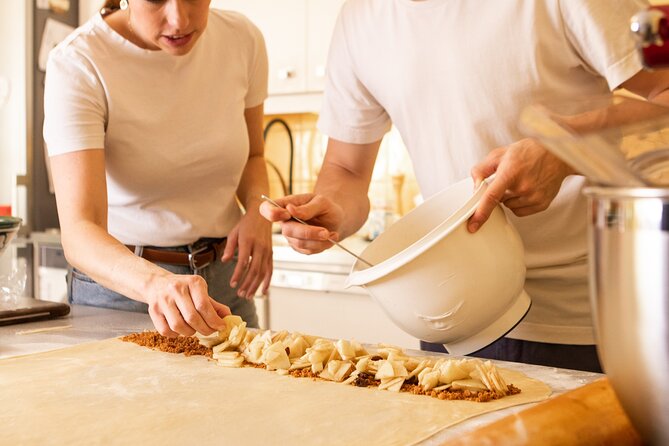
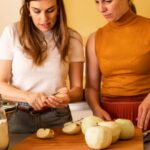
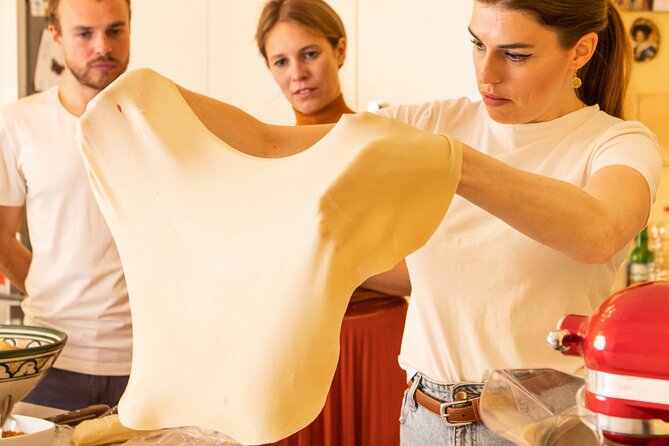
Apple strudel is the dessert, and it’s where the class feels especially memorable. You make apple strudel with homemade pastry, and the menu includes whipped cream. The guide’s emphasis here is on getting the dough right and assembling the filling so you can recreate it later.
Strudel is a great second-phase lesson because it builds confidence. After schnitzel, you’ve learned technique and timing. Then you shift to dough and structure. When it works, you get that classic layered pastry effect and the comfort of warm apple.
If you are thinking about dietary needs, this part is crucial. Gluten-free apple strudel can’t be made, even if the class can be arranged gluten-free in other ways. Vegan is also not possible. If those restrictions apply to you, it’s worth asking what alternative dessert will be offered before you book.
What Happens During the Meal: Cook, Then Eat Together
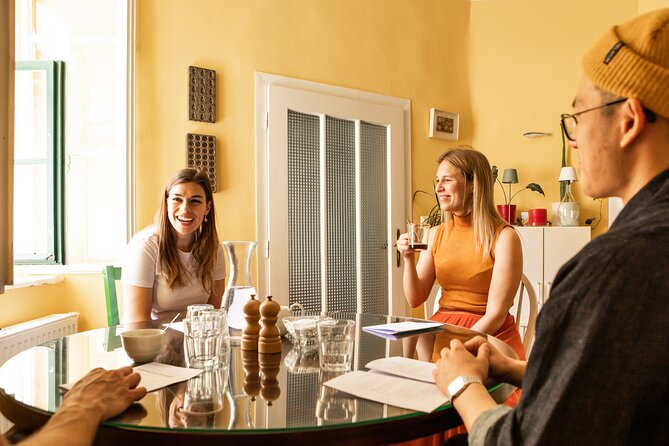
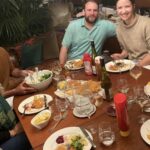
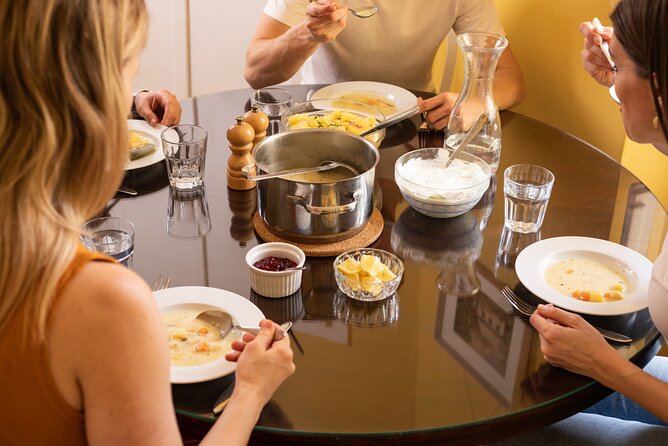
The best part of these classes is often the final table. After cooking, you all eat what you made. That sounds simple, but it changes how you experience the food. You’re not just consuming. You’re checking your work—how crisp the schnitzel stayed, how well the soup tasted, how your strudel holds up warm.
I also like that the guide starts by explaining Austrian cuisine and what you’ll cook together. That turns the meal into a mini education, not just a step-by-step cooking workshop. Even if you’ve never cooked before, you’re given enough context to understand why each dish fits together on a Viennese table.
The class runs about 3 hours. That length is a sweet spot: long enough to cook and taste, not so long that you feel stuck standing around. Coffee or tea is included, which helps you settle in after the work.
English-Language Teaching With Real Human Warmth
This class is offered in English, and the guide also speaks German. That’s helpful if you run into food vocabulary you don’t know—there’s likely a simple way to get it across.
The vibe is consistently described as intimate and welcoming. People note that guides like Lena, Nina, and Leah check in while still giving you space to cook. That balance is hard to find in group classes. Too controlling and you never learn. Too hands-off and you feel lost.
Here, the instruction style seems to focus on clear guidance plus freedom. If you’re someone who likes to learn by doing, this format works well. If you worry about being stuck with tasks you don’t understand, you’ll likely appreciate the step-by-step pacing.
Group size also matters. Your booking has a maximum of 6 travelers, which keeps it from becoming a chaotic production line. Smaller groups usually mean you get attention when you need it, and you get enough time at the counters to actually practice.
Value for Money: Why $144.18 Feels Fair
At $144.18 per person for about 3 hours, you might ask if it’s worth it versus eating in a restaurant. In Vienna, that question is fair. This class is worth it if you value skill-building more than just a meal.
Here’s what you get for the price:
- A 2- or 3-course lunch meal, plus coffee or tea
- An English guide (also German)
- Kitchen equipment, so you aren’t sourcing tools like an amateur chef
The real value is the learn-and-repeat part. Schnitzel and strudel are both dishes you can make again at home, and the class is designed for that. You’re not just told what to do—you make the food yourself, then eat it immediately.
If you’re traveling with kids or someone nervous about cooking, this class also helps. The interactive format can feel like a family-style activity rather than a formal lesson. And because kids and families are welcome, it’s set up for a friendly pace.
Who Should Book This Cooking Class (And Who Should Think Twice)
You should book if:
- You want Austrian comfort food with real hands-on instruction
- You like small-group activities where you cook, not just watch
- You want recipes you can recreate, especially schnitzel and strudel
- You enjoy learning from local family-style cooking stories
You might think twice if:
- Stairs are difficult for you, since the building has no elevator
- You need vegan food, because vegan isn’t possible
- You need gluten-free apple strudel, because gluten-free strudel cannot be made
If you’re flexible on those points, the class feels like a strong use of a few hours in Vienna. It’s not a performance. It’s a practical meal you make with guidance, then share at the table.
Should You Book This Shared Cooking Class?
Yes—if your goal is to leave Vienna with more than photos. This class gives you a clear menu, a home-apartment setting, and the chance to cook the dishes you actually want to eat. The biggest win is the hands-on technique mindset behind crispy schnitzel and classic apple strudel.
If stairs or strict dietary needs are deal-breakers, you’ll want to plan first. Otherwise, this is the kind of experience that turns Austrian food from a restaurant memory into a skill you can repeat.
FAQ
Is this cooking class beginner-friendly?
Yes. It’s described as suitable for beginners as well as intermediate cooks, and the instruction is designed so you cook as much as possible yourself.
How long is the class and what do I get to eat?
It lasts about 3 hours and includes a 2- or 3-course meal. The meal includes coffee or tea.
Where does the class take place?
The class meets at Neumanngasse 7, 1040 Wien, Austria, and it ends back at the meeting point.
What dishes are typically included?
The sample menu includes Old Viennese potato soup, chicken schnitzel with cucumber salad and potato salad (served with lingonberry jam and lemon), and apple strudel with homemade pastry and whipped cream.
Can the class accommodate dietary restrictions?
Yes for vegetarian, lactose-free, or gluten-free classes if arranged. Vegan is not possible, and gluten-free apple strudel cannot be made.
What language is the class taught in?
The class is held in English, and the guide can also speak German.
Is the building accessible by elevator?
No. The building does not have an elevator.
What is the cancellation policy?
Cancellation is free up to 24 hours before the experience starts for a full refund. If you cancel less than 24 hours before, the amount paid is not refunded.