REVIEW · CIVITELLA DI ROMAGNA
Romagna: Piadina Cooking Class
Book on GetYourGuide →Operated by Agriturismo Campo Rosso · Bookable on GetYourGuide
A hot piadina says a lot fast. In Emilia-Romagna, this hands-on Romagna piadina cooking class turns flour and water into a real snack you can eat right away, with the Romagna hills as a backdrop. It’s at Agriturismo Campo Rosso, where the vibe feels old-school and welcoming.
I especially like that you cook your own piadina romagnola, guided step by step until you can roll the dough into a thin disc and cook it on a hot pan. I also love the outdoor part: you get to taste freshly cooked piadina with local cheese while looking out over the hills of Romagna.
One consideration: this experience is not suitable for people with gluten intolerance, since it’s built around traditional wheat flour piadina.
In This Review
- Key things to know before you go
- A countryside farmhouse class in Emilia-Romagna
- What you’re really making: piadina romagnola
- From kneading to rolling: the skills you’ll carry home
- Cooking your own piadina on the pan
- Fillings: pecorino, herbs, and vegetables
- The best part: tasting outdoors with a drink
- Price and value: is $51.24 worth it?
- Plan your 90 minutes around what you can control
- Who this class is best for
- Should you book the Romagna piadina class?
- FAQ
- How long is the Romagna piadina cooking class?
- What’s included in the price?
- What languages are used during the class?
- Is it wheelchair accessible?
- Is it suitable for gluten intolerance?
- Are there any dress code rules?
Key things to know before you go
- You start from flour and water and learn the full process, not just the final assembly
- You cook on a hot pan and practice rolling the dough to a thin, even disc
- Fillings include pecorino cheese plus herbs and vegetables for that classic savory hit
- You taste what you make with a drink as part of the experience
- The setting includes panoramic Romagna hills views while you eat outdoors
- Apron, kitchen equipment, and headgear are included so you can focus on cooking
A countryside farmhouse class in Emilia-Romagna
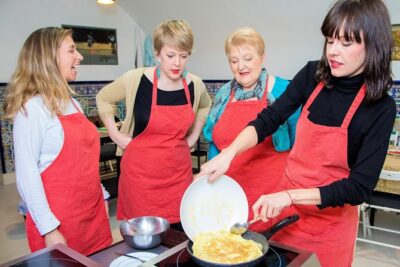
This experience is set in Emilia-Romagna, in Italy’s Romagna area, and it’s run out of a country farmhouse: Agriturismo Campo Rosso. That matters, because piadina isn’t a complicated food to memorize on a screen. It’s a food you learn through hands-on rhythm: knead, roll, cook, fill, eat.
There’s also a strong sense of place. You’re not tucked into a city studio. You’ll enjoy your snack with a panoramic view of the Romagna hills, which makes the whole “cooking class” feel more like a meal that happened to come with lessons.
The staff and instruction approach is friendly and collaborative, which helps when you’re trying something a bit old-fashioned. The class runs with an instructor who speaks Italian, French, and English, so you’re not stuck guessing what to do next.
What you’re really making: piadina romagnola
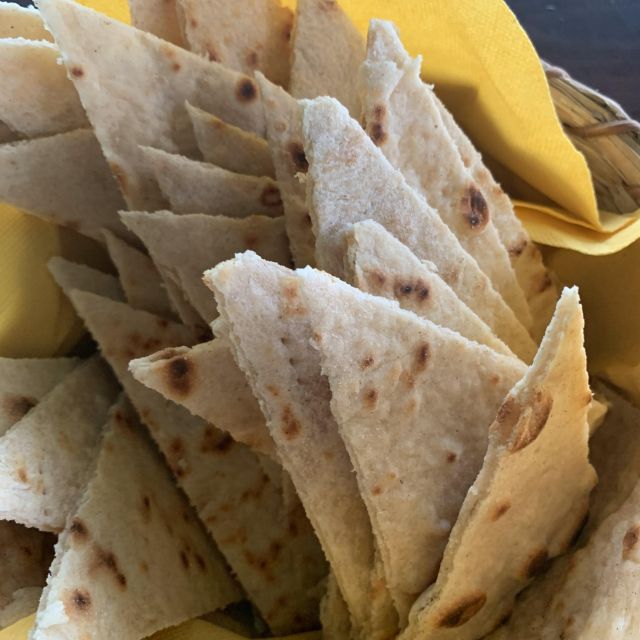
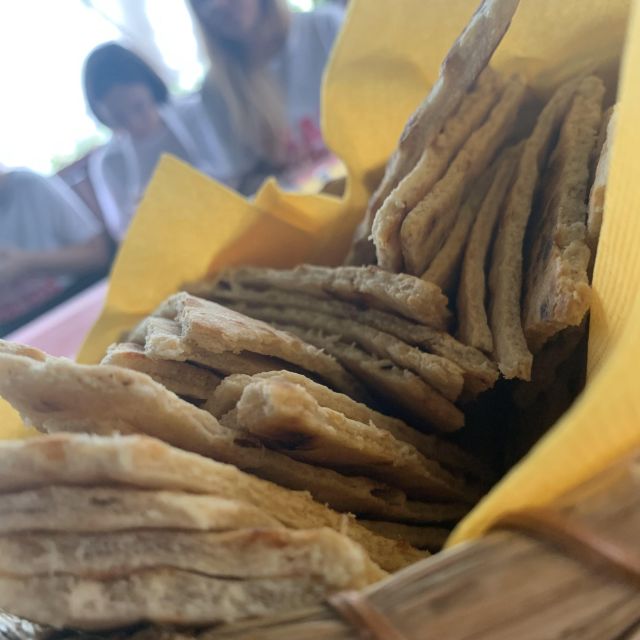
Piadina is an unleavened bread typical of the provinces of Forlì-Cesena, Ravenna, and Rimini. In practice, that means it cooks quickly and stays pleasantly chewy, with a flavor that works perfectly with salty local fillings.
In this class, you learn to make traditional Romagna bread the way it’s meant to be made: from basic ingredients, by hand. You work with flour and water to form the dough, then roll it out into a disc a few millimeters thick. That thickness detail is key. Too thick and it won’t cook the same way; too thin and it’s harder to handle on the pan.
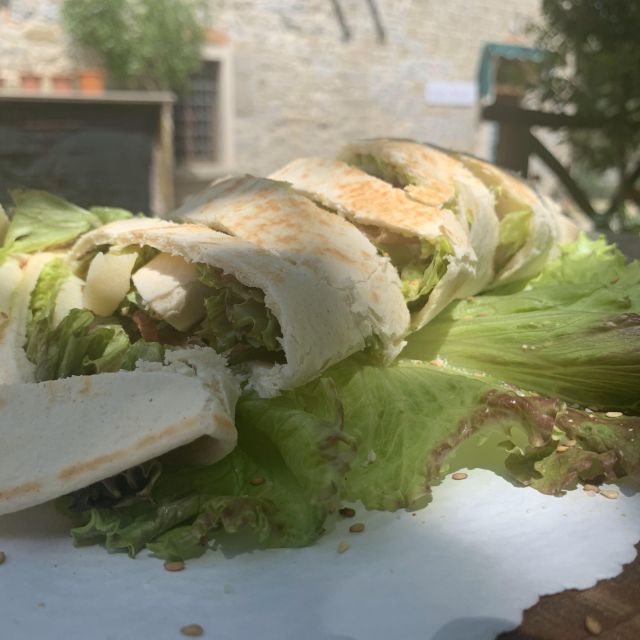
Piadina also isn’t usually eaten alone. It’s typically paired with local cheeses and cured meats. Here, you focus on cheese-forward and veggie-forward fillings, especially pecorino cheese, plus herbs and vegetables.
From kneading to rolling: the skills you’ll carry home
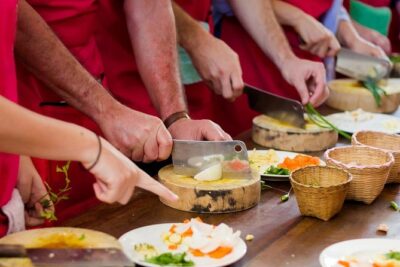
This is a cooking class where the technique is the point. You’ll knead the dough with your hands, then use a rolling pin to roll it out until you get that thin, even disc. The goal isn’t perfection like a pastry competition. It’s learning what the dough should feel like as you work it.
Then comes the hot pan part. Piadina is cooked on a hot pan, so the timing and heat management matter even if you’re not given exact minute-by-minute instructions. You’ll learn how to watch the bread as it cooks and gets that cooked-through texture.
Included gear helps you focus on technique:
- Apron
- Kitchen equipment
- Headgear
And since the instructor works in Italian, French, and English, you can ask questions in the language that feels most natural to you. That makes a difference when you’re working with heat, dough texture, and a rolling step that you can’t really learn from just listening.
Cooking your own piadina on the pan
The “lab” feeling is real. You’re not just assembling something at a table. You’re cooking bread on the same kind of setup that makes piadina a practical local food.
Here’s what you should pay attention to as you cook:
- The dough thickness, since piadina is rolled into a thin disc
- How the bread responds as it hits the hot pan
- The moment it becomes ready to fill and eat
Because this experience is designed around your participation, you’ll spend time doing, not watching. That makes it a good choice if you like activities where you leave with a skill, not only a photo.
Also, the experience includes tasting, so you’re not waiting until the end to find out whether your work is any good. You’ll taste the flavor of freshly cooked piadina as part of the class.
Fillings: pecorino, herbs, and vegetables
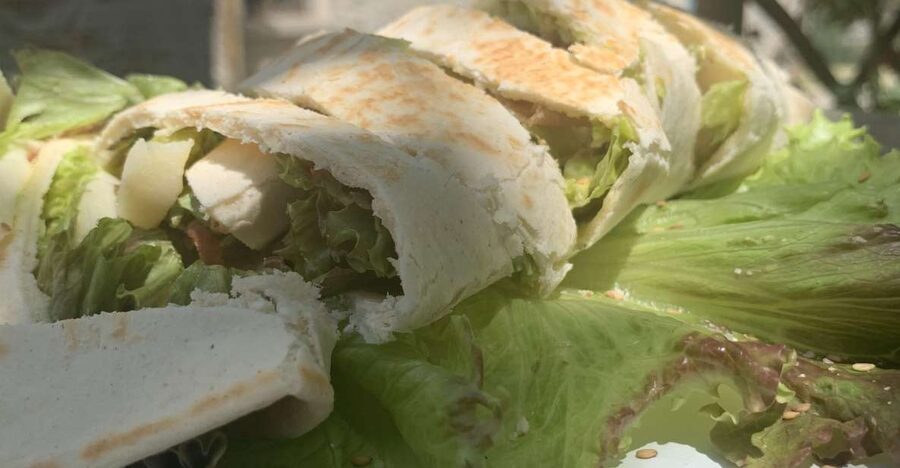
Once your piadina is cooked, you’ll fill it. The class specifically mentions pecorino cheese as one option, plus herbs and vegetables for another.
Why these fillings matter: pecorino is salty, sharp, and suited to an unleavened bread that has its own simple, wheat-based character. If you’ve ever liked Italian cheeses because they taste like a place and not just a flavor, this is that.
Herbs and vegetables give you a different angle—more freshness, more bite, and a break from straight cheese. That variety helps you understand how flexible piadina is. It’s not one rigid recipe; it’s a bread that adapts to local preferences.
The best part: tasting outdoors with a drink
After you cook, you sit down to enjoy what you made. The class includes tasting and a glass of wine or juice, which is a nice touch because it turns your work into an actual meal moment.
The outdoor setting adds a lot. You’ll eat with that panoramic view of the Romagna hills, which makes the experience feel less like a kitchen exercise and more like a farm-style lunch break.
Practical note: this is an activity that runs about 1.5 hours. So you’re unlikely to be “doing something” the entire time. Expect a mix of instruction, hands-on cooking, and then eating what you made.
Price and value: is $51.24 worth it?
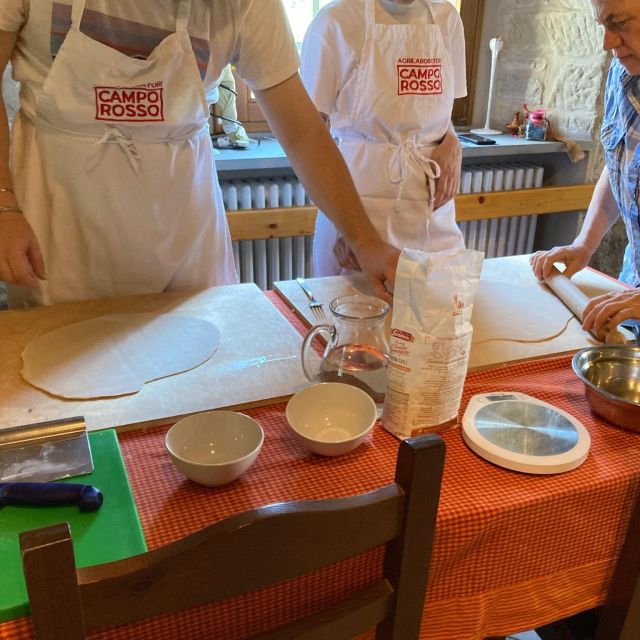
At $51.24 per person, this class is priced like a hands-on food experience, not like a casual tasting only. The value comes from what’s included:
- cooking class
- tasting
- a glass of wine or juice
- apron
- kitchen equipment
- headgear
That’s important because cooking classes can nickel-and-dime you with extras. Here, the main costs tied to learning—equipment and protective gear—are already handled. You’re paying for instruction, the ingredients and setup needed to make piadina, and the meal-style tasting afterward.
Also, the duration is 1.5 hours, which makes it easier to fit into a day without feeling like you’ve lost half of your itinerary. It’s a good “local food” option if you want something more personal than a standard sightseeing stop.
Plan your 90 minutes around what you can control
The class lasts 1.5 hours, and starting times depend on availability, so check the schedule before you lock in the rest of your day. Since this is a cooking-and-eating format, timing matters. You want to arrive ready to work and hungry enough to enjoy the results.
A few rules you should know up front:
- Not allowed: sleeveless shirts
- Not suitable for: children under 4
- Not suitable for: people with gluten intolerance
The instructor team is Italian, French, and English, which helps a lot if your Italian isn’t strong. You’ll be able to follow steps and ask questions in a language that works for you.
One more practical point: since you’ll wear headgear and an apron provided by the activity, you don’t need to bring anything special for your gear. But you do need to show up dressed appropriately with a shirt that has sleeves.
Who this class is best for
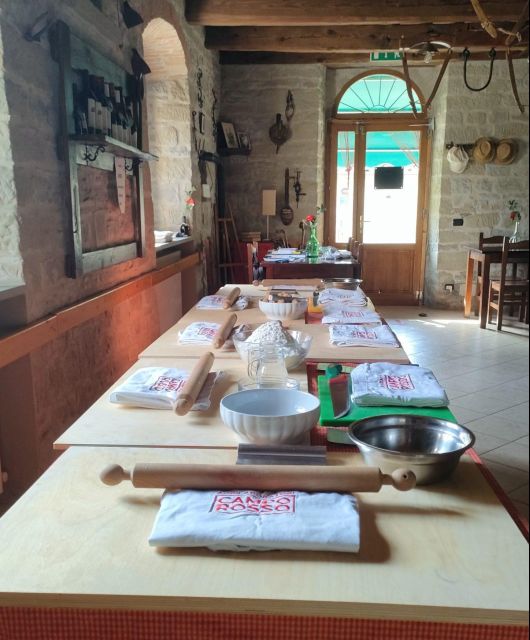
This fits best if you want something that’s hands-on and genuinely local.
You’ll likely enjoy it if:
- you like learning food techniques with your hands
- you enjoy Italian cheese flavors, especially pecorino
- you want an experience in the Romagna countryside rather than a city studio
- you prefer an activity that ends with you eating what you made
It’s less ideal if:
- you need gluten-free options (the class is not suitable for gluten intolerance)
- you’re traveling with very young children (it’s not suitable for kids under 4)
If you’re traveling solo, this also works well because you get full participation time rather than a passive tour vibe. Couples often like it too, since you’re both focused on making one shared dish and then tasting together.
Should you book the Romagna piadina class?
If your idea of a great day includes cooking something simple yet satisfying and then eating it outdoors with local flavor, I think this is a strong booking. The combination of hands-on piadina romagnola practice, pecorino + herb/vegetable fillings, and the Romagna hills view makes it feel more memorable than a typical food stop.
Skip it only if gluten intolerance affects you, or if the sleeveless-shirt rule would be a hassle. If those don’t apply, this is a neat way to learn what Romagna food culture feels like at table level, not just at market level.
FAQ
How long is the Romagna piadina cooking class?
The class lasts 1.5 hours. Starting times depend on availability.
What’s included in the price?
The experience includes the cooking class, tasting, and a glass of wine or juice, plus apron, kitchen equipment, and headgear.
What languages are used during the class?
The instructor uses Italian, French, and English.
Is it wheelchair accessible?
Yes, the experience is wheelchair accessible.
Is it suitable for gluten intolerance?
No. It is not suitable for people with gluten intolerance.
Are there any dress code rules?
Yes. Sleeveless shirts are not allowed.