REVIEW · KO LANTA
Dinner Cooking Class with Thai Master Chef at Sukho Cuisine Koh Lanta
Book on Viator →Operated by Oh-Hoo · Bookable on Viator
Five Thai dishes, taught step by step.
This Koh Lanta dinner cooking class at Sukho Cuisine is interesting because you’re not just tasting Thai food—you’re making key components like curry paste from scratch and learning how the flavors are built. I especially like that the class is kept small (max around 10), so you get real help rather than standing around watching. It’s also a true evening activity, ending with you eating what you cooked.
The other thing I really like: you get to leave with practical take-home support—a cooking guide plus a certificate—so the experience doesn’t vanish the next day. Plus, from the tone of classes I read about, the chef teaching style is upbeat and hands-on, with humor mixed into the instruction (Chef Pak comes up a lot). One consideration: the class only runs Tuesdays, Thursdays, and Fridays, and you need to be at least 9 years old since knives and gas are part of the cooking.
In This Review
- Key highlights you’ll care about
- Why this Koh Lanta Thai cooking class feels like dinner with a teacher
- The five dishes: more than a list of meals
- From herbs and spices to curry paste that actually tastes like Thailand
- The evening schedule: what happens from pickup to dessert
- What the chef teaching style brings to the table
- Diet choices and spice control: make it yours
- Pickup, group size, and the comfort factor
- Price and value: is $79.44 worth it?
- Who should book this class (and who might skip it)
- Should you book this dinner cooking class?
- FAQ
- What days are the cooking classes available?
- How long is the Dinner Cooking Class with Thai Master Chef?
- Is hotel pickup included?
- How many people are in the group?
- Can I choose vegetarian, vegan, or different spice levels?
- What is the minimum age to attend?
Key highlights you’ll care about
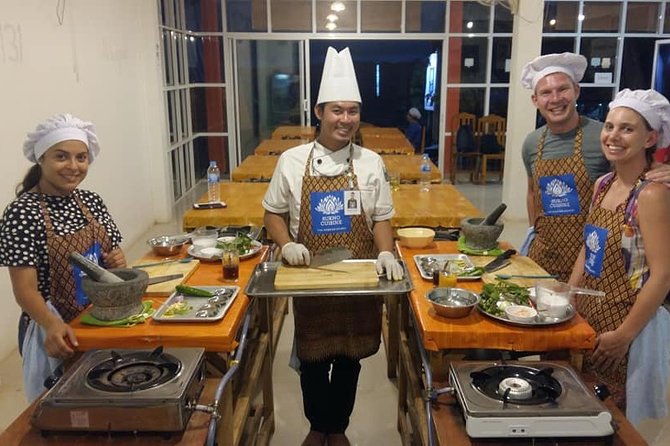
- Curry paste from scratch with mortar and pestle so you understand the backbone of Thai flavor
- Small group class (about 10 max) for more attention at your station
- Cook, then eat your creations as a real dinner, not a snack demo
- Hotel pickup and return transportation included, making it easy on a busy vacation
- English-speaking instruction with a structured, hour-by-hour flow
- Options for vegetarian/vegan and spice levels so you can dial it to your taste
Why this Koh Lanta Thai cooking class feels like dinner with a teacher
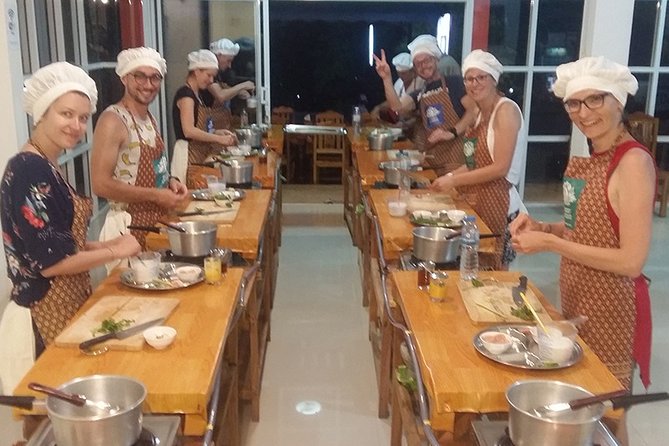
A lot of cooking classes sell the same promise: watch, stir, eat. This one focuses on doing the work yourself, from the earliest flavor building blocks. If you’ve ever tasted Thai food and wondered why it hits so hard, this class gives you the “why” through hands-on prep.
I like that the teaching is structured. You start with the ingredients system—herbs, vegetables, spices, rice, and condiments—then move into cooking techniques that make those ingredients make sense together. And when it’s time to eat, you’re sitting down with the proof of your labor.
There’s also a cultural element that comes through in what you make and how you’re taught to think about it. Several people highlighted that the chef explains the authentic Thai kitchen and the meaning behind what you’re cooking, not just the steps.
You can also read our reviews of more tours and experiences in Ko Lanta.


The five dishes: more than a list of meals
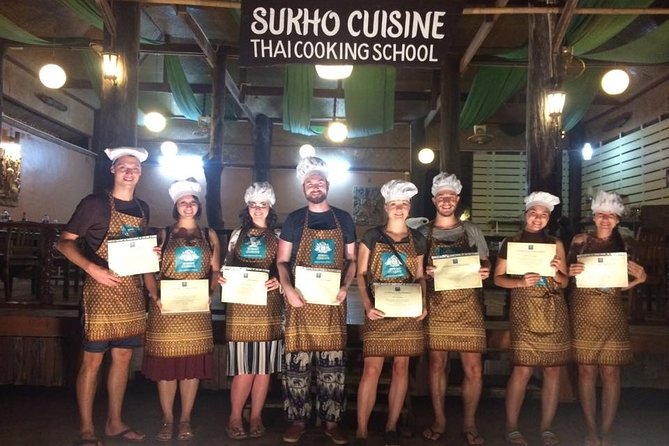
The course is built around learning to make five well-known Thai dishes, but the real value is that the lineup teaches you a range of Thai cooking styles. You’re not just repeating one technique five times. You learn how Thai dishes rely on a few shared foundations—aromatics, balanced seasoning, and texture—then you see how those foundations change by dish.
Based on the class flow, expect work in these areas:
- making curry paste using a mortar and pestle
- cooking a Thai soup you can enjoy right away
- preparing an appetizer and a main-style dish (the schedule names a course called mean cot, plus meat curry paste work)
- finishing with a Thai dessert
If you’re hoping for a menu that will match every eater’s preferences, you’re in luck: the class offers vegetarian and vegan options and lets you choose how spicy you want to go. That means you’re less likely to end up with one “leftover” plate that doesn’t match what you can enjoy.
From herbs and spices to curry paste that actually tastes like Thailand
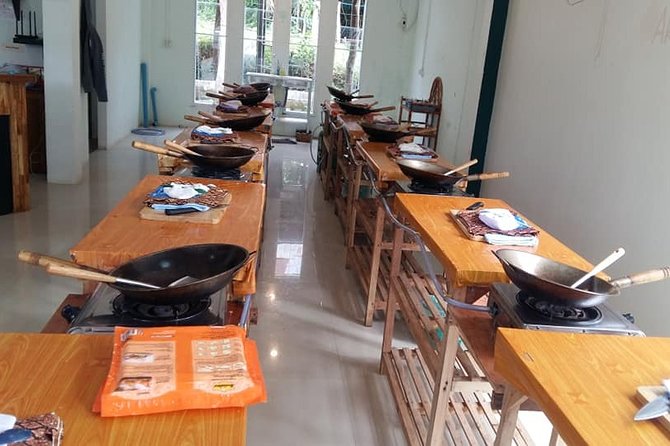
Thai food starts with a strong flavor base, and this class teaches that base directly. Early on, you get guided instruction on the herbs, vegetables, and spices used in Thai cooking, plus how Thai rice and condiments fit into the flavor system.
Then comes the part most people remember: you’ll learn to make your own curry paste from scratch using a mortar and pestle. That detail matters. Store-bought paste can taste good, but it doesn’t show you what fresh aromatics and spice grinding do to the final dish. When you grind and combine ingredients yourself, you understand how the paste changes texture and intensity.
One practical benefit: the curry paste lesson helps you connect Thai cooking to something you can reuse later. You won’t just know what to cook; you’ll know how the “engine” works.
The evening schedule: what happens from pickup to dessert
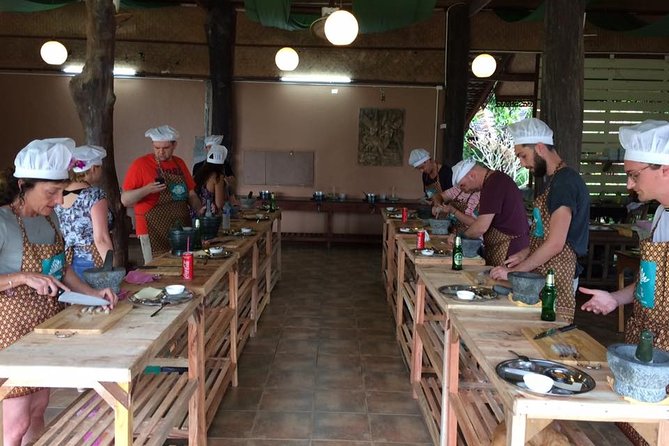
This class runs about 5 hours, and it’s designed to keep momentum from start to finish. Here’s the flow you can expect, in plain terms:
3:00 pm – Pickup from your hotel or meeting point
You’re collected and brought to Sukho Cuisine. This is helpful in Koh Lanta because travel time can eat up your evening plans.
4:00 pm – Introduction: herbs, spices, Thai rice, and condiments
This is the setup hour. You learn what you’re about to cook and why those ingredients matter. It’s also where questions make the biggest difference, because you’re building understanding before heat hits.
5:00 pm – Cook an appetizer and eat it
You start cooking the first dish and then sit down to enjoy it. Eating your work soon helps you connect cause and effect—taste changes based on what you do in the pot.
6:00 pm – Cook Thai soup and eat it
Soup is a great teaching tool because it forces balance. People tend to focus on paste and spice, but soup teaches restraint too: you learn how Thai flavor should feel layered rather than harsh.
7:00 pm – Cook mean cot, make home-style meat curry paste, and prepare Thai dessert
This is the busy block where you’re doing more than one cooking task. The schedule includes meat curry paste work and also ends with dessert, which means you’ll keep tasting as you go.
8:30 pm – Certificate and fruit platter after class
At the end, you get a certificate plus a fruit platter. It’s a nice way to close the loop after cooking and eating.
9:00 pm – Return to your hotel
You’re done at a reasonable hour, and you don’t have to figure out transport.
The biggest advantage of this schedule is pacing. You get enough instruction time to feel confident, then enough eating moments to keep motivation up.
What the chef teaching style brings to the table
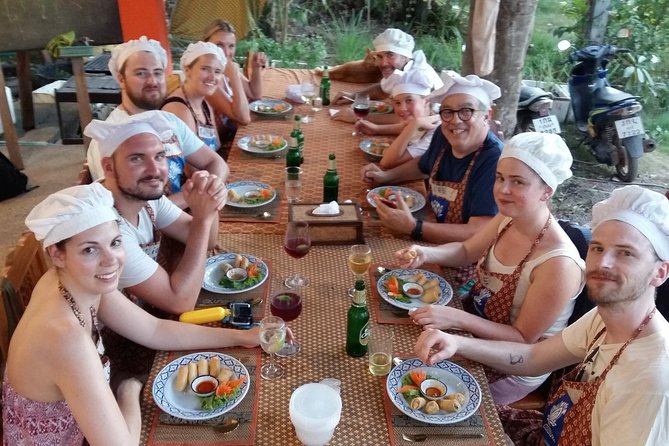
The most praised part of this experience is the teaching approach. Multiple people mentioned that the chef is very supportive, funny, and really focused on details. One name that came up in the reviews is Chef Pak, and the common thread is that his instruction is engaging, not lecturing.
Here’s what that means for you in real life:
- You’re more likely to remember techniques because you’re having fun while learning.
- You get clearer guidance on how Thai flavor should taste, not just how it’s made.
- Even if you don’t cook much at home, you won’t feel lost—because you’re taught during the action.
And since the class limits capacity (max around 10), you’re not stuck with the “good luck, figure it out” vibe that some group classes create.
Diet choices and spice control: make it yours
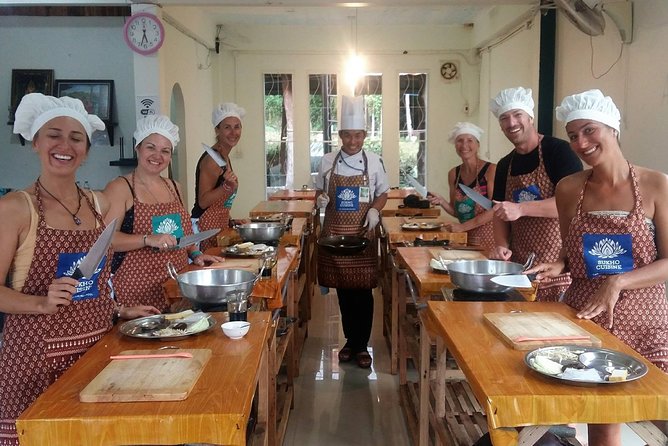
Thai cooking can be intense, but you don’t have to live on the far end of the chili scale. The class explicitly states that all dishes can be vegetarian or vegan, and you can also choose spicy or non-spicy versions to match your taste.
This is a big practical win. It means the class isn’t just “one substitution and hope for the best.” You should be able to cook and eat in the same session without feeling like you’re being sidelined.
If you’re traveling with someone who can’t handle heat, this flexibility makes shared meals easier. And if you’re vegan or vegetarian, you’ll likely enjoy this more than generic cooking demos that assume everyone eats the same way.
Pickup, group size, and the comfort factor
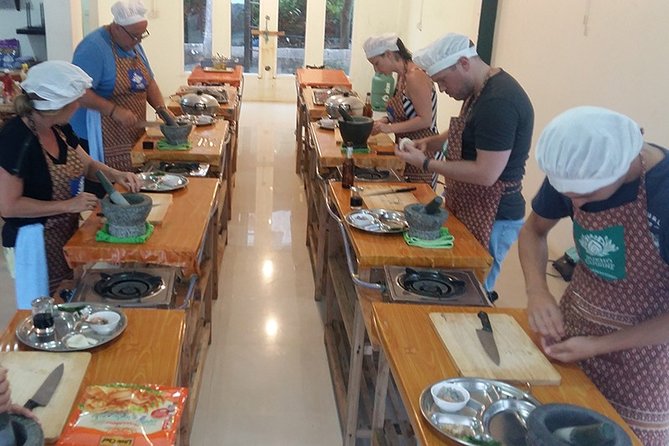
Logistics matter because they decide whether you enjoy the class or just survive it. This one includes pickup offered and transportation back to your hotel. It also uses a mobile ticket, which is simple if you like keeping everything on your phone.
The class size is kept tight. It’s described as capable of taking 10 participants at the time, with a maximum of 12. Your experience should feel like a small working group rather than a crowded show.
You’ll meet at Sukho Cuisine Thai Cooking School at เลขที่ 667 หมู่ 2 (คลองโขง), Tambon Sala Dan, Amphoe Ko Lanta. If you prefer to plan ahead, it’s also noted as near public transportation, which is reassuring if you ever need an alternate route.
Price and value: is $79.44 worth it?
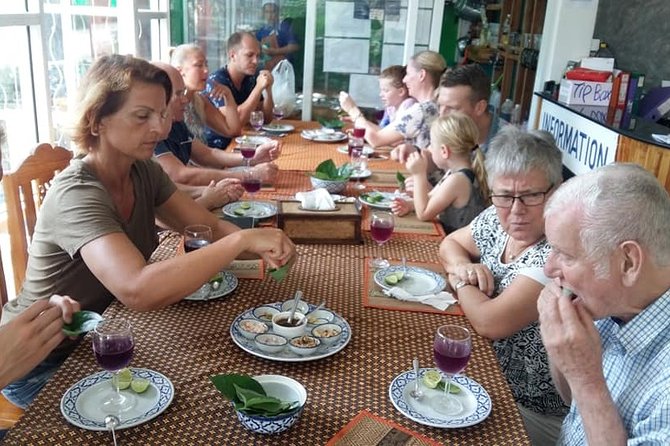
At $79.44 per person, this is not the cheapest thing you can do in Koh Lanta. But it’s also not just paying for ingredients and a table.
You’re paying for:
- guided instruction from a Thai master chef level professional (with strong English command mentioned)
- a structured 5-hour lesson with you cooking multiple dishes
- curry paste made from scratch (time + skill value)
- hotel pickup and return transportation included
- a certificate and cooking guide to take home
- the food you cook, plus a fruit platter at the end
When you compare that to the cost of eating out a lot during a vacation, it can come out fair—especially because you’re getting skills you can reuse. If you actually cook at home, or you want to stop guessing at Thai flavor, this class feels like more than a meal.
Where the price might feel less “worth it” is if you’re not interested in cooking. If your goal is mostly to sit and eat with minimal involvement, you’d probably want to think carefully. The class does offer an option: someone who comes but doesn’t want to cook pays an extra 700 Baht per person, and that person still includes share of food and transportation.
Who should book this class (and who might skip it)
This is a great pick if you:
- want a hands-on Koh Lanta Thai cooking class with real technique, not just tasting
- like eating dinner that you can explain afterward (because you cooked it)
- enjoy spice control and want vegetarian/vegan flexibility
- prefer small-group attention
It might be less ideal if:
- your schedule only fits around the other days (class is only Tue/Thu/Fri)
- you want a casual, low-effort activity (this involves cooking with knives and gas)
Also, if you’re traveling with kids, note the minimum age is 9. That’s a practical safety detail, not a deal-breaker, but it helps you plan.
Should you book this dinner cooking class?
I’d book it if you want Thai cooking skills you can use, plus a real sit-down meal in the middle of your vacation—not just a one-off food experience. The combination of curry paste from scratch, structured teaching, and small-group attention hits a sweet spot for value.
I’d hesitate if your dates don’t line up with Tue/Thu/Fri or if you’re looking for something purely passive. In that case, you might enjoy another type of evening out more.
FAQ
What days are the cooking classes available?
The class is available only on Tuesdays, Thursdays, and Fridays.
How long is the Dinner Cooking Class with Thai Master Chef?
It runs for about 5 hours (approximately).
Is hotel pickup included?
Pickup is offered, and the experience includes free transportation to and from your hotel.
How many people are in the group?
The class capacity is limited to a maximum of 12, with the activity capped at 10 travelers.
Can I choose vegetarian, vegan, or different spice levels?
Yes. All dishes can be vegetarian, vegan, spicy, or non-spicy to match your preferences.
What is the minimum age to attend?
Children must be 9 years or older to attend the class because knives and gas are involved.