REVIEW · BEPPU
Cooking Class: Make a Local Delicacy in a Japanese House
Book on Viator →Operated by Space Beppu · Bookable on Viator
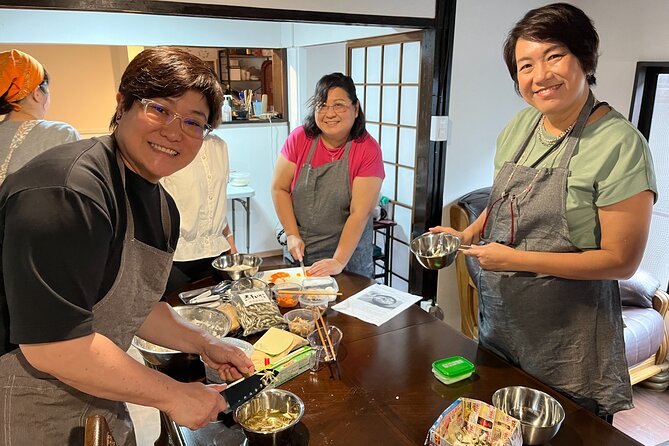
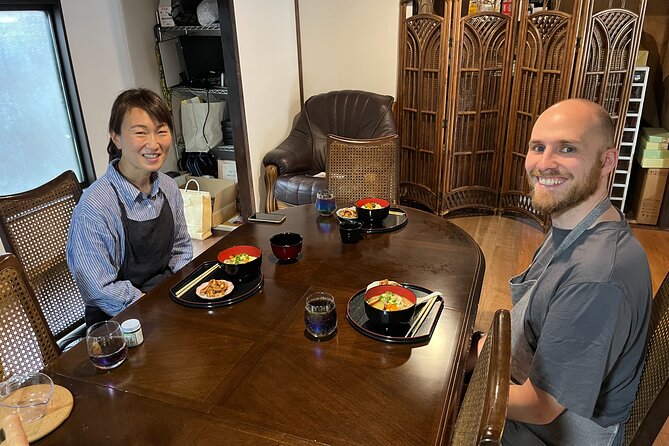
Soup-making in a century-old house feels special. In Beppu, this cooking class is built around dango jiru, a comfort soup made by hand from simple dough and local vegetables, then finished with the sharp kick of yuzukosho. I really like how hands-on it is, so you are not just watching while someone else cooks. I also like the warm, chatty vibe with hosts such as Masa-san, Mari-san, and Aya-san. One thing to consider: if you want the alternatives like ramen noodles or onigiri instead of dango soup, you need to request that at booking.
This is also a genuinely “local house” setup, not a showroom kitchen. You’ll start at Space Beppu, then cook inside a 100+ year old Japanese house, with step-by-step guidance and all ingredients provided. The session runs about 1 hour 30 minutes, and it’s set up for small groups only—just your party—so it feels less rushed than many big-group cooking tours.
In This Review
- Key things to know about making dango jiru in Beppu
- A century-old Japanese house in Beppu is the real “course”
- What you’ll make: dango noodle soup (dango jiru) the Oita way
- Your cooking flow: apron on, dough first, broth last
- Yuzukosho and the flavor lesson you’ll actually use later
- Optional swaps: ramen noodles or onigiri with miso soup
- Meet at Space Beppu, then get into the old-house kitchen
- Price and time: is $61.90 worth your hour and a half?
- Who this cooking class suits best (and who might skip)
- Should you book this dango jiru cooking class?
- FAQ
- FAQ
- What dish will I learn to make?
- How long is the cooking class?
- Is the class private for my group?
- Are ingredients and tools provided?
- Can someone help if I don’t speak Japanese?
- What’s the meeting point?
- Is there free cancellation?
Key things to know about making dango jiru in Beppu
- Hand-shaped dough: You knead, rest, then stretch and form the noodle-like dumplings before they go into the broth.
- Oita Prefecture comfort food: Dango jiru is a local specialty, and you’ll learn why it matters in regional food culture.
- Seasonal vegetables in the bowl: Expect hearty add-ins like taro potato and burdock, not generic soup veggies.
- Finished with yuzukosho: That yuzu pepper gives the soup a bright, punchy edge.
- Choice at booking: You can request ramen noodles or onigiri with miso soup as an alternative to dango soup.
- English support available: An English interpreter can be arranged on request with no additional fee.
A century-old Japanese house in Beppu is the real “course”
When I see a cooking class happening inside a 100+ year old Japanese house, I pay attention. The setting matters because you get that sense of a normal household workflow, not a stage-managed demonstration. In this class, the house is part of the experience, and past sessions have included a small local crafts area you can look around before you start cooking.
The tone is also refreshingly human. Even with a structured recipe, the hosts keep it conversational, and that’s where the value really shows. People have talked about how Masa-san and his assistant team were genuinely fun to talk to, not just polite instructors.
The best part for you: you’re learning techniques you can actually repeat later. Kneading and shaping dough by hand is not something you can fake with a premade packet, and that is the point here.
What you’ll make: dango noodle soup (dango jiru) the Oita way
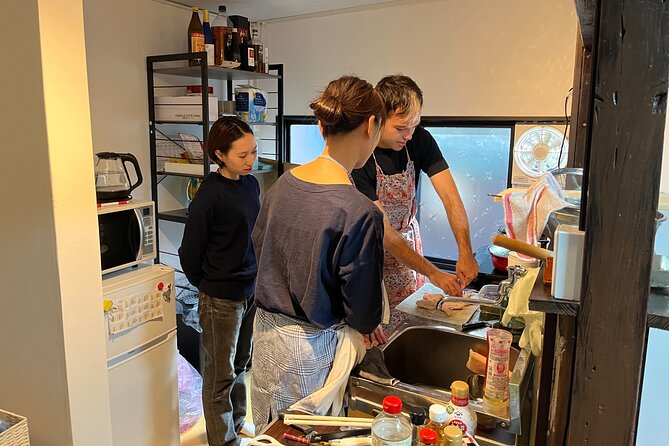
This class centers on dango noodle soup, a traditional delicacy from Oita Prefecture. The method starts simple: knead wheat or rice flour with water, then let the dough rest so it becomes workable. After that, you stretch and shape the dough by hand, which is exactly the kind of tactile cooking skill you’ll remember.
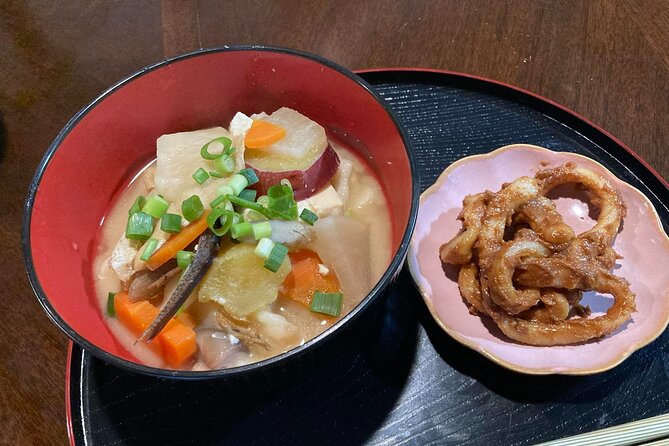
Then comes the broth and the heartiness. Dango jiru is a wholesome soup, and it’s typically built with seasonal vegetables such as taro potato and burdock. These ingredients give the soup substance and a home-style feel. The flavor comes from seasonings like miso or soy sauce, depending on what the teacher has you prepare.
If you are worried it will be bland because it sounds basic, don’t. The dough texture plus the savory broth gives it contrast. And then you finish with local seasoning: yuzukosho (yuzu pepper). That last step is where the soup stops tasting like plain comfort food and starts tasting like Beppu regional food.
Your cooking flow: apron on, dough first, broth last
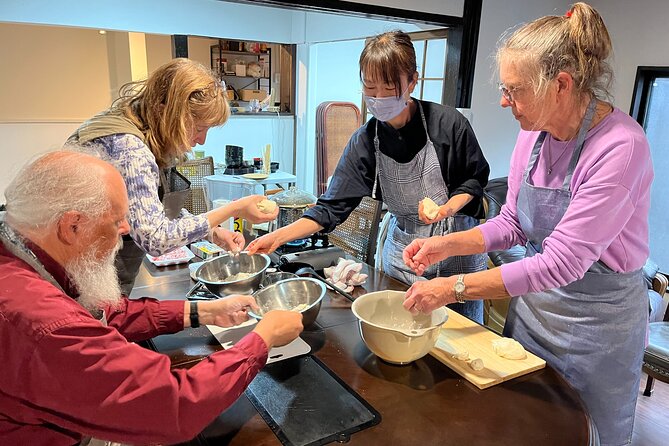
The class is set up as a step-by-step build, with you cooking rather than simply assembling. You’ll be given an apron right at the start, then you’ll follow the teacher’s guidance as ingredients go from flour to dough, and dough to handmade noodle-like pieces.
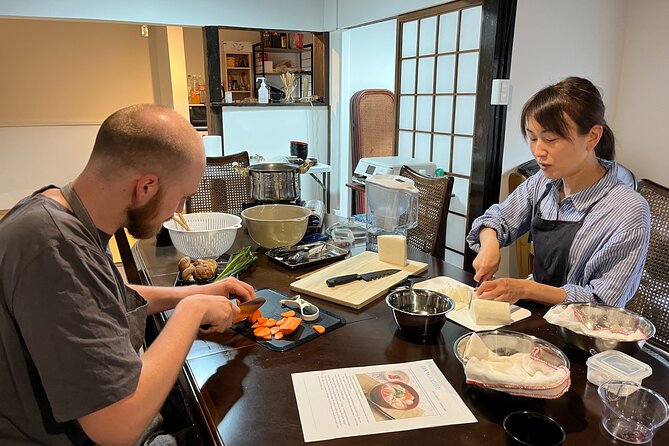
A big practical win: all ingredients are provided. That means you don’t need to hunt down specialty flours or worry that your supply bag is missing something. You also don’t need to be a confident home cook. This is structured instruction, and the pace is designed around group participation.
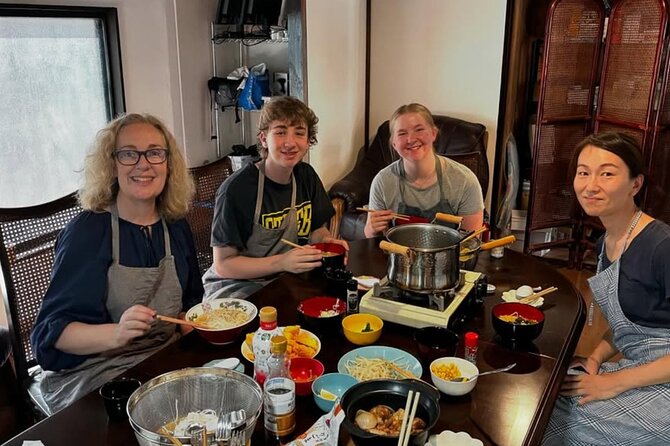
After you finish cooking, you get to sit down and enjoy what you made. That’s not a throwaway detail. The best classes have a clear payoff moment, and here the payoff is eating your own dango jiru right where you cooked it. If you like the idea of learning a technique and then immediately tasting the result, this format fits you well.
One small note for your expectations: this is not a full-day food tour. It’s a focused lesson that ends with a meal. So go in hungry, but also ready to leave with a pretty clear sense of what you just learned.
Yuzukosho and the flavor lesson you’ll actually use later
If you want to understand Japanese regional flavors, this soup gives you a clear starting point. You’re tasting how dough and broth work together first. Then you add yuzukosho, which changes the entire character of the bowl.
Yuzu pepper is the kind of seasoning that can turn “good” into “memorable,” and the class uses it to make your final bowl feel unmistakably local. For you, that’s useful because it’s not just about eating; it’s about learning a finishing move you could replicate later.
If you prefer milder flavors, I suggest telling the instructor you’d like a lighter touch. You don’t have to treat this as a spicy test. The goal is to enjoy your bowl, and the teacher can guide you in how much seasoning to use.
Optional swaps: ramen noodles or onigiri with miso soup
This class does more than one thing, but there’s a key timing detail: alternatives must be requested at booking. If you’re not in the mood for dango jiru on the day, you can ask to make ramen noodles or onigiri with miso soup instead.
That choice matters because it affects what you’ll actually learn with your hands. Dango jiru focuses on kneading and shaping dough into small forms for soup. Ramen noodles and onigiri require different techniques, so you’re not just swapping the menu—you’re swapping the cooking skill practice.
If you like variety, you can pick based on what you already enjoy. Ramen noodles are familiar if you love bowls of Japan’s best-known comfort food. Onigiri fits if you want something more portable and rice-forward, paired here with miso soup.
Meet at Space Beppu, then get into the old-house kitchen
You meet at Space Beppu Japan in Beppu’s Chiyomachi area. It’s near public transportation, which matters because you don’t want your meal day to turn into a navigation puzzle.
From that starting point, the class experience takes place back at the meeting location area. You’re not committing to a long route across town. This is helpful if you’ve got other Beppu plans like sightseeing or onsen time after your meal.
You’ll also use a mobile ticket. For most people, that’s convenient: you don’t need to print anything or keep track of paper confirmations. I still recommend saving the ticket on your phone in case your connection is spotty.
Price and time: is $61.90 worth your hour and a half?
At $61.90 per person for about 1 hour 30 minutes, this isn’t a cheap snack workshop. But it is priced in the “hands-on skill + local house + meal” category. You’re paying for more than ingredients. You’re paying for instruction, translation support if you need it, and the fact that it’s held in a century-old Japanese house rather than a generic venue.
Here’s why it can be good value for you:
- You cook and eat what you make, which reduces the feeling that you paid for a photo stop.
- The group is private (just your group), so the attention is less diluted.
- All ingredients are provided, so you avoid the hidden cost of missing items.
- If you’re traveling with friends, group discounts may apply, which can lower your effective per-person cost.
The booking timing is also a clue. It’s commonly booked around 59 days in advance, so there’s steady demand. If Beppu is in your plan, I’d treat this as something to lock in early rather than waiting until the last minute.
Who this cooking class suits best (and who might skip)
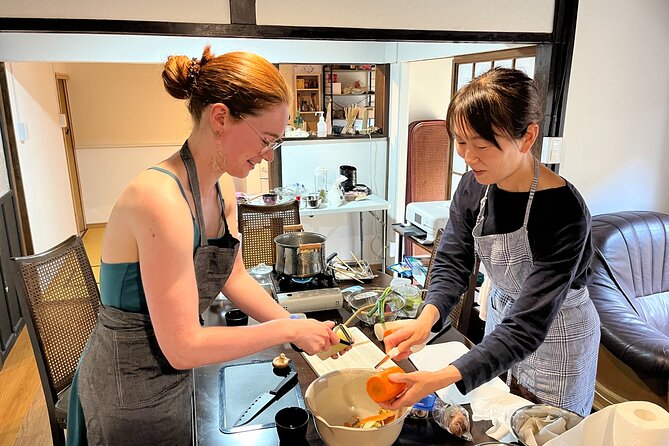
This class is a strong fit if you want a hands-on food experience in Beppu that’s not just tasting. If you enjoy learning techniques—kneading dough, shaping pieces, understanding how seasonings change flavor—you’ll likely have a good time.
It’s also a good option if you want local conversation. People have noted how naturally the hosts chat and how the welcome feels authentic. That is exactly what you want from a home-style cooking experience.
You might reconsider if you dislike soup-style meals, because the main payoff is eating a bowl. You should also think carefully if you are very picky about flavor profiles. Since the class uses miso or soy sauce and finishes with yuzukosho, your best move is to speak up early if you prefer very mild seasoning.
Should you book this dango jiru cooking class?
I’d book it if you want a focused, local food skill in Beppu: hand-made dough, seasonal vegetables like taro potato and burdock, and a finishing step with yuzukosho. The 100+ year old house setting adds real atmosphere, and the private group format makes it feel personal rather than production-line.
If you’re choosing between this and a more general food tasting, pick this one for the cooking lesson. If you’re choosing based on dish preference, decide early whether you want dango jiru or you plan to request ramen noodles or onigiri at booking.
If you care about English support, good news: an interpreter is available on request at no extra fee. That can turn a cooking class from intimidating to confidently fun.
FAQ
FAQ
What dish will I learn to make?
The class focuses on making dango noodle soup (dango jiru). You can also request an alternative at booking, such as ramen noodles or onigiri with miso soup.
How long is the cooking class?
It lasts about 1 hour 30 minutes.
Is the class private for my group?
Yes. Only your group participates.
Are ingredients and tools provided?
Yes. You’ll be provided with ingredients, and you’ll also get an apron.
Can someone help if I don’t speak Japanese?
An English speaking interpreter is available on request at no additional fee.
What’s the meeting point?
You start at Space Beppu Japan in Beppu’s Chiyomachi area (874-0942 Oita, Beppu, Chiyomachi, 12 12番9号).
Is there free cancellation?
Yes. You can cancel for a full refund up to 24 hours before the experience starts. If you cancel less than 24 hours before, you won’t receive a refund.