REVIEW · BAVARIA
Bavarian Schnitzel Cooking Class in Oberaudorf Farmhouse
Book on Viator →Operated by Adventure Bavaria · Bookable on Viator
Schnitzel gets personal in Oberaudorf. You’ll cook inside a local farmhouse setting (150-year-old vibes) and learn the real rhythm of hands-on Wiener Schnitzel plus strudel-style dessert energy, with a meal you eat fresh in the kitchen. I love the full see-do-cook flow, from cappuccino and Bavarian starters to pounding cutlets with the schnitzel hammer, and I also love that you get recipe cards to recreate it later. The main drawback is the price: at $252.05 per person for about four hours, you’ll want to be sure you really enjoy cooking and eating what you make.
This is also a small-group class (max 10), taught in English, with pickup offered from Oberaudorf train station for an extra fee. You’ll start at Bahnhof Oberaudorf at 10:00 am, then end back near the meeting point, which makes it a clean day trip if you’re staying around Munich. One thing to consider: you’re traveling out of the city to a quieter alpine town, so the day feels more like a focused food mission than a sightseeing marathon.
In This Review
- Key Highlights at a Glance
- Oberaudorf Day Trip From Munich: Worth the Train Ride
- Inside the Werkstatt Kitchen: Old-World Atmosphere, Modern Comfort
- What You Cook: Pretzels, Wiener Schnitzel, and Kaiserschmarrn
- Starter: Pretzels with Bavarian Spreads
- Main: Veal Wiener Schnitzel with Classic Sides
- Dessert: Kaiserschmarrn (the sweet flip-and-rip finish)
- The Class Flow: How the Timing Keeps You From Getting Lost
- Hosts and Teaching Style: Anna, Tyler, and the Team Energy
- Price and Value: What $252.05 Buys in Real Terms
- Best Fit: Who Should Book This Cooking Class
- Practical Tips Before You Go
- Should You Book This Bavarian Schnitzel Class?
- FAQ
- What time does the Bavarian cooking class start?
- How long is the experience?
- Is the class offered in English?
- Do I get pickup or drop-off from Oberaudorf station?
- Where do I meet the team?
- What dishes will we make during the class?
- How many people are in the group?
- Do I get recipes to take home?
Key Highlights at a Glance
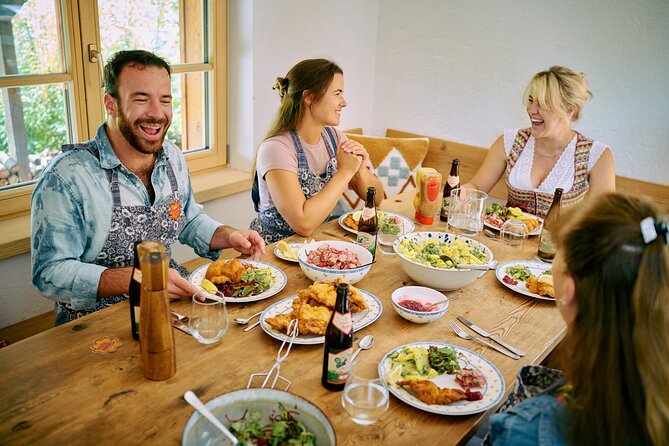
- 150-year-old farmhouse setting in Oberaudorf with modern kitchen comfort
- Pounding and breading Wiener Schnitzel using the classic schnitzel hammer
- A complete Bavarian menu: pretzels and spreads, schnitzel with sides, and kaiserschmarrn
- Small group (up to 10) so you actually get hands-on help
- Recipe cards to take home so your kitchen can keep the trip going
Oberaudorf Day Trip From Munich: Worth the Train Ride
This class is built around the Oberaudorf setting, not the Munich setting. You’ll meet at Bahnhof Oberaudorf (Bahnhofpl. 2), and the kitchen is about a 5-minute drive from there. Trains run hourly between Munich and Oberaudorf, so you can plan without complicated transfers.
If you’re using public transit, aim to keep your schedule simple. When you arrive in Oberaudorf, look for the people in lederhosen and dirndl on the platform. It’s an easy visual cue when you’re stepping off the train.
One practical note I liked from real-world experience: the ride from Munich is usually smooth and manageable for Americans who are still getting comfortable with German trains. If you want to make it even easier, sit closer to the front two coaches when departing Munich, because a train split can happen later on the route. That tiny habit can reduce stress if your portion of the train is less crowded or less clearly marked.
Also plan for time in the village after the class. Oberaudorf is small and walkable. One good move is to take the short walk back through town rather than defaulting to a drive. It adds a bit of atmosphere to the day, and it doesn’t cost you much time.
Inside the Werkstatt Kitchen: Old-World Atmosphere, Modern Comfort
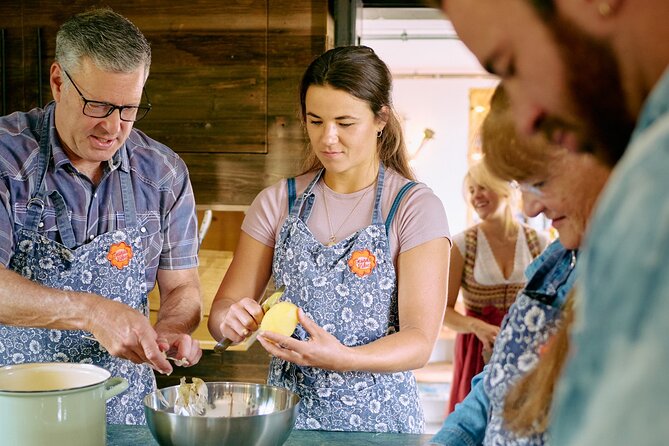
The cooking happens at the Adventure Bavaria Werkstatt Kitchen. It’s described as newly renovated, with modern amenities plus old-world farmhouse vibes. That mix matters more than you might think.
A class like this is hands-on and a bit busy. You’ll be pounding cutlets, breading, frying, and then turning to dessert. A kitchen that’s comfortable to work in helps you focus on technique instead of fighting the space.
The setting also adds the right tone for Bavarian food. Schnitzel isn’t just a dish; it’s a process. In this kitchen environment, you get to treat it like a real local meal, not a staged demo.
And because the group is capped at 10, you’re not squeezed into a big crowd. That translates into more personal guidance and less waiting around for your turn.
What You Cook: Pretzels, Wiener Schnitzel, and Kaiserschmarrn
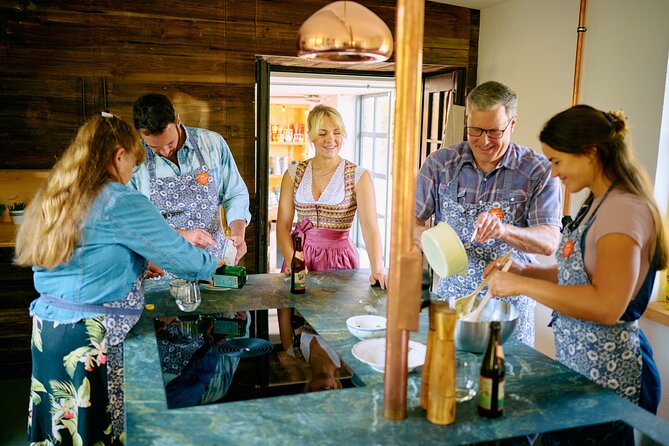
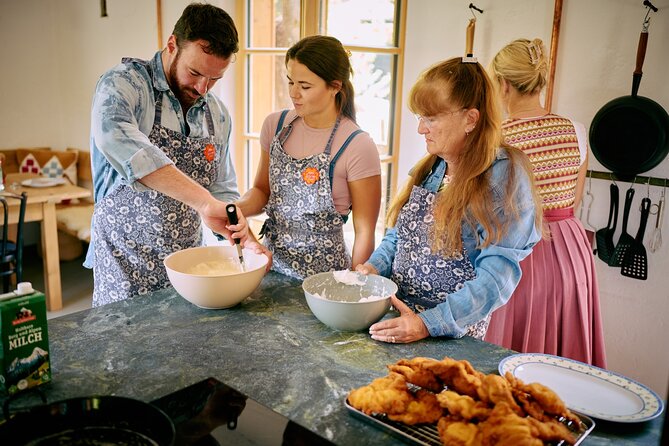
This class is centered on one key thing: you do the work. You don’t just watch food happen. You roll up your sleeves, put on an apron, and follow the flow from starter to main to dessert.
Starter: Pretzels with Bavarian Spreads
You’ll start with cappuccino and Bavarian appetizers. The starter is pretzels served with spreads that feel unmistakably Bavarian:
- Obazda, a paprika cheese spread
- Blue cheese with fresh black pepper
- Butter with fresh herbs
This is a good start because it’s forgiving while you’re getting oriented. You can taste, talk, and get a feel for the day before the frying begins.
Main: Veal Wiener Schnitzel with Classic Sides
The main dish is Wiener Schnitzel, made with veal. The class teaches the whole sequence:
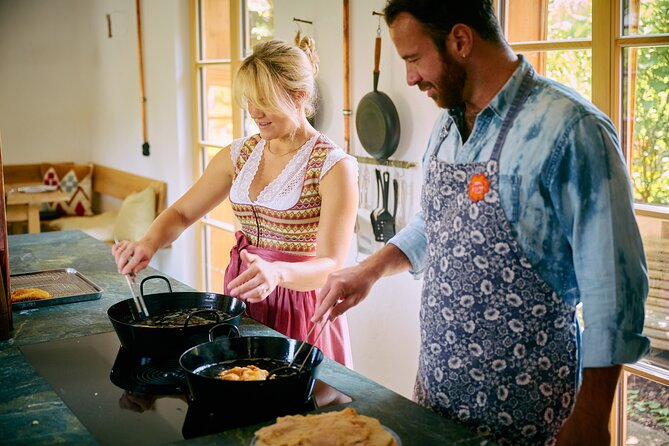
- You pound each cutlet to a thin evenness using the Adventure Bavaria schnitzel hammer.
- You bread and fry each piece one at a time.
- You aim for schnitzel that’s crispy, puffed, and golden.
That one-at-a-time detail is not just drama. It’s about temperature and control. When schnitzels are crowded, they cook unevenly and don’t crisp the same way. Frying piece by piece helps you get the texture that makes schnitzel worth the effort.
You’ll also learn how the schnitzel is served and how the flavors play:
- Lingonberry jam
- Lemon
And you’ll get three sides as part of the meal experience:
- Bavarian-style potato salad
- Radish salad
- A fresh green salad
The sides matter because they’re the frame for the schnitzel. Potato salad gives body and tang. Radish salad brings crunch and bite. The green salad keeps it light so the fried food doesn’t dominate the whole plate.
Dessert: Kaiserschmarrn (the sweet flip-and-rip finish)
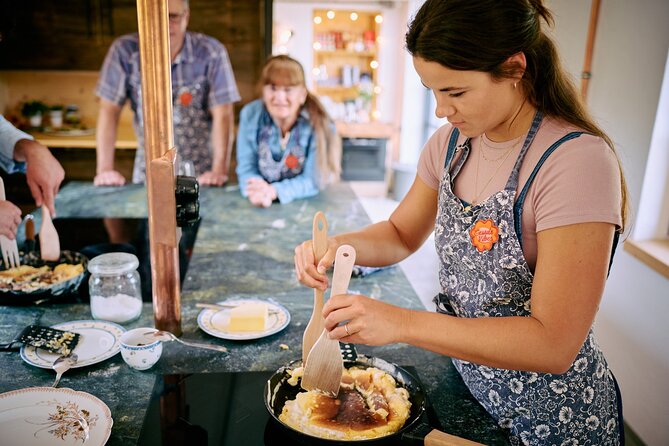
While the schnitzel fries, you prepare the dessert batter for kaiserschmarrn. Then you rest and time things so the meal can happen fresh.
Kaiserschmarrn is an alpine-style pancake you rip and flip after cooking. Here’s how the class describes it: once the last schnitzel is done, the batter rests, then you sit down to eat while it is fresh. Don’t get too cozy though, because you return to the kitchen to finish the dessert properly.
The final touches are a sweet bite and, in many cases, a chance to try schnapps alongside coffee.
The Class Flow: How the Timing Keeps You From Getting Lost
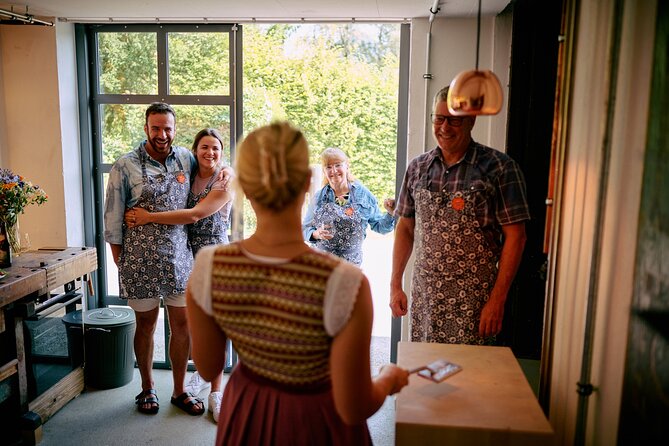
What I like most about this experience is the built-in structure. It’s set up so you’re always doing something, but not in a chaotic way.
Here’s the rhythm you can expect:
- Welcome with cappuccino and appetizers
- Prep classic sides (potato salad and radish salad)
- Pound, bread, and fry schnitzel
- Switch to dessert batter while schnitzel is cooking
- Eat the main meal together while things are fresh
- Finish kaiserschmarrn with flipping and ripping
- Wrap with coffee, dessert, and possibly schnapps
- Leave with recipe cards
This timing is useful for first-timers. If you’ve never made schnitzel before, frying can feel intimidating. But the class pace reduces guesswork because you’re guided at each step, and you’re not trying to invent the process on the fly.
Group size helps too. When there are up to 10 people, the hosts can spot issues early, answer questions in the moment, and still keep things moving.
Hosts and Teaching Style: Anna, Tyler, and the Team Energy
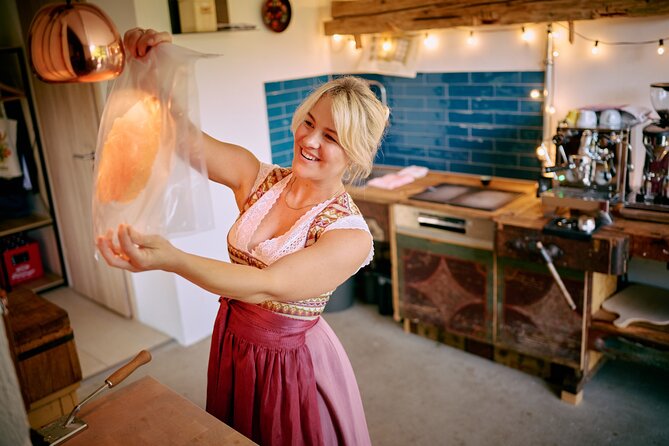
The class is led by Anna, with Tyler also involved, and you may meet additional team members during the day. In reviews, guests specifically mention Anna as the person delivering history and technique, and they describe the hosts as warm, friendly, and welcoming.
One review detail I found especially meaningful: Anna is described as teaching using recipes and lessons inspired by her Oma, and that family connection comes through in the explanation style. You’re learning technique, but also the why behind it, like how to think about thickness, crispness, and serving choices.
If you enjoy talking while you work, this kind of teaching is a strong match. It’s not just a checklist. You’ll get food culture context while you’re actually cooking.
And yes, they can handle different needs. One guest noted vegetarian accommodation was done with ease. If you have a dietary requirement, bring it up during booking so they can plan accordingly.
Price and Value: What $252.05 Buys in Real Terms
At $252.05 per person for about four hours, this is not a budget activity. So ask yourself what you want from the day.
For your money, you’re paying for:
- A small-group hands-on cooking class (max 10)
- A full Bavarian meal sequence you cook and eat
- Technique coaching for schnitzel frying and assembly
- Dessert production (kaiserschmarrn)
- Recipe cards to take home
- English-language instruction
If you’ve cooked schnitzel before, this can still be valuable because the class isn’t only about assembling food. It focuses on precision steps like pounding thinness and managing crispness while frying.
If you’re a true beginner, it’s also a decent bet because the process is guided and you’re not expected to master everything alone. You’re also eating the result, which means you’re getting immediate payoff instead of just hoping it turns out at home later.
The extra cost to add pickup/drop-off from the station is worth considering only if you’d rather reduce walking and minimize schedule friction. The station is just a short drive away, and the town walk afterward is often easy and pleasant.
Best Fit: Who Should Book This Cooking Class
This class is best for:
- Food lovers who want hands-on cooking, not passive watching
- People who enjoy Bavarian classics and want to learn how they’re built
- Families and mixed-age groups, since guests have described multi-generation experiences
- Anyone traveling from Munich who wants a focused day in a smaller alpine town
It’s less ideal if:
- You want a mostly sightseeing day with long walking tours and lots of stops
- You’re only interested in eating, not cooking
- You’re price-sensitive and mainly want a casual meal experience
One plus for the right traveler: because Oberaudorf is quieter and scenic, the day often feels like a real break from city pace. Add-ons like a short hike or a nearby summer toboggan ride can turn the day into a full alpine memory, though those are optional ideas rather than part of the core class.
Practical Tips Before You Go
These small choices can make the day smoother:
- Arrive with enough time to get to Bahnhof Oberaudorf and spot the hosts in traditional dress.
- Plan for a 4-hour block starting at 10:00 am. It’s a full session, not a quick stop.
- Bring a light appetite. You’ll eat what you make, including schnitzel and dessert.
- If you have dietary needs, communicate them when booking.
If you can, keep your schedule flexible enough to allow for a short village walk afterward. The town time helps the day feel complete.
Should You Book This Bavarian Schnitzel Class?
Book it if you want a true Bavarian cooking day with hands-on schnitzel technique, a full meal, and real take-home recipes. I especially think it’s a great match for first-time schnitzel makers who want crisp results without guessing.
Don’t book it if you’re not into cooking. This is not a look-but-don’t-touch experience. Also, if $252.05 per person feels steep, compare it to how many other meals and activities you could pack into the same four hours. The value is strongest when you’ll use the recipe cards and actually cook the dishes again at home.
If you’re deciding between Munich-only plans and a day trip into the Bavarian Alps area, this one is a neat compromise: you get food culture you can taste and recreate, plus a calm alpine town outside the big-city buzz.
FAQ
What time does the Bavarian cooking class start?
It starts at 10:00 am at Bahnhof Oberaudorf.
How long is the experience?
The cooking class lasts about 4 hours.
Is the class offered in English?
Yes, the class is offered in English.
Do I get pickup or drop-off from Oberaudorf station?
Pickup and drop-off from the Oberaudorf train station are offered for an additional cost. The station is about a 5-minute drive from the kitchen.
Where do I meet the team?
You meet at Bahnhof Oberaudorf, Bahnhofpl. 2, 83080 Oberaudorf, Germany.
What dishes will we make during the class?
You’ll make Bavarian sides like potato salad and radish salad, then prepare Wiener Schnitzel, and finish with kaiserschmarrn.
How many people are in the group?
The class has a maximum group size of 10 travelers.
Do I get recipes to take home?
Yes, you’ll receive Bavarian recipes to enjoy at home after the class.