REVIEW · BATTAMBANG
Battambang: Cooking Class and Market Touring
Book on GetYourGuide →Operated by Angkor Guide Adventure · Bookable on GetYourGuide
Cooking and shopping in one smooth 4-hour block is a great deal. This Battambang experience sends you from a local market to a Khmer home kitchen, where you cook 3 real dishes and then eat what you made. I like that it feels practical and local, not like a showroom class.
Two things I really like: you get to choose fresh ingredients with an English-speaking guide, and you cook with step-by-step support from a local instructor in a home setting. One consideration: it’s a market-first format, so if you dislike crowded stalls or strong morning heat, you may want to pace yourself and come prepared with sun cover and water.
In This Review
- Quick reasons this works in Battambang
- Tuk-tuk pickup, market start, and the 4-hour rhythm
- Market touring: choosing ingredients you can taste later
- The cooking lesson in a local home kitchen
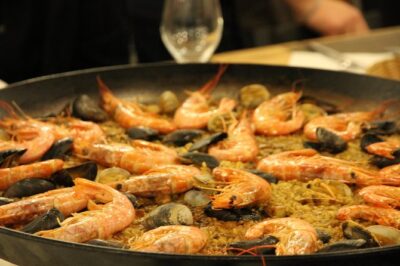
- Your 3-course meal: eating what you made
- Price and value: what $25 really buys
- Who should book, and who should consider a different activity
- Should you book the Battambang cooking class?
- FAQ
- How much does the Battambang cooking class cost?
- How long is the experience?
- What time is hotel pickup?
- Do I get a tuk-tuk ride to and from the class?
- Is a market visit included?
- What will I cook?
- Is there a vegetarian option?
- What’s included in the price?
- What is not included?
- Can I cancel or change my plans?
Quick reasons this works in Battambang
- Hotel pickup plus tuk-tuk rides: door-to-door comfort for a 9:30AM start
- Market tour with an English-speaking guide: you pick ingredients before you cook
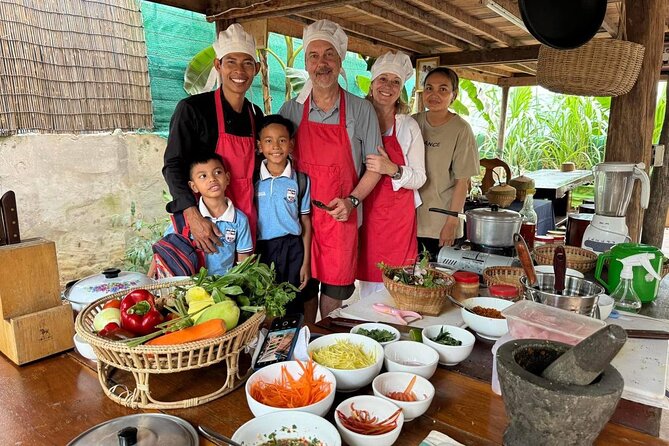
- You cook 3 dishes: two savory courses plus a sweet dessert
- A sit-down 3-course meal: you don’t just sample, you actually eat your work
- Vegetarian option available: you can participate without missing the menu
Tuk-tuk pickup, market start, and the 4-hour rhythm
This runs for about four hours and starts with hotel pickup around 9:30AM, with you asked to be ready roughly 15 minutes before the activity begins. That timing matters more than it sounds. A late start can turn a market visit into a rushed scramble, and rushed markets lead to less confidence when you’re choosing ingredients. A morning start usually means you can move through stalls at an unhurried pace and get your bearings before the cooking part begins.
You’ll ride in a traditional tuk-tuk both to and from the class. It’s not just a photo moment. It keeps the day light and easy—Battambang’s neighborhoods feel more “lived in” when you’re not fighting traffic on foot or juggling taxis while you’re hungry and cooking later.
The welcome drink is a small detail, but it helps you shift from travel mode into host-mode. You arrive, you’re offered something to sip, and then the day gets organized: market first, home cooking next, then lunch. That clean structure is one reason this feels good value at $25 per person—because the price isn’t just for a recipe lesson. It also covers market touring with a guide, preparation of three dishes, and hotel pickup/drop-off.
If you’re the type who gets frustrated with classes that feel too theoretical, this format should suit you. You’re not waiting around to watch someone else work. You’re making decisions at the market, then putting them into practice at the stove.
You can also read our reviews of more tours and experiences in Battambang.
Market touring: choosing ingredients you can taste later
The market portion is where the experience becomes more than cooking. You’ll visit a local market with an English-speaking guide, walk through the stalls, and help choose fresh ingredients. That’s the payoff: you learn what fresh means in practice, not just in theory.
In a home cooking class, ingredients aren’t interchangeable. If something is past its best, it shows up in the final dish. When you select items yourself, you’re more likely to remember what you used and why. You also get a chance to ask basic questions in real time—how sellers label produce, what’s typical to buy, and what the cooking teacher expects you to bring into the kitchen.
Practical note: markets can be busy and tactile. Even if you’re not shopping for souvenirs, you’ll be close to displays and people moving around. Wear something comfortable for walking and bring shoes you don’t mind getting slightly dusty. Also, you’ll likely feel hot during parts of the day, so pack light sun protection if you have it.
What I like about this market-first approach is that it creates a natural reason for paying attention. When you later cook your three Khmer dishes, you’re not guessing. You’re connecting your ingredient choices to flavors and textures you can actually taste during your meal.
One possible drawback: markets can be overwhelming if you prefer quiet sightseeing. If that’s you, treat this as a guided walk with a job—your job is to choose ingredients and ask questions. Focus on that, and the noise becomes background.
The cooking lesson in a local home kitchen
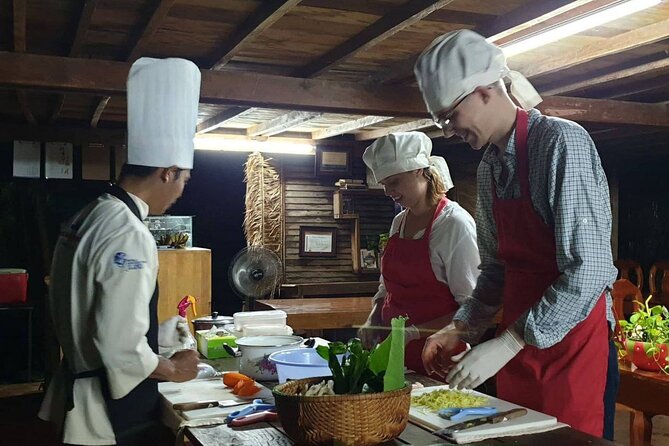
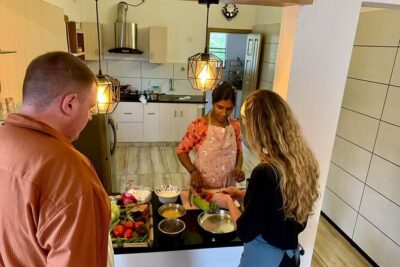
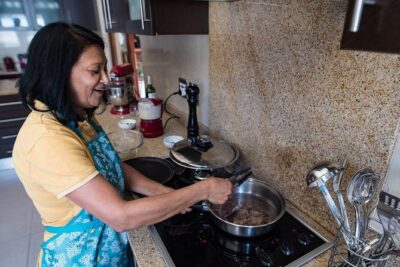
After the market, you head to your host’s home for the cooking class. This matters. A local home kitchen typically feels less rigid than a cooking studio, which can make the learning curve friendlier—especially if you’re not used to cooking Khmer dishes.
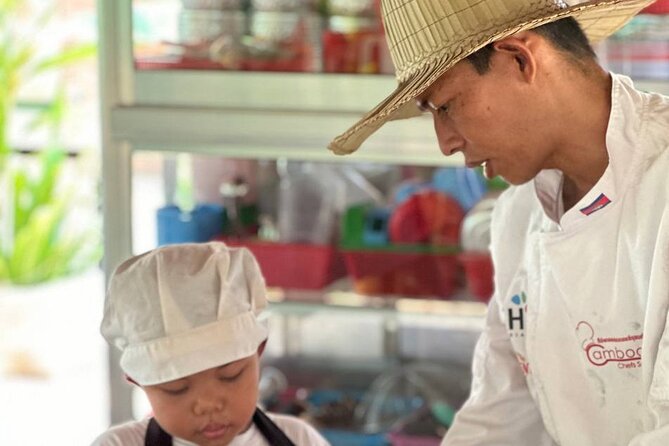
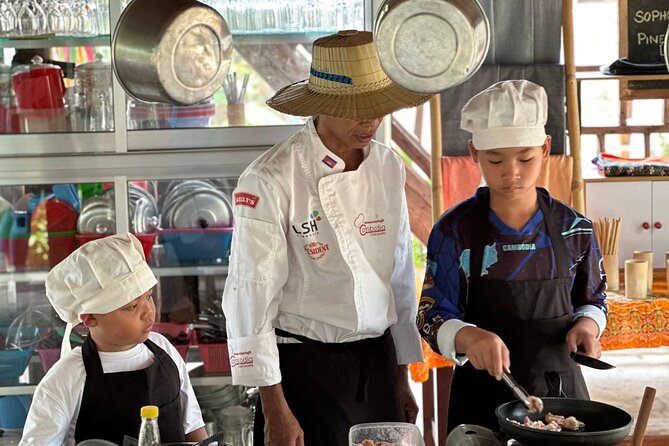
You roll up your sleeves and learn how to make two savory dishes and one sweet dessert. Your instructor provides easy steps and cooking tips, and you spend time actually preparing the dishes rather than just watching. That’s the key difference between a cooking activity and a cooking class that sticks with you. You leave with muscle memory, not just a printed recipe.
Because the class is hands-on, you’ll probably do things at your own pace while still following the flow of the day. That’s also why the four-hour schedule works. You get enough time for ingredient choices, real prep, and plating, without the whole day stretching into an exhausting experience.
A smart strategy for getting value: ask questions when you notice a step that feels different from what you cook at home. Things often make sense only after you see the teacher’s reasoning—like how long something should be cooked, or what you should look for visually. Since the class is taught in English, you should be able to keep the explanations clear and practical.
Vegetarian option is available, which is useful if you’re avoiding meat or just want a different menu. The important thing to know is that the option exists, so you can plan to participate fully rather than hoping the kitchen can adapt last minute.
One consideration: home settings mean you’ll likely be working in close quarters. If you prefer lots of personal space or you’re sensitive to smells that come with real cooking, you might find the kitchen portion intense. That said, this is the charm. You’re cooking like a guest in someone’s home, not like a passenger in a demonstration.
Your 3-course meal: eating what you made
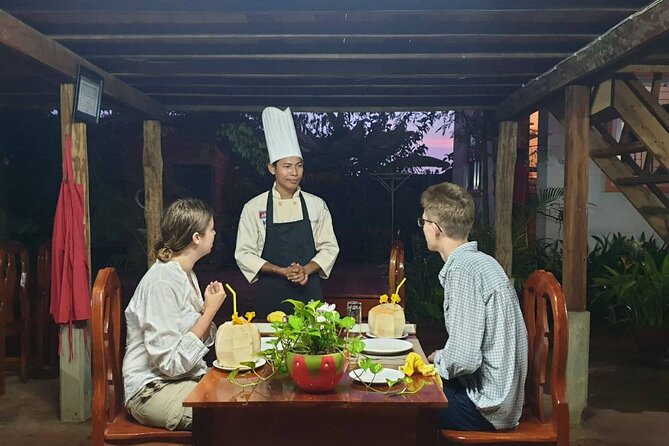
At the end of cooking, you sit down and enjoy your 3-course meal. This is one of the best parts of a cooking class like this, because it turns the day into a full experience: buy, cook, eat, repeat in your head so you can recreate parts later.
Since the day includes two savory dishes and a sweet dessert, you’ll get a more complete picture of Khmer home cooking than if you only make one item. Even if you don’t remember every step, you’ll remember how the meal felt—what worked together, what tasted balanced, and which part you enjoyed most.
I also like that the meal comes right after cooking. There’s no waiting around for late service. You’re still warm, still in the mindset of learning, and the smells and textures are fresh in your memory. That timing makes it easier to understand the structure of the dishes and how they should be served.
If you’re thinking about dietary planning: the only explicit note is that a vegetarian option exists. Alcoholic & beverages aren’t included, so if you want drinks beyond the included welcome drink, you’ll pay separately. Plan your hydration, especially if you’re sensitive to heat after the market.
Price and value: what $25 really buys
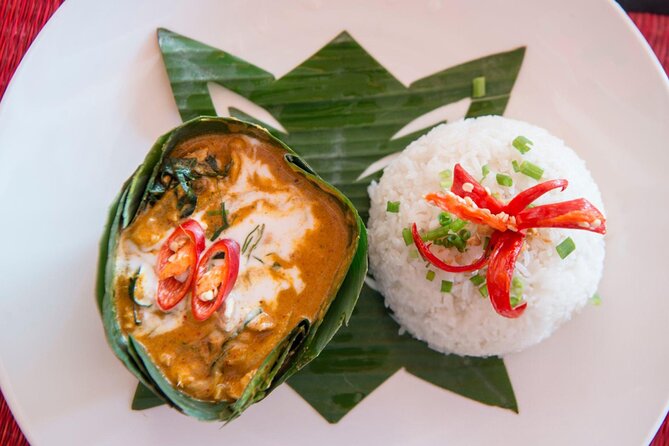
$25 per person for about four hours is the kind of price that can work well for many budgets—especially because it includes a bundle of practical items.
Here’s what you’re getting in the package:
- Market tour with an English-speaking guide
- Welcome drink
- Preparation of three dishes
- Hotel pickup and drop-off
That’s not just “someone teaches you recipes.” It’s also transport, a guided ingredient hunt, and the meal itself. When a cooking class is cheap but doesn’t include transport or ingredients, you usually end up paying extra or feeling like it’s incomplete. Here, the structure is built in: you get to and from your hotel by tuk-tuk, you’re guided at the market, and you cook three courses with support.
Timing is also part of value. A four-hour format is long enough to learn and cook, but short enough to keep your day flexible. If you’ve got other plans in Battambang, this won’t swallow your whole afternoon.
One more thought: because it’s priced accessibly, you might be more likely to go with a lighter itinerary elsewhere. In other words, this isn’t a “special once in a lifetime splurge” unless you want it to be. It’s a solid way to add a meaningful local experience without over-committing.
Who should book, and who should consider a different activity
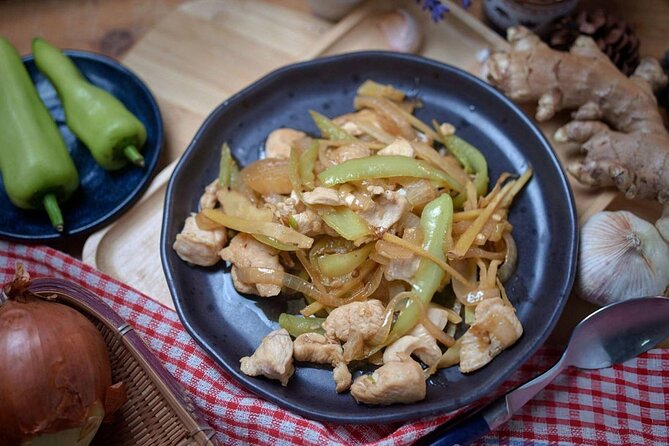
This is a great fit for you if you like food that comes with context. You’re not only eating Cambodian dishes. You’re learning how the ingredients get picked and how a home cooking lesson moves from prep to finished plate.
It’s also a good match if you want a guided activity without being stuck in a classroom. The market walk gives you movement and local color, and the cooking portion gives you a clear goal: make three dishes.
I’d think twice if you strongly dislike markets or close indoor work. The experience starts with a market tour, then moves into a home kitchen for hands-on cooking. If you’re traveling with someone who gets anxious in crowds, talk it through before you go. Also consider your comfort with heat and walking—Battambang mornings can feel bright, and you’ll want your feet and sun protection to be ready.
If you’re traveling solo, this also tends to work well because pickup and drop-off reduce stress. If you’re traveling as a couple or small group, the shared focus on cooking and eating makes it feel like a joint activity rather than a detached tour.
Should you book the Battambang cooking class?

Yes, I’d book it if you want a short, satisfying way to understand Khmer cooking. The biggest reason is that it’s not just a demonstration—it’s a market-to-kitchen-to-meal format where you choose ingredients and cook three dishes yourself. For $25, the mix of guidance, tuk-tuk transport, and a sit-down 3-course meal is strong value.
Book it especially if:
- You want an English-speaking guide and step-by-step cooking support
- You’re excited about hands-on learning, not just tasting
- You’d like a vegetarian option and still want the full experience
Skip it or choose a different option if:
- You hate markets or don’t handle crowds well
- You prefer very quiet activities or lots of personal space
If you’re in Battambang and food is part of why you travel, this is one of the most practical and memorable choices you can make.
FAQ
How much does the Battambang cooking class cost?
It costs $25 per person.
How long is the experience?
The duration is 4 hours.
What time is hotel pickup?
Hotel pickup for the activity start is at 9:30AM. You should be ready about 15 minutes before the pickup.
Do I get a tuk-tuk ride to and from the class?
Yes. You’ll ride in a traditional tuk-tuk to and from the class.
Is a market visit included?
Yes. You’ll do a local market tour to pick out fresh ingredients, with an English-speaking guide.
What will I cook?
You’ll prepare three dishes: 2 savory dishes and 1 sweet dessert.
Is there a vegetarian option?
Yes. A vegetarian option is available.
What’s included in the price?
Included are the market tour with an English-speaking guide, a welcome drink, preparation of three dishes, and hotel pick-up and drop-off.
What is not included?
Alcoholic & beverages and personal expenses are not included.
Can I cancel or change my plans?
You can cancel up to 24 hours in advance for a full refund. You can also reserve now & pay later.