REVIEW · SRI LANKA
Udawalawe: Farm to Table Cooking & Authe: Village Experience
Book on GetYourGuide →Operated by OwinRich Hospitality · Bookable on GetYourGuide
A food day in Udawalawe that starts with cinnamon tea has my attention. You’ll also get hands-on cooking in a traditional village kitchen, plus a guided walk through a 200-year-old reconstructed farming setting. One watch-out: part of the meal experience may come with extra charges for drinks.
This is the kind of tour where you’re not just watching. You’re picking vegetables, learning spice prep, and sitting down to eat what you helped make. The potential drawback is pricing around beverages, so it’s smart to ask before you order.
In This Review
- Key Things You’ll Remember From Udawalawe Village Food Day
- Why This Udawalawe Farm-to-Table Day Works So Well
- Starting With Cinnamon Tea and King Coconut (Yes, It Sets the Tone)
- The Precious-Stone Mine Stop: What You Actually Learn
- Cinnamon Peeling: Seeing the Craft Behind the Spice
- Picking Vegetables in the Organic Garden (Real Freshness, Not Theater)
- Cooking Class in a Traditional Village Kitchen With Local Women
- The Local Meal: What You Eat After Cooking
- Joining the Melas: Music, Dance, Crafts, and Local Food
- Price and Timing: Is $30 Good Value?
- Who This Tour Suits (And Who Should Think Twice)
- Should You Book the Udawalawe Village Cooking and Melas Experience?
- FAQ
- How long is the Udawalawe village experience?
- What languages does the guide speak?
- What’s included in the $30 per person price?
- Where is the meeting point?
- Is this activity wheelchair accessible?
- Are drinks included with the meal?
Key Things You’ll Remember From Udawalawe Village Food Day
- Cinnamon tea welcome to set the pace before you go anywhere
- Precious-stone mine visit paired with a process demonstration
- Cinnamon peeling by artisans so you see the work behind the spice
- Vegetable garden harvest with fresh, pick-and-cook energy
- Traditional cooking class with local women in a working-style village kitchen
- Melas participation with music, dance, crafts, and local delicacies
Why This Udawalawe Farm-to-Table Day Works So Well
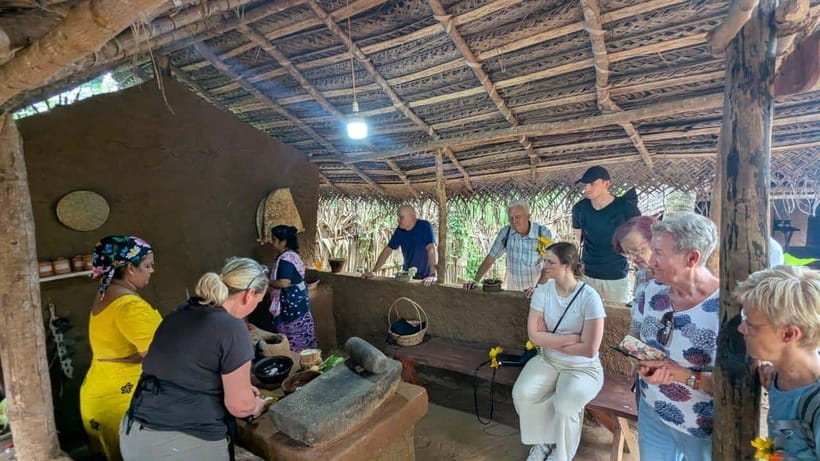
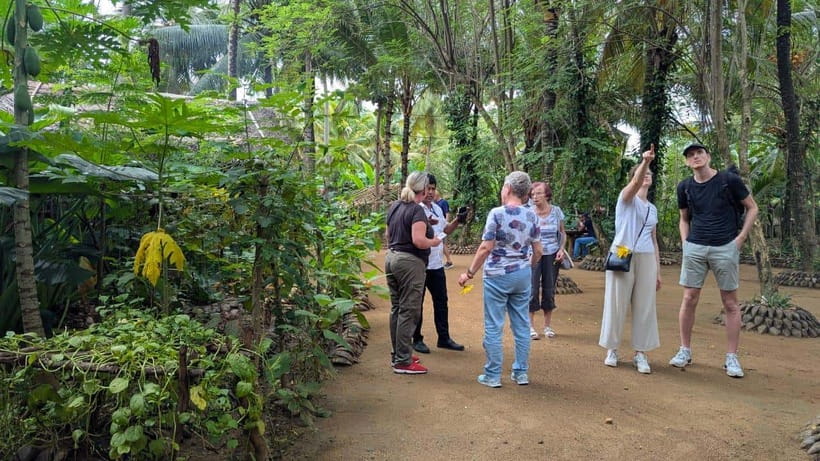
Udawalawe is famous for big animal moments, but this experience shifts the focus back to everyday village life. The program is built around a reconstructed 200-year-old Sri Lankan agricultural village, so you get a sense of how people lived and cooked long before tourism-style routines. It’s not a museum feel; it’s a working-food day where your hands do real tasks.
Two things I especially like for first-time visitors: you get spice education early, and you end with a meal that matches what you cooked. That gives the whole day a clear arc. Also, the setting is close to a well-known landmark (the Udawalawe Elephant Orphanage), so you can usually plug it into a normal Udawalawe itinerary without complicated logistics.
The one practical consideration: this is a walking-focused activity, and it’s not set up for wheelchair access. If you have mobility limits, you’ll want to plan around that.
Starting With Cinnamon Tea and King Coconut (Yes, It Sets the Tone)
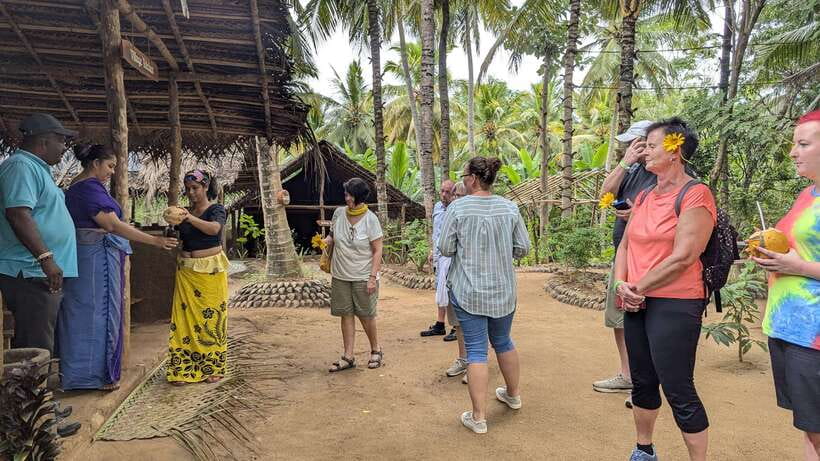
Your day begins with a welcome drink of cinnamon tea. It’s a small touch, but it helps you settle in fast and makes the group feel like it’s officially “starting village time.” From there, the experience moves quickly into the day’s themes: spices, agriculture, and local food culture.
The program info also notes King coconut as part of the welcome. Depending on timing and how the host runs the flow, you may get coconut as part of the drink stage. Either way, the point is the same: you begin with something Sri Lankan and practical—hydration that doesn’t feel like a gimmick.
If you’re sensitive to strong tea/spice aromas, take note. Cinnamon tea can be fragrant and warming, and it’s meant to prepare you for the spice sessions ahead.
The Precious-Stone Mine Stop: What You Actually Learn
Next comes an exclusive visit to an ancient precious-stone mine and a guided look at the mining process. This is one of the more distinctive parts of the day. Sri Lanka’s gemstone industry shapes jobs, tools, and local knowledge, and the visit helps you connect the dots between what you’ve probably seen from a distance and how it’s done on the ground.
What makes this section valuable is the sequencing. You start with cinnamon (a spice with a clear supply chain), then you switch to precious stones (a high-value resource with its own set of techniques). You’re not just passing time—you’re learning how extraction and preparation work in different forms.
A small detail you’ll appreciate: you’re not left alone with facts. You get a guide and a demonstration format, so even if you don’t know the industry at all, you still come away with the basic idea of how the process is carried out.
Cinnamon Peeling: Seeing the Craft Behind the Spice
After the mine visit, the program shifts into something you can taste later: cinnamon peeling. You’ll watch skilled artisans handle the spice with real technique—how it’s prepared and why the spice matters locally.
Cinnamon is one of those products people associate with Sri Lanka, but it’s easy to think it just appears in a shop. Here you see the work that turns a plant into the sticks you use at home. That makes the later cooking class feel more grounded, because you understand the spice isn’t just a flavor—it’s labor, skill, and a whole market tied to it.
If you love cooking, this is the part that makes your kitchen life better later. When you know what goes into the spice, you’re more likely to treat it carefully at home instead of using it blindly.
Picking Vegetables in the Organic Garden (Real Freshness, Not Theater)
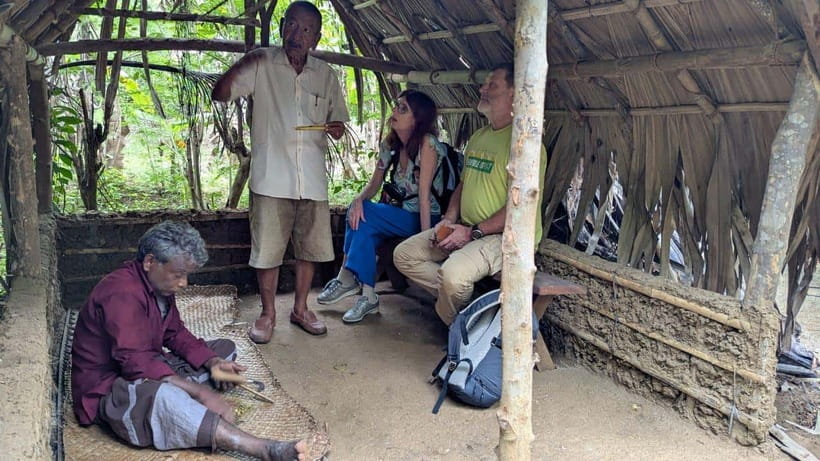
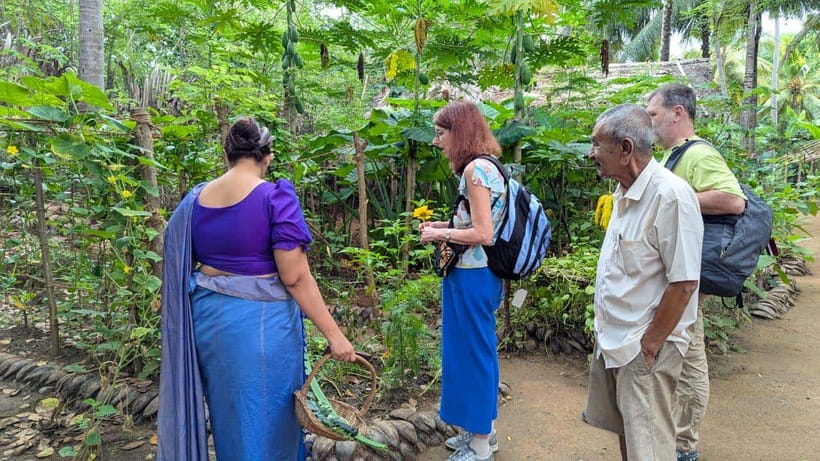
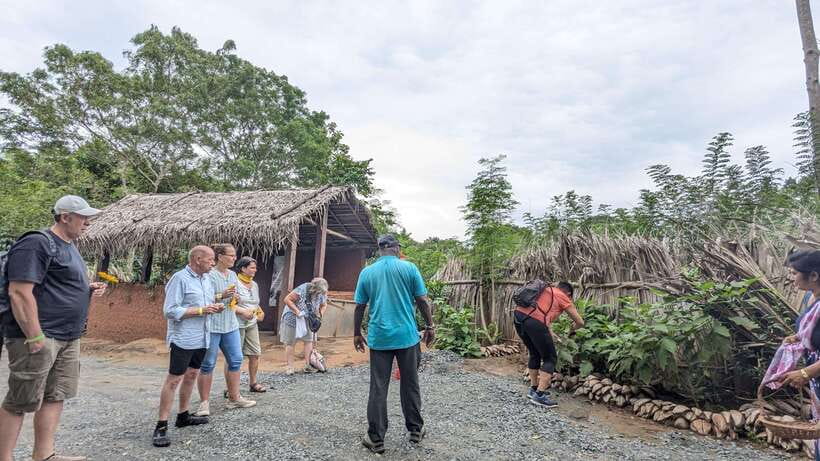
Then you head into the garden area to pluck your own vegetables from the property’s organic garden. This isn’t a token photo stop. The whole point is to connect the meal to the land you’re standing on.
From a practical point of view, vegetable picking also improves the cooking class. When ingredients are new, you’re more curious about them. You tend to learn faster, ask better questions, and remember what was used and why.
If you have dietary preferences, this is also where you can mentally note what you’re seeing: the vegetables available on that day will shape what you cook. The program is designed as a hands-on class, so your choices are part of the teaching flow.
Cooking Class in a Traditional Village Kitchen With Local Women
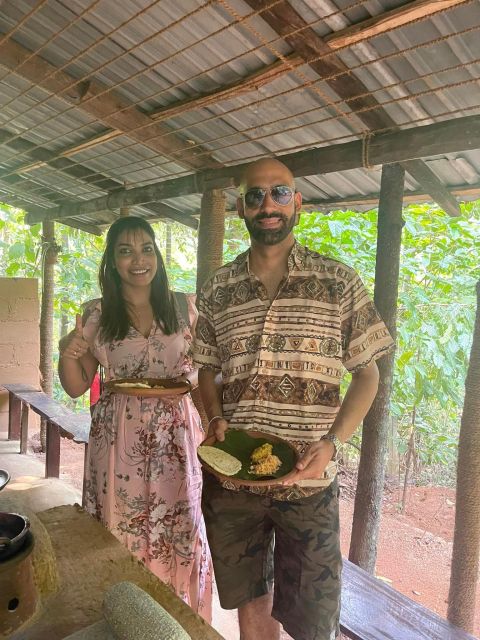
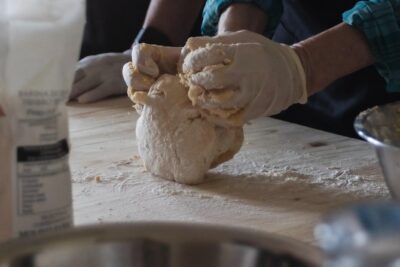
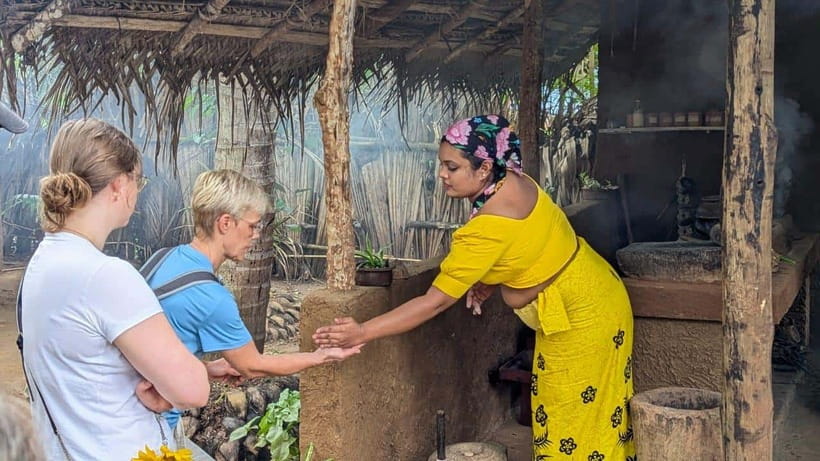
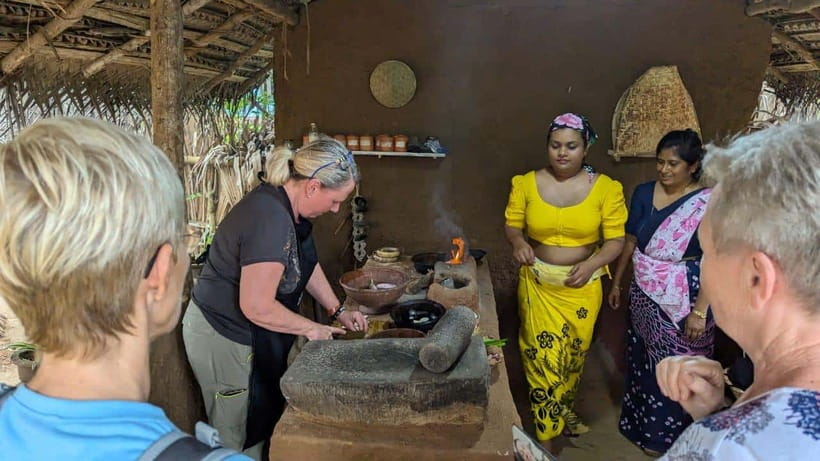
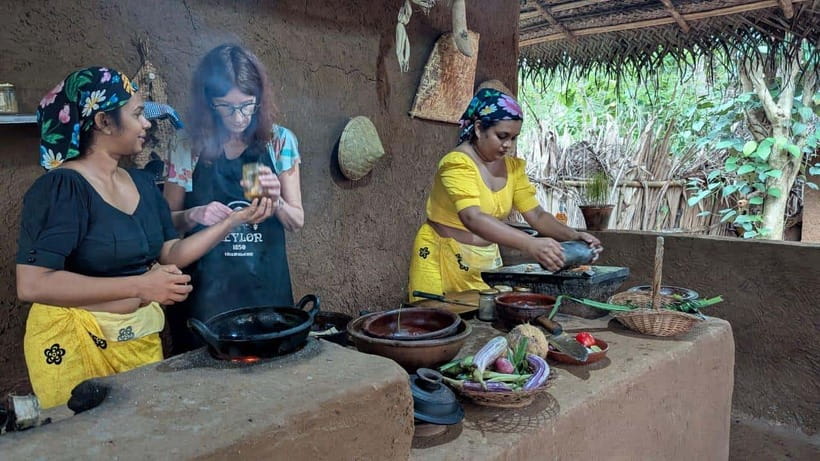
This is the heart of the experience: a traditional cooking class where you learn to prepare authentic Sri Lankan dishes with local women. Expect work that moves from spice handling to cooking over a village-style setup (including preparation steps like grinding spices and cooking over an open-flame style setup, based on the program description).
Why I think this is such good value: you get both instruction and participation. You’re not just tasting. You’re learning process—how ingredients change while cooking, how spice combinations are built, and how the final dish comes together.
Also, the kitchen setting matters. In a typical city cooking class, you’re in a modern studio. Here, the teaching environment is tied to village life, so the lessons feel more like practical tradition than a performance.
The meal you make tends to reflect that teaching style. One dish highlighted from past participants is coconut sambal, plus dahl—both strong, comforting Sri Lankan staples that show up in different forms across the island.
The Local Meal: What You Eat After Cooking
After the cooking session, you sit down to enjoy the local meal featuring dishes prepared during your class. This is where the day’s structure earns its keep. It’s one thing to cook; it’s another to eat together right afterward, while flavors and techniques are still fresh in your mind.
The communal meal format is part of the value. You’ll get a real sense of how food is shared in the village setting—less like a plated restaurant moment, more like a group experience.
One important caution: drinks may not be included with the meal. A previous participant reported that beverage pricing was higher than expected and not clearly communicated up front. My advice is simple: when drinks are offered, ask what’s included and what costs extra before you sit down.
Joining the Melas: Music, Dance, Crafts, and Local Food
To close out the experience, you join local melas, traditional fairs with music, dance, crafts, and local delicacies. This is a big part of why I’d call the day more than a cooking class. It connects the food to the social life around it.
What to do during melas: watch for small craft items and food stalls, and let the guide point out what you’re seeing. If you’re the type who likes cultural context—not just cuisine—this final stop turns the whole day into something you can remember beyond recipes.
One practical note: mela time can feel energetic, and it’s usually outdoors. Plan for that with sun coverage if you’re visiting during hot months.
Price and Timing: Is $30 Good Value?
At $30 per person for about 2 hours, this can be good value—mainly because the time includes multiple different activities. You’re not paying for one thing; you’re paying for a package of learning moments:
- Cinnamon tea welcome (and coconut noted in the program info)
- Visit to an ancient precious-stone mine with a demonstration
- Cinnamon peeling by artisans
- Organic vegetable picking
- Hands-on village cooking class with local women
- The meal you help make
- Participation in melas with crafts and local delicacies
- A live guide (English and Singhalese)
If you were to recreate those pieces independently—guides, entry time, cooking instruction, ingredients, and a meal—you’d likely spend more. The main way the value drops is if you add on extra spending during the meal stage. Since drinks can come separately and may be priced in a way that surprises some people, budget a little extra if you want beverages.
Timing-wise, the program says 2 hours, but it also notes a full walking tour of around 90 minutes. That means you should expect some walking between garden, kitchen, and activity stops. Build in buffer time so the day doesn’t feel rushed.
Who This Tour Suits (And Who Should Think Twice)
This is a strong match if you:
- Want a Sri Lankan food day that’s hands-on, not just scenic
- Like learning how spices and cooking steps connect to local life
- Prefer small, personal groups (this is a private group)
- Are in Udawalawe and want something different from elephants-only sightseeing
It’s less ideal if you:
- Need wheelchair-friendly routes (it’s not suitable for wheelchair users)
- Have limited stamina for a walking-focused format
- Are very strict about having every cost clearly included (especially around drinks)
Should You Book the Udawalawe Village Cooking and Melas Experience?
I’d book this if your main goal is real participation: picking vegetables, cooking on the spot, learning cinnamon prep, and then eating what you made. It’s the kind of experience that gives you practical memories, not just photos.
Skip it or go in with caution if you hate uncertainty about add-on costs at mealtimes. Before you commit, decide if you want beverages during the meal—then ask what’s included so you’re not caught off guard.
If you’re staying near the Udawalawe Elephant Orphanage, the meeting point being about 1.2 km away makes this easy to fit into a day. And because the day blends food education with village fair culture, you’ll likely end with a sense of place—not just a recipe list.
FAQ
How long is the Udawalawe village experience?
The total duration is listed as 2 hours, and it’s described as a full walking tour of around 90 minutes.
What languages does the guide speak?
The live tour guide speaks English and Singhalese.
What’s included in the $30 per person price?
The included items are a welcome drink, a guided visit to an ancient precious-stone mine with a demonstration, cinnamon peeling, vegetable picking from the organic garden, a traditional cooking class with local women, the meal featuring dishes prepared during the class, and participation in local melas with crafts and local delicacies.
Where is the meeting point?
The meeting point is about 1.2 km from Udawalawe Elephant Orphanage.
Is this activity wheelchair accessible?
No, it is not suitable for wheelchair users.
Are drinks included with the meal?
The meal includes the dishes you cook, but drinks are not clearly stated as included. One past participant reported that beverage costs were charged separately at the time of eating, so it’s smart to ask before ordering.