REVIEW · OSAKA PREFECTURE
Osaka Sushi Cooking Class
Book on Viator →Operated by MatchaExperience Osaka · Bookable on Viator
Sushi feels hard until someone shows you the steps. This Osaka sushi cooking class packs hands-on technique into about 90 minutes, then lets you taste your own nigiri and maki. I like that it’s built for all levels, from first-time roll-makers to sushi fans who want to tighten up the basics. The group stays small (max 8), so instruction doesn’t get lost in the shuffle.
One thing to keep in mind: the session is short, so you’ll learn the core moves well, but you won’t walk out doing every advanced sushi style you can find on menus. Also, alcoholic drinks like sake or beer aren’t included.
In This Review
- Why This Osaka Sushi Class Is Such a Smart 90-Minute Plan
- Meeting in Suita: Getting There Without Stress
- 90 Minutes of Sushi Basics That Actually Click
- Chef Kazuki Harada and the Value of Clear Instruction
- Nigiri Sushi: Shaping Rice and Placing Toppings
- Maki Rolling Craft: The Part Where You Learn to Be Calm
- Flavor Enhancements: Wasabi, Soy Sauce, and Pickled Ginger
- Tasting and Sharing: Your Plate Becomes the Lesson
- Price and Value: Is $78.04 Worth It?
- Who Should Book This Osaka Sushi Class
- Small-Group Timing and What to Expect During the Lesson
- Book It or Skip It: My Practical Recommendation
- FAQ
- Where is the meeting point for the Osaka Sushi Cooking Class?
- How long is the sushi cooking class?
- What is the maximum group size?
- What’s included in the price?
- Is alcohol included?
- What is the cancellation policy?
Why This Osaka Sushi Class Is Such a Smart 90-Minute Plan
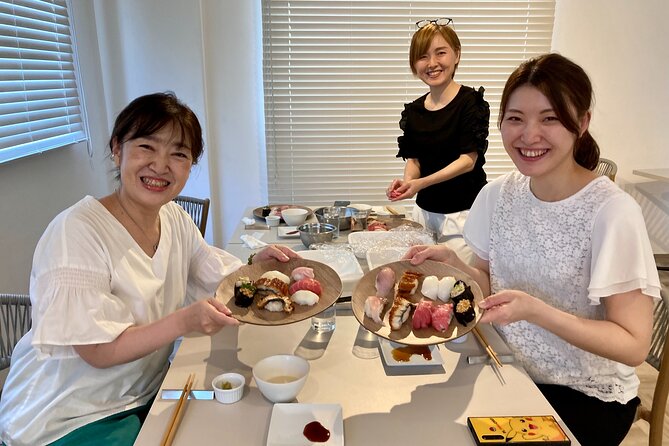
- Small group size (max 8): You get enough attention while you’re shaping rice and rolling maki.
- Chef-led, step-by-step flow: You move from sushi basics to nigiri shaping to maki rolling without jumping around.
- Real practice, not just watching: You’ll handle the ingredients and build your own nigiri and maki.
- Flavor lessons you can use later: Wasabi, soy sauce, and pickled ginger are explained as part of the experience.
- Tea and drinks that keep it simple: Water and green tea are included, which fits a class like this.
Meeting in Suita: Getting There Without Stress

This class meets at 3-chōme-35-5 Tarumichō, Suita, Osaka 564-0062, Japan. The good part is the tour notes that it’s near public transportation, so you’re not trying to solve a last-mile puzzle in a foreign language while hungry.
You start there and the activity ends back at the same meeting point. That matters more than it sounds: a tight class window is easier when you don’t need to plan another transfer right after you’ve finished cooking and eating.
You’ll also have a mobile ticket, so you’re not scrambling with printouts. If your schedule in Osaka is packed, this format is a practical way to squeeze in a memorable food experience without turning it into a half-day mission.
90 Minutes of Sushi Basics That Actually Click
The heart of this class is learning the building blocks first, then using them immediately. You begin with a welcome and an overview of what’s covered, then you shift into sushi basics like rice, seaweed, fillings, and condiments.
Why that order works: sushi tastes balanced because every component has a job. Rice isn’t just filler. It’s the structure. Seaweed isn’t just wrapping. It brings its own flavor and texture. The condiments aren’t an afterthought either, because they change how you perceive each bite.
The tone is beginner-friendly. You don’t need to already know how sushi rice should feel or how tight a roll should be. And if you love sushi already, you’ll likely appreciate the clarity on what each element is supposed to do.
A chef guiding you through every stage makes this less intimidating than trying to replicate instructions from memory later. And since it’s small-group, you can catch mistakes early, not after you’ve already rolled half a board.
Chef Kazuki Harada and the Value of Clear Instruction
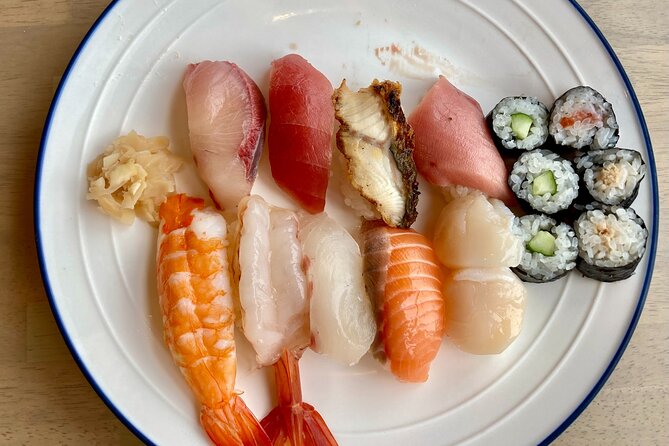
One of the standout things in the experience is the instructor approach. Kazuki Harada gets strong praise for being both professional and personable, and the practical result is that people leave feeling capable of making sushi for family and friends.
That’s the kind of teaching you want in a class like this. You’re not just buying a ticket to eat. You’re buying a shortcut to better technique: how to shape nigiri without it falling apart, and how to roll maki so the pieces look clean.
You’ll get guidance on the why, not only the what. The class also covers how to enhance flavors with wasabi, soy sauce, and pickled ginger, which helps you understand how sushi is meant to be eaten, not just assembled.
In real-world terms, good instruction turns a messy attempt into something you can repeat at home. That repeat value is where the experience earns its price.
Nigiri Sushi: Shaping Rice and Placing Toppings
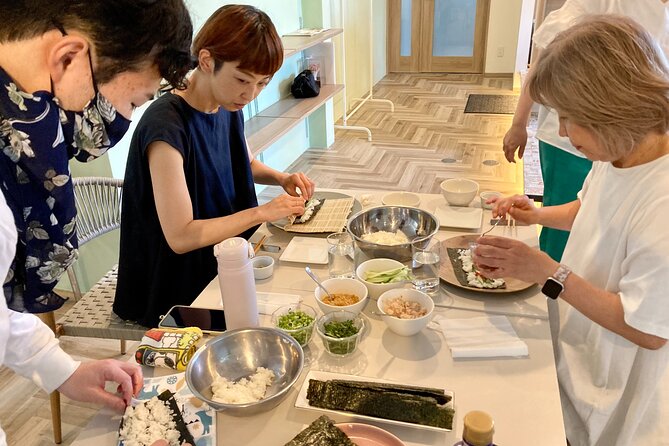
After the sushi basics, you move into nigiri sushi. This is where the class becomes very tactile. You’ll learn how to shape rice and then place toppings in a controlled way.
Nigiri can look simple, but it’s mostly about technique. Rice needs to hold together while still feeling like rice, and toppings need to land in the right place so each piece bites cleanly. The chef shows you how to do it, then you practice your own version.
This part is valuable even if you think you already know nigiri from restaurants. Restaurant nigiri is consistent because of trained hands. In a class setting, you get to understand what you can control: portion size, how firmly you shape the rice, and how you position the topping.
It’s also one of the most satisfying parts to learn because it’s visible progress. Once your first nigiri looks like a nigiri, the rest feels more doable.
Maki Rolling Craft: The Part Where You Learn to Be Calm
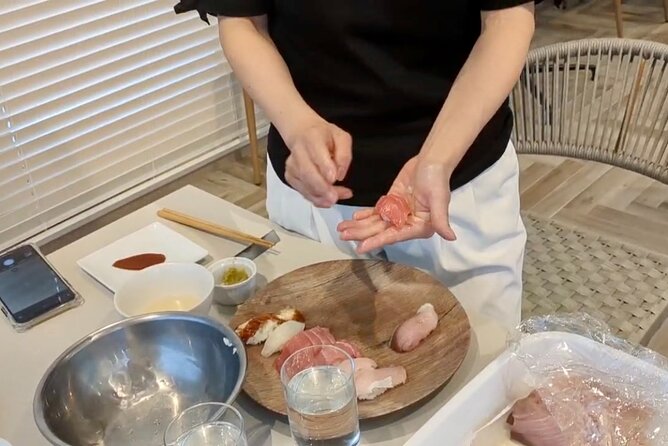
Next comes maki roll crafting. This is where you learn the process of rolling sushi with your chosen fillings.
Rolling is a skill, but it’s also a mindset. Your goal is even pressure, a neat roll, and clean slicing into pieces you’d be happy to eat. The chef guides the process so you don’t start rolling with bad habits.
This segment is especially helpful if you’ve ever tried to make sushi at home and ended up with a roll that falls apart, leaks fillings, or comes out uneven. In a short class, you’re not meant to master every variation. You’re meant to learn the core mechanics so you can improve afterward.
And because this class is about eating what you make, rolling isn’t just practice. It becomes part of your meal. That makes you more careful, which is exactly what you want when you’re learning.
Flavor Enhancements: Wasabi, Soy Sauce, and Pickled Ginger
Sushi tastes simple, but the seasoning choices are anything but random. You’ll talk through flavor enhancements and how wasabi, soy sauce, and pickled ginger fit into the experience.
This matters because people often use condiments in the wrong way at home. Too much soy sauce can overwhelm. Wasabi isn’t meant to be a giant blob. Pickled ginger works as a palate reset, so you can enjoy the next bite fully.
In the class, you learn these as tools in a bite-by-bite system. That helps you eat more intentionally, not just quickly. It also makes the tasting more meaningful because you’re not guessing what’s making each bite work.
Green tea and water are included, which is a practical pairing here. You get a palate-clean option that doesn’t compete with the flavors the way random drinks might.
Tasting and Sharing: Your Plate Becomes the Lesson
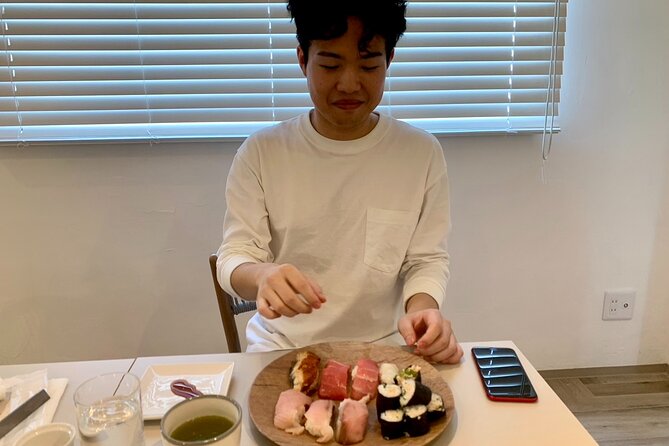
At the end, you taste what you made and share your thoughts. This isn’t a throwaway finish. It’s the part where learning turns into confidence.
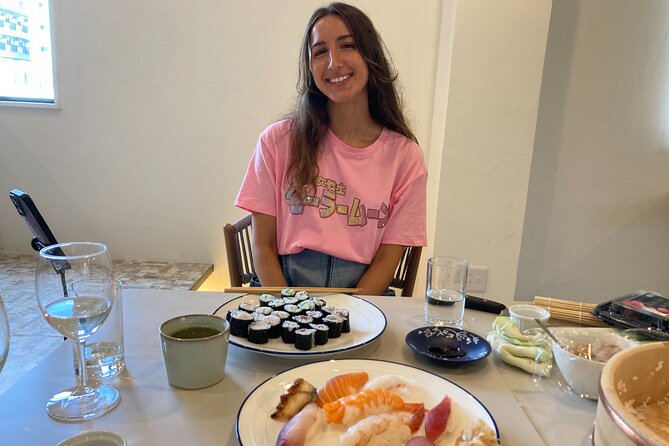
You’ll sample a plate that includes self-made nigiri and maki. Seeing the final result also helps you connect technique to taste. If your roll was a little loose, you’ll notice. If rice shaping felt different, you’ll notice. That’s how you build a mental map for what to repeat later.
Sharing thoughts is also useful, especially in a small group. You learn by comparing what your pieces came out like, even if you don’t share a common language. Food is the universal translation.
If you’re the type who wants to come home with a skill, this is the moment that makes it real. People finish this kind of class and immediately want to reproduce it.
Price and Value: Is $78.04 Worth It?
At $78.04 per person for about 1 hour 30 minutes, you’re paying for more than ingredients. You’re paying for guided technique, equipment, and the built-in moment where you actually eat what you make.
Here’s why the value can be strong:
- You get chef instruction for multiple stages: sushi basics, nigiri, and maki.
- Ingredients and equipment are included, which saves you the hassle and cost of buying supplies you might not use again.
- The class size cap (max 8) helps protect quality. More attention usually means fewer mistakes.
Where you should be realistic: $78.04 isn’t going to buy an all-day, master-level sushi apprenticeship. This is a focused workshop, not a long-term course. You’ll leave with a working foundation and a better idea of how sushi components work together.
So if you want a hands-on food experience in Osaka that’s short, guided, and meal-based, this price can feel fair. If you’re only looking for a quick snack, it might not match your goals.
Who Should Book This Osaka Sushi Class
This one fits well if you’re:
- A beginner who wants sushi skills without intimidation.
- A sushi enthusiast who likes understanding technique, not just eating.
- Someone short on time in Osaka but still craving a hands-on activity.
- Food travelers who enjoy learning how ingredients work together.
It’s also a great pick for small-group social energy. You cook, taste, and compare results in a group capped at 8, so it stays personal instead of chaotic.
If you’re extremely focused on a specific sushi style beyond basic nigiri and maki, you may find the session a bit narrow. But as a foundation class, it’s an efficient use of time.
Small-Group Timing and What to Expect During the Lesson
The class is structured so you’re never waiting around too long. You start with welcome and overview. Then you go through basics, then make nigiri, then roll maki, then wrap with flavor guidance and tasting.
That flow is ideal for learning because it’s not abstract. Each topic is followed by making. And because it ends back at the meeting point, you can plan the rest of your day without complicated logistics.
You’ll have water and green tea, plus the ingredients and equipment needed to cook. Alcohol isn’t included, so plan to handle any sake or beer plans separately.
Book It or Skip It: My Practical Recommendation
I’d book this class if you want a guided, small-group way to learn sushi steps you can repeat. The combination of chef-led instruction, hands-on rice shaping and rolling practice, and a tasting that includes what you made is exactly the kind of experience that gives you something real to take home.
Skip it only if you want a longer, deeper course or you’re specifically hoping for advanced specialty sushi beyond nigiri and maki. Also, if you’re expecting alcohol to be part of the experience, you’ll need to adjust your expectations since only tea and water are included.
FAQ
Where is the meeting point for the Osaka Sushi Cooking Class?
The class starts at 3-chōme-35-5 Tarumichō, Suita, Osaka 564-0062, Japan, and it ends back at the meeting point.
How long is the sushi cooking class?
The experience runs for about 1 hour 30 minutes.
What is the maximum group size?
This class has a maximum of 8 travelers.
What’s included in the price?
It includes water and green tea, ingredients, equipment, and green tea.
Is alcohol included?
No. Alcoholic beverages like Japanese sake or beer are not included.
What is the cancellation policy?
You can cancel for free up to 24 hours in advance for a full refund.