REVIEW · CHEFCHAOUEN
Moroccan Cooking Class with a Local Family & Market Visit
Book on Viator →Operated by Enchanting Chefchaouen Tours with a Local Guide · Bookable on Viator
Chefchaouen gets even better with a cooking lesson. This Moroccan Cooking Class with a local family pairs a market visit with Amazigh-style technique inside a 300-year-old house, so you’re not just eating—you’re learning how the food gets made. I like the small-group feel (max 5) and the way the family keeps it practical, from shopping choices to step-by-step cooking. One thing to consider: this experience depends on good weather, so plan some flexibility if conditions are rough.
You’ll start with a short introduction, then head to the market to pick fresh ingredients that actually drive the flavor of what you cook. In my notes, the name that came up for the welcome and on-the-ground hosting was Murad, with Zohra leading the teaching during the cooking portion.
The class ends with lunch/dinner, tea and cookies, plus photos and time to ask questions. You’ll likely cook couscous or tajine (vegetables or chicken), and you may also make dishes like zaalouk, depending on the menu for your day.
In This Review
- Key highlights you’ll feel right away
- What You’re Booking in Chefchaouen (and why it works)
- The 3-hour flow: from market bag to dinner plate
- 1) The quick intro (about 10 minutes)
- 2) Market visit (about 30 minutes)
- 3) Prep time (about 20 minutes)
- 4) Cooking time (about 1 hour)
- 5) Plating and presentation (about 15 minutes)
- 6) Tasting plus culture talk (about 25 minutes)
- Tea, cookies, photos, and Q&A
- Market visit tips: what you should pay attention to
- Couscous or tajine: your hands-on menu
- Couscous
- Tajine (vegetables or chicken)
- You’ll also learn plating basics
- The 300-year-old house factor (and why the setting matters)
- Dinner, tea, cookies: what’s actually included
- Price and value: is $49 worth it?
- Getting there: pickup, transit, and small logistics that matter
- Who this Chefchaouen cooking class suits best
- The bottom line: should you book?
- FAQ
- How long is the Moroccan cooking class in Chefchaouen?
- What dishes will I learn to cook?
- Is there a market visit included?
- Is dinner included?
- Does the tour offer pickup?
- How big is the group?
- What happens if the weather is bad?
- What is the cancellation policy?
Key highlights you’ll feel right away
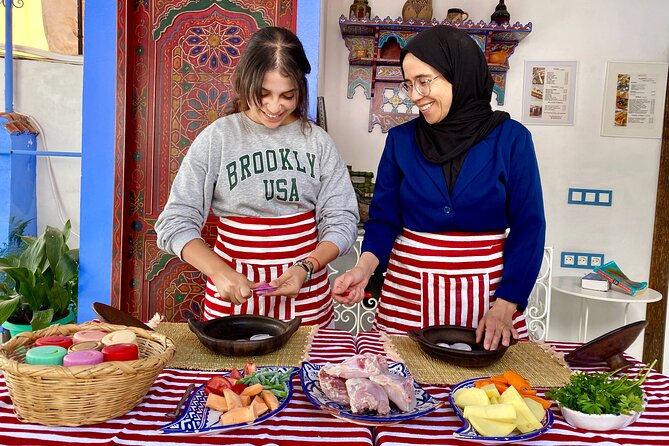
- Market shopping that actually matters: you select ingredients first, not after the fact.
- Amazigh technique you can repeat at home: prep and cooking steps are taught with care.
- Hands-on cooking with a small group: max 5 travelers makes it personal.
- Family hosting, not a demo: you learn alongside the household rhythm.
- Zohra and Murad bring the lesson to life: clear steps, friendly guidance, real conversation.
What You’re Booking in Chefchaouen (and why it works)
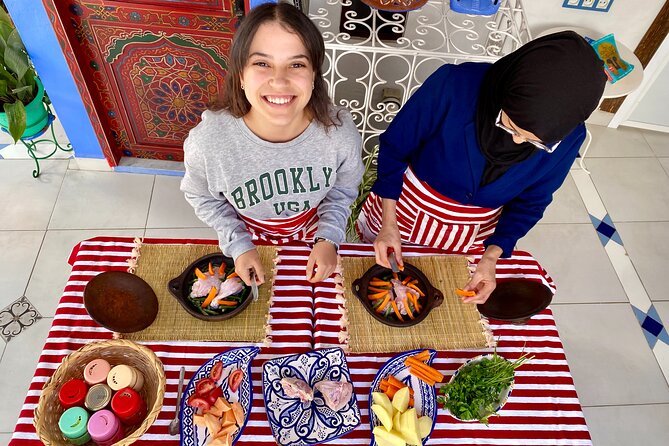
This is a Chefchaouen cooking class built around a simple idea: good Moroccan food starts with what you buy and how you prep it. So the experience doesn’t jump straight to the stove. It starts at the market, where ingredients, cuts, spices, and timing all get explained in plain language.
What I like most is the balance. You get a full meal experience, but it’s not a touristy cooking show. You’re learning techniques that Moroccan home cooks use, including Amazigh-influenced methods that many families pass down. And because it’s taught by a local family (not a generic instructor standing in for everyone), the cultural talk feels like it belongs to the day you’re having—tea conversations, kitchen details, and the kind of questions you can’t ask while walking past a shop.
Price-wise, $49 per person is a fair deal for what’s included. You’re getting dinner, tea (and cookies), water, instruction, and a market stop. The “not included” part is mostly what you’d expect—private transport and alcohol. If you’re already in Chefchaouen and can handle getting there via public transportation, this is one of the better value ways to spend a few hours in town.
You can also read our reviews of more tours and experiences in Chefchaouen.


The 3-hour flow: from market bag to dinner plate
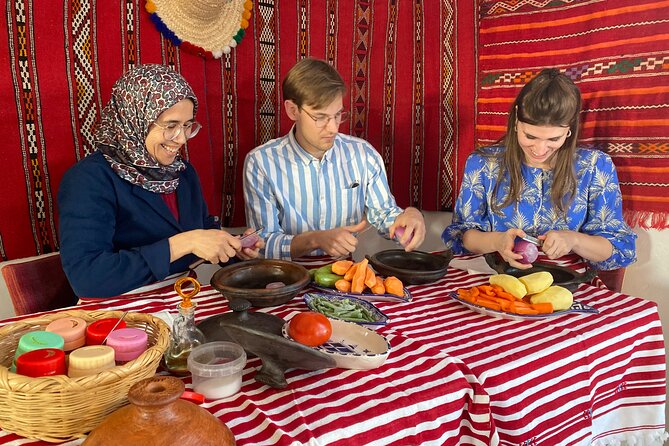
The day moves in a clear sequence, and that matters. Cooking classes can feel chaotic when the schedule is loose. Here, each block has a job.
1) The quick intro (about 10 minutes)
You start with an overview of Moroccan cuisine and what you’ll make. This isn’t a textbook lecture. It sets expectations so you’re not standing there wondering what you’re supposed to do next.
2) Market visit (about 30 minutes)
Next comes the market visit. You’ll pick fresh ingredients with guidance, so you understand why certain choices lead to certain flavors. This is also when you get a feel for the local rhythm—what people buy, how they talk about produce and spices, and what’s considered fresh that day.
If you like markets, this part is the payoff. If you don’t, it can still be worth it because you’re shopping for your own meal, not browsing.
3) Prep time (about 20 minutes)
Back at the house, you’ll do traditional ingredient prep. Expect hands-on work: chopping, cleaning, and prepping components for your dish. This is where Moroccan cooking separates itself from the “add everything and hope” approach you might be used to.
The best moment here is when the teacher slows things down and makes technique feel doable. In the class, Zohra is one of the names that comes up for careful, step-by-step instruction.
4) Cooking time (about 1 hour)
Then you cook. This is not just stirring while someone else does the real work. You’re guided through the process, with enough structure that you can follow along without feeling lost.
You’ll make either couscous or tajine. And the style is traditional, with the pacing of home cooking rather than restaurant speed.
5) Plating and presentation (about 15 minutes)
Moroccan food looks good on the plate, but it’s also about arrangement. You’ll get tips for plating and presentation—useful if you want to recreate the look later at home, not just the flavor.
6) Tasting plus culture talk (about 25 minutes)
Finally, you sit down and taste what you cooked. You’ll also have culture conversation—why certain dishes matter, what people use in everyday cooking, and the kind of context that turns a recipe into something you understand.
Tea, cookies, photos, and Q&A
Alongside the meal, you’ll get Moroccan tea and cookies. Then there’s time for photos and Q&A, which is great if you want recipe advice or want to understand what you did step-by-step.
Market visit tips: what you should pay attention to
The market is only 30 minutes, so you won’t see every stall in Chefchaouen. Instead, focus on what affects flavor and texture.
- Look at what ingredients look like that day. Freshness isn’t abstract here—it shows up in how food tastes when cooked.
- Notice spice handling and how ingredients are grouped. Even if you can’t translate everything, you’ll learn what goes together.
- Ask about choices, not just quantities. With guidance, you can connect the market decision to your final tajine or couscous.
This part is especially meaningful because you’re shopping for dinner. It’s a small time commitment, but it changes how you experience the cooking after. You start paying attention to details.
Couscous or tajine: your hands-on menu
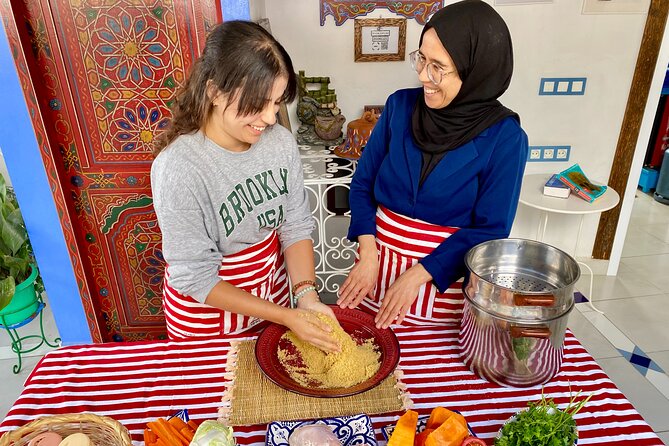
Your class centers on one main dish, with options depending on the day’s flow:
Couscous
You’ll learn how couscous is prepared using authentic Amazigh techniques. One of the strongest impressions from past participants was that the couscous came out excellent—so take this as a sign that the class teaches more than the basics.
If you’ve had couscous that tasted bland or dry, this is the kind of lesson that can help you fix that at home: the prep steps and careful handling are what make it work.
Tajine (vegetables or chicken)
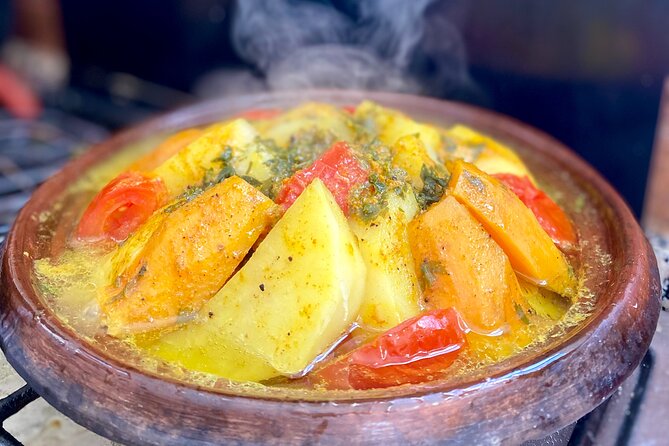
If you go with tajine, you’ll learn how to build and cook a traditional dish. Chicken tagine is a common pairing in the class experience, and vegetables tajine is also offered.
From the examples shared, eggplant dishes like zaalouk can show up as part of the menu. That matters because eggplant preparation and seasoning are where Moroccan cooking can jump from good to memorable.
You’ll also learn plating basics
Presentation isn’t an afterthought. The plating portion makes you slow down, arrange the food, and think about serving style. It’s a small lesson, but it helps you recreate the dish more accurately later.
The 300-year-old house factor (and why the setting matters)
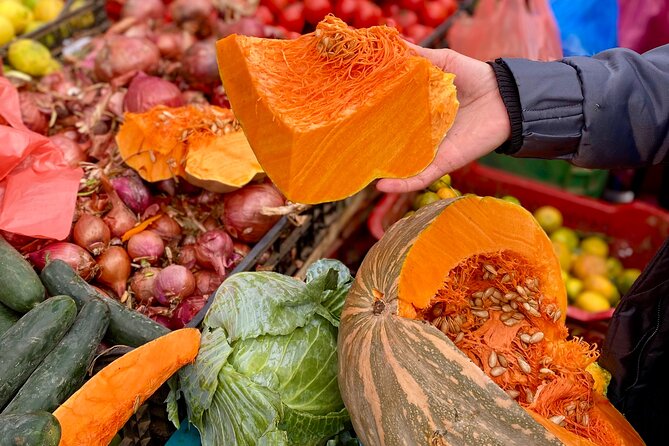
The cooking takes place in a traditional home space, described as a 300-year-old house. That’s more than a cool detail for photos. It shapes the experience.
Old houses tend to have kitchens designed for the pace of daily cooking: practical layouts, familiar rhythms, and a style of teaching that feels like you’re being hosted rather than processed. You can feel the difference between a cooking lesson that happens in a random room and one that happens in a real household setting.
In past experiences, the warmth of the family hosting came through strongly. Names like Murad (welcoming and present throughout) and Zohra (teaching) show up as key parts of that feeling.
Dinner, tea, cookies: what’s actually included
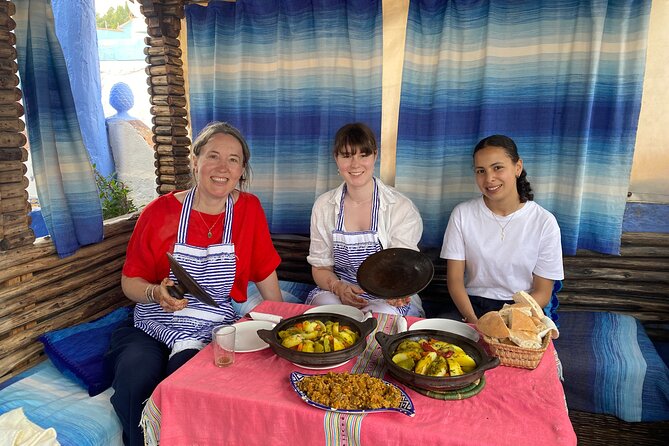
You’re not just learning; you’re eating well.
Included with the class:
- Dinner
- Coffee and/or tea
- Bottled water
Not included:
- Private transportation
- Alcoholic beverages
A practical note: since dinner is included, plan your day so you’re hungry. If you arrive after a big lunch, you’ll miss the point of the tasting portion. This class is built to be a meal experience, not a snack.
Price and value: is $49 worth it?
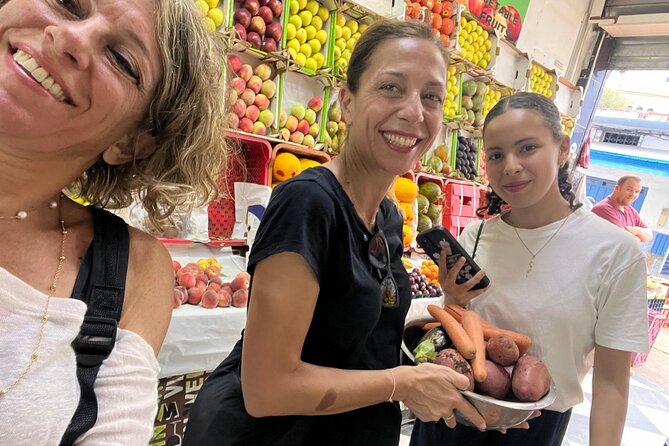
At $49 per person for about 3 hours, the value depends on two things: how much you’ll benefit from market shopping and how much you’ll enjoy hands-on instruction.
Here’s why it can be good value:
- You’re getting dinner plus tea and cookies.
- You’re learning with a small group (max 5), which usually means more attention and better guidance.
- The class includes a structured sequence: market, prep, cooking, plating, tasting, and culture talk.
If you only want a quick food taste, you might feel this is longer than you need. But if you want to come away with a method you can repeat—like how to prep and cook for good couscous or tajine—this is the right kind of spend.
Also, this is booked about 7 days in advance on average. That usually means the best time slots can go first, especially when groups want a morning or early evening session that fits sightseeing.
Getting there: pickup, transit, and small logistics that matter
Pickup is offered, which is a big help in a place where streets can be steep or narrow. If you’re not using pickup, the class notes it’s near public transportation, so you should be able to reach the meeting area without too much hassle.
You’ll also have a mobile ticket. And you’ll receive confirmation at booking time.
One more practical point: the experience requires good weather. If conditions are poor, you’ll be offered a different date or a full refund. So don’t schedule this as the only fixed plan on your last day in town.
Who this Chefchaouen cooking class suits best
This is a strong fit if you want:
- a hands-on lesson (not a sit-and-watch class)
- real household hosting and conversation
- a market component that ties directly into your meal
- small-group attention
It’s also a great way to end a trip in Chefchaouen. After you’ve seen the blue streets, this gives you a calmer, personal experience tied to the same place.
You might want a different option if:
- you don’t enjoy markets or hands-on cooking tasks
- you’re expecting a purely restaurant-style lesson with formal techniques
- you want private transportation included (it isn’t)
The bottom line: should you book?
I’d book this if you want a Chefchaouen experience you can take home. The market stop is short, but it changes everything about the meal. The small group size helps, and the family-led teaching style makes it feel human, not scripted.
If you’re on the fence, ask yourself one question: do you want to learn how Moroccan couscous or tajine gets made, or do you just want to eat something good? This class is for the first goal.
If the weather looks questionable, keep it flexible. Otherwise, it’s a smart value at $49, especially because dinner and tea are included and you’ll leave with steps you can actually repeat.
FAQ
How long is the Moroccan cooking class in Chefchaouen?
The experience lasts about 3 hours.
What dishes will I learn to cook?
You’ll learn to prepare couscous or tajine, with vegetables or chicken.
Is there a market visit included?
Yes. A market visit is included and lasts about 30 minutes.
Is dinner included?
Yes. Dinner is included, along with coffee and/or tea and bottled water.
Does the tour offer pickup?
Pickup is offered, but private transportation is not included.
How big is the group?
The experience has a maximum of 5 travelers.
What happens if the weather is bad?
The experience requires good weather. If it’s canceled due to poor weather, you’ll be offered a different date or a full refund.
What is the cancellation policy?
You can cancel for a full refund up to 24 hours in advance. If you cancel less than 24 hours before the start time, you won’t receive a refund.