REVIEW · KSAMIL
Ksamil Cooking Class: Preparing Traditional Albanian LAKROR
Book on GetYourGuide →Operated by Nebo info &Tours · Bookable on GetYourGuide
Hands-on Albanian cooking feels like a shortcut to belonging. This Ksamil class turns Lakror and Fërgesa into real, do-it-yourself skills, starting with a welcome glass of Narden plum nectar. It’s family-run in spirit, yet set in a modern, comfortable restaurant where you can actually see and learn the steps.
I like the way the instruction stays practical and patient. You’re not just watching: you help with sauce prep and dough work, and the whole group keeps moving in a friendly rhythm. Second, you eat what you make—two kinds of Lakror, Fërgesa, homemade bread, vegetables, and a traditional dessert—so the class ends as a proper Albanian lunch, not a snack.
One consideration: you’ll need your own way to the restaurant (transportation isn’t included). If you’re arriving from elsewhere, plan enough time to get there and settle in before the kitchen starts.
In This Review
- Key Highlights You’ll Feel Fast
- Why Lakror And Fërgesa Are The Best Way To Learn Albanian Food
- Meet The Family Kitchen: Narden Plum Nectar And A Modern Restaurant Feel
- The Lakror Workshop: Dough Work, Sauce Prep, And Team Assembly
- Fërgesa And Homemade Bread: How The Extra Dish Fits In
- Lunch Included: Two Lakrors, Fërgesa, Bread, Vegetables, And Dessert
- Instructor Energy: Patient Guidance, Then A Little Culinary Confidence
- Price And Value: What $65 Buys In A 2-Hour Private Class
- Who This Ksamil Cooking Class Is For (And Who Might Skip It)
- Practical Tips Before You Go (So You Enjoy The Full 2 Hours)
- Should You Book This Lakror Workshop In Ksamil?
- FAQ
- Where does the cooking class take place?
- How long is the class?
- What dishes will I prepare and eat?
- What is included in the price?
- What languages are used during the class?
- Is this a private group experience?
- Is transportation included?
- Is alcohol included?
- FAQ
- Is it easy to join if I’m not an experienced cook?
- What should I do about the timing of my meals?
- Who do I meet at the restaurant?
- Can I choose different flavor options?
- Do I get anything to take home?
Key Highlights You’ll Feel Fast
- Mama-led cooking where you knead, mix, and assemble with clear guidance
- Narden plum nectar as a warm welcome before the work begins
- Two kinds of Lakror plus Fërgesa so you leave with a full lunch experience
- Recipe included, useful if you want to recreate it later
- Private group format that keeps the pace and attention comfortable
- Chef-energy: fun, hands-on teaching that can be a little bossy in the best way
Why Lakror And Fërgesa Are The Best Way To Learn Albanian Food
If Albanian cuisine had a fast lane, it would look like this class. Lakror is the kind of traditional dish that teaches technique through repetition—dough handling, filling preparation, and assembling. And Fërgesa shows another side of the same culinary world, with a meal-ready payoff.
What I like about this pairing is how it helps you understand the logic of the food, not just the taste. You learn how a dish becomes lunch: organized prep, shared work, and then eating everything while it’s still part of the same experience.
This also works well if you don’t consider yourself a cook. You’re given tasks that fit the group, and you’re guided through them step by step.
You can also read our reviews of more tours and experiences in Ksamil.
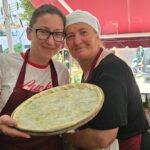
Meet The Family Kitchen: Narden Plum Nectar And A Modern Restaurant Feel
The experience starts with a welcome drink: Narden, plum nectar. It’s a small moment, but it sets the tone—traditional hospitality, then straight into the cooking flow.
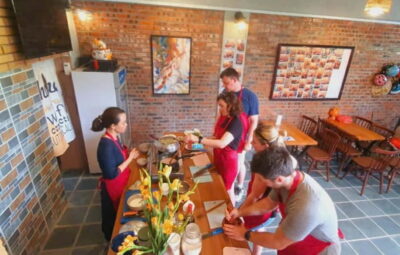
You’ll meet the local guide at the restaurant. The guide is identified by a uniform marked Mëndra, and they help make the experience feel organized without killing the family vibe. Since the class is a private group, it’s easier to ask questions and adjust your pace when you need a breather.
The atmosphere matters more than people think. A modern, comfortable restaurant makes a hands-on class easier to enjoy, especially when you’re learning with flour, mixing bowls, and a clock that moves fast.
The Lakror Workshop: Dough Work, Sauce Prep, And Team Assembly
Lakror is the centerpiece, and it’s built around participation. You’ll work alongside the family’s cooking lead as the group prepares the renowned typical dish, with hands-on time that includes sauce prep and dough kneading.
Here’s the practical part you should know: this is a class, so the goal is learning how to do the steps, not just producing a perfect final pie. The instructor’s job is to keep you moving and correcting mistakes early, when they’re still easy to fix.
Expect a warm, focused kitchen moment where everyone contributes. In a class like this, the best technique is the simplest one: follow the guide closely, then repeat what you’re doing once the group shifts to the next step. You’ll also have the option to choose flavor variants based on taste preferences, which helps if your group has mixed likes and dislikes.
Language support is part of the value here. The instructor works in English and Albanian, and the local guide supports so you can stay confident about what you’re doing.
Fërgesa And Homemade Bread: How The Extra Dish Fits In
Not everyone in the group will do Fërgesa at the exact same hands-on level, but many people will join that part. This is one of those good-trade-offs in a short, two-hour experience: you still get the main meal experience, and you might also get more active cooking time depending on how the group is set up.
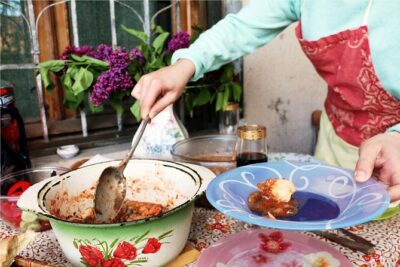
Fërgesa is also paired with homemade bread, which matters because it turns the dishes into a complete plate—not two items that feel separate. Bread is the bridge between “cooking class” and “real lunch,” and that’s a big reason the meal feels satisfying rather than staged.
If you enjoy structure, you’ll like how the class keeps the flow tight. You’ll be cooking, then you’ll be eating what you helped make, which prevents the usual problem of classes that turn into long waiting.
Lunch Included: Two Lakrors, Fërgesa, Bread, Vegetables, And Dessert
This is not a pour-and-sit class. You get a full lunch built around what you prepared, including:
- Two types of Lakror
- Fërgesa
- Homemade bread
- Vegetables
- Traditional dessert
- Water
You should also plan your timing around food weight. One Lakror per person can keep you going for hours, so I’d treat this like a meal, not a light tasting. If you’re coming from the beach, skip the idea of a big breakfast first—your future self will thank you.
Also note what’s included versus not. Alcoholic drinks aren’t included, so if you want a drink with lunch, you’ll need to plan for it.
What makes the lunch portion valuable is the connection. You’re eating inside the story of the class, while the flavors still feel tied to your own work—especially when your hands were involved in dough and sauce steps.
Instructor Energy: Patient Guidance, Then A Little Culinary Confidence
A strong cooking class doesn’t just teach ingredients—it builds comfort. In this workshop, the instruction tends to be patient and friendly, with a sense that the kitchen lead wants you to succeed.
You may notice the teaching style is hands-on and direct. Sometimes that shows up as playful pushing—basically a good kind of bossiness that prevents you from drifting. In a private group setting, that kind of direction works because you’re not competing with a crowd for attention.
There’s also an English-speaking guide component that helps smooth the experience if you’re not speaking Albanian. The result is simple: you understand what you’re doing, and you don’t feel lost when the steps move quickly.
Price And Value: What $65 Buys In A 2-Hour Private Class
At $65 per person for a 2-hour experience, the price only makes sense because so much is included. You’re paying for:
- A welcome drink (Narden)
- Cooking equipment
- Lunch (two kinds of Lakror, Fërgesa, bread, vegetables, dessert)
- Water
- A local guide (son of the family)
- Recipe materials
When you tally that up, it’s close to the cost of a meal plus the benefit of a guided kitchen experience. You’re not just eating Albanian food—you’re learning it, with a takeaway recipe you can use later.
Transportation isn’t included, which is the one place where you’ll do a bit of planning. If you already plan to get to the restaurant anyway, the class value is strong because you don’t have to add much else to your day.
Who This Ksamil Cooking Class Is For (And Who Might Skip It)
I’d steer you toward this class if you want:
- A break from the beach that’s still social
- A hands-on food experience that ends with a real lunch
- A beginner-friendly way to learn traditional Albanian dishes
It also fits mixed cooking comfort levels. The workshop style is built for people who can follow steps, not for people who already have a kitchen background. If you’re traveling with someone who eats more than they cook, this balances well: you do real prep, and you still get the full meal payoff.
If you hate kitchen mess, this might not be your match. Lakror dough work implies flour, hands-on mixing, and an active session. For people who prefer quiet sightseeing, it may feel a bit too participatory.
Practical Tips Before You Go (So You Enjoy The Full 2 Hours)
Here’s how to make the class feel smooth from start to finish:
- Go hungry, but not overfed. The lunch is substantial, and you may not need breakfast beforehand.
- Expect active prep. Dough kneading and sauce prep mean your hands will be involved.
- Ask about flavor variants. You can choose options to match taste preferences, so say what you like.
- Use the language support. If you’re unsure about a step, ask in English or Albanian through the lead and guide.
- Wear comfortable clothes. You’ll be in a working kitchen environment for part of the time.
- Plan your timing. With only 2 hours, you want to arrive ready rather than rushing in late.
The class is led in a way that keeps the momentum. The more you focus on the current step, the better the whole experience lands.
Should You Book This Lakror Workshop In Ksamil?
If you want an Albanian food experience that goes beyond eating—where you cook, learn, and leave full—this is an easy yes. The biggest reasons are the combination: Lakror + Fërgesa, a traditional welcome drink (Narden), and a complete included lunch in a short private setting.
Book it if you like hands-on learning, want a memorable meal, and don’t mind cooking along with the group. Skip it only if you’re set on a low-effort, sit-and-watch activity or if you can’t handle the idea of kneading dough.
If your schedule is flexible, the option to reserve and pay later can make planning easier, and the class has free cancellation up to 24 hours in advance.
FAQ
Where does the cooking class take place?
It takes place in Vlorë County, Albania, at the restaurant location where you’ll meet the guide.
How long is the class?
The experience lasts 2 hours.
What dishes will I prepare and eat?
You’ll prepare traditional Lakror and may also take part in Fërgesa. Lunch includes two kinds of Lakror, Fërgesa, homemade bread, vegetables, and a traditional dessert.
What is included in the price?
Included are the welcome drink (Narden), cooking equipment, lunch, water, a local guide, and a recipe.
What languages are used during the class?
The instructor speaks English and Albanian.
Is this a private group experience?
Yes. The class runs as a private group.
Is transportation included?
No. Transportation to the location is not included.
Is alcohol included?
No. Alcoholic drinks are not included.
FAQ
Is it easy to join if I’m not an experienced cook?
Yes. The class is designed with step-by-step guidance, and you’ll be supported throughout as you work on different tasks.
What should I do about the timing of my meals?
Plan for a full lunch during the 2 hours. Many people find they can skip breakfast and still feel satisfied for a large part of the day after one Lakror per person.
Who do I meet at the restaurant?
Meet the guide at the restaurant. The guide wears a uniform marked Mëndra.
Can I choose different flavor options?
You can choose a suitable flavor variant for the dishes based on taste preferences.
Do I get anything to take home?
Yes. You receive a recipe as part of the included items.