REVIEW · KO SAMUI
Koh Samui: Thai Cooking Class with Local Market Tour
Book on GetYourGuide →Operated by Oh-Hoo · Bookable on GetYourGuide
If you like food more than sightseeing, this hits. This Koh Samui class pairs a short local market tour with a hands-on cooking session so you’re not just watching flavors—you’re building them. I like that it stays small (up to 6 people), so questions don’t get lost in the noise.
The two best parts for me are the chance to choose your dishes ahead of time and the way the teacher keeps you moving with step-by-step guidance. You also end up eating what you make, not some pre-plated show meal.
One thing to consider: you’ll pick items like tom yum, som tam, curries, and pad thai from a set menu, so if you’re picky about spicy food, you’ll want to pay attention when you choose (and ask how things can be adjusted).
In This Review
- Key takeaways before you book
- Why This Koh Samui Class Starts in the Market, Not the Kitchen
- Hotel Pickup and Timing: Getting to the Cooking School Without Stress
- Picking Your Dishes Before You Shop: How the Menu Shapes the Whole Class
- The Market Tour: Learning Spices and Produce You Can Actually Recreate
- The Kitchen Setup: Small Group, Individual Workspaces, and a Garden-Style Feel
- Cooking for Real: Four Dishes Plus Dessert, Made Step by Step
- Eating Your Work: The Best Part Is Sitting Down to What You Built
- Price and Value: Is $93 Worth It in Koh Samui?
- Who This Class Fits Best (And Who Might Want to Choose Another Option)
- Quick Tips to Make Your Cooking Day Go Smoothly
- Should You Book This Koh Samui Market-and-Cooking Class?
- FAQ
- How long is the Koh Samui Thai cooking class?
- Is hotel pickup included?
- What dishes can I choose to cook?
- How many dishes do I cook?
- What language is the tour guide?
- Is there free cancellation?
Key takeaways before you book
- Up to 6 people means real attention at the stove, not just a demo
- 30-minute market tour to understand herbs, veg, and spices before cooking
- Choose from a big menu (spring rolls, curries, pad thai, som tam, and more)
- Ingredients, equipment, and individual stations are included
- Certified Thai chefs and English instruction keep the class clear and practical
Why This Koh Samui Class Starts in the Market, Not the Kitchen
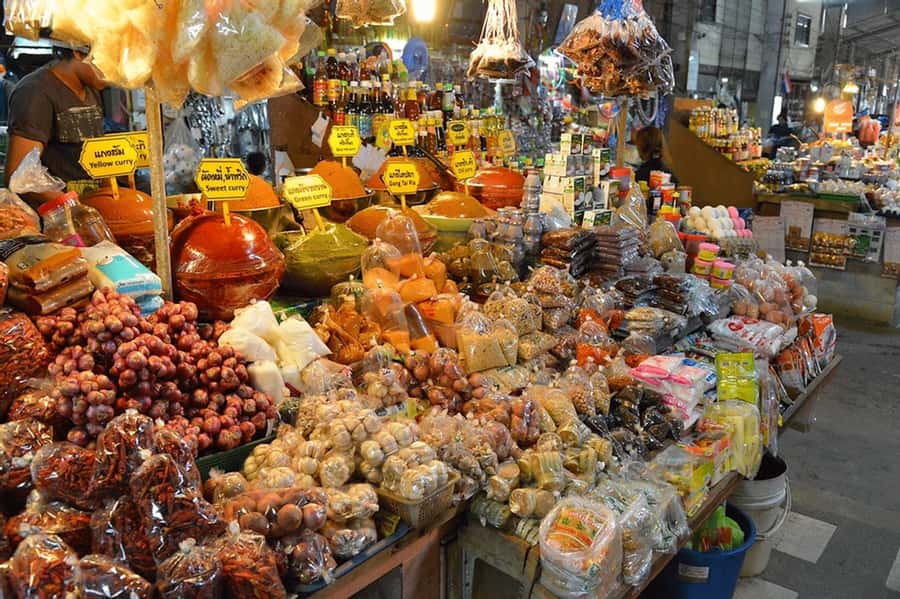
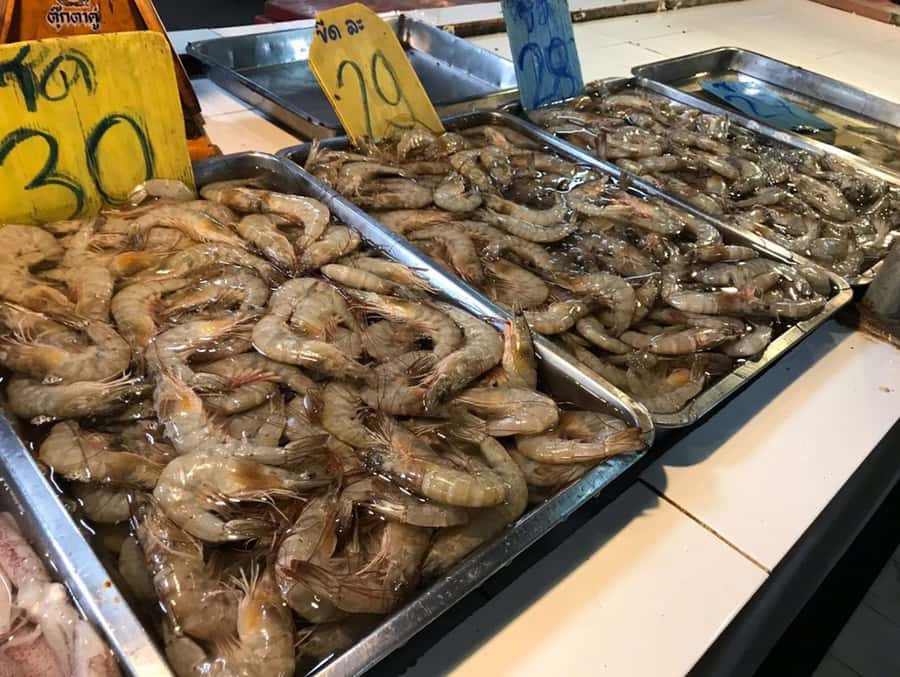
The class begins with a market stop for about 30 minutes, guided in English. That’s not long—so you should treat it like a focused orientation. You’ll look at the ingredients you’re going to cook with soon: herbs, vegetables, spices, and the basics behind how Thai meals are built.
This matters because Thai cooking is ingredient-driven. One wrong chili, one wilted herb, one kind of noodle, and the whole plate changes. Seeing what you’re shopping for first helps you cook with more confidence later, especially when you’re recreating dishes at home.
A second benefit is context. Your guide points out what’s grown locally versus what’s imported, which gives you a better sense of why certain flavors and textures show up in Thai households. It also makes the market feel less like a tourist stop and more like a real part of local food life.
If you’re the type who loves the “why” behind meals—this first step is your head start.
Hotel Pickup and Timing: Getting to the Cooking School Without Stress
You get free hotel pickup from Choeng Mon, Chaweng, and Chaweng Noi (and you’ll also be picked up from Bophut near the main road). If you’re staying on a hill, you may need to go to a nearby hotel or meeting point—so check your email for the exact plan.
You’ll want to be ready early. The schedule includes a window where you arrive 30–50 minutes before the official start, which gives you time to settle in before the day ramps up. It’s also smart to be at the lobby at least 10 minutes before pickup; arriving more than 10 minutes late can mean you’re marked a no-show.
This is one of those tours where logistics affect the vibe. When pickup is smooth, you arrive calm, focused, and ready to cook—rather than rushed.
Picking Your Dishes Before You Shop: How the Menu Shapes the Whole Class
A neat part of this experience is that you choose what you want to cook before heading to the market. That keeps the day personal instead of generic.
Your choices include:
- Appetizers: Spring Roll
- Soups: Tom Yum (spicy soup) and Tom Kah (coconut milk soup)
- Salads: Som Tam (papaya salad) and Glass noodle salad
- Curry: Green Curry, Massaman Curry, Panang Curry
- Stir-fried noodles: Pad Thai and Pad Kee Mao (fried spicy noodles)
- Stir-fry: Fried Rice and Pad Ka Pao (stir-fried with hot basil)
- Dessert: Banana coconut milk
Here’s the practical way to think about it: pick a mix that teaches you technique. For example, pairing a curry (like Massaman or Panang) with a noodle dish (like Pad Thai) helps you learn how Thai flavors shift across different cooking methods—saucing, frying, balancing sweet-sour-salty, and using herbs at the right moment.
Also, don’t underestimate how spicy choices can affect your comfort. Tom Yum and Pad Kee Mao come with heat by nature. If you know you prefer mild flavors, pick your spice-heavy options carefully and ask the teacher what to expect.
Even though you choose dishes early, the cooking portion includes crafting four dishes plus dessert by the end. So you should come in ready to learn more than just your first picks. That extra variety is what makes the meal feel full and satisfying.
The Market Tour: Learning Spices and Produce You Can Actually Recreate
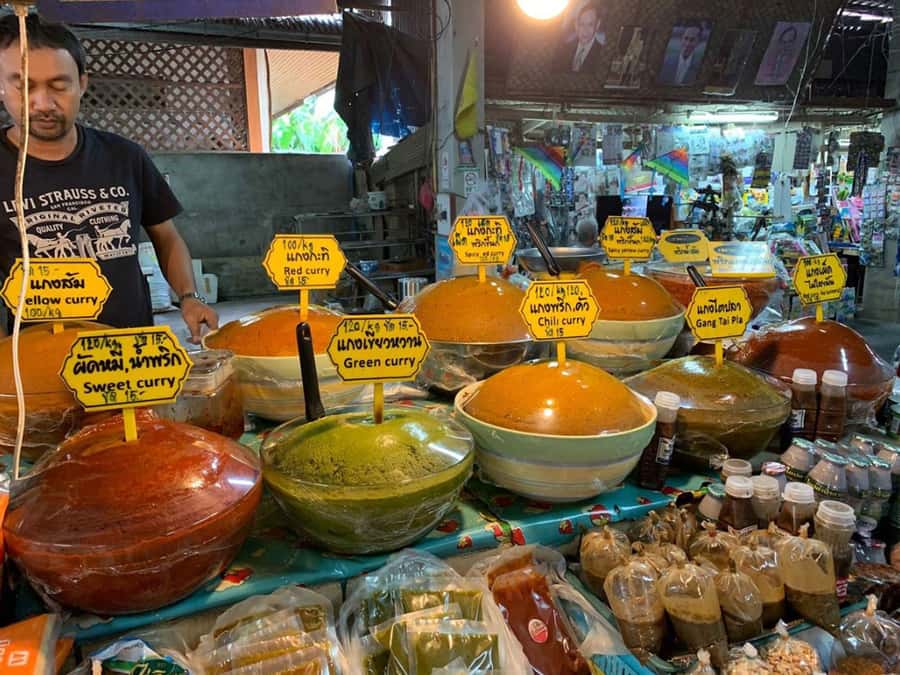
You get about 30 minutes in the market, guided through the ingredients tied to your menu. The best part isn’t trying to see everything. It’s noticing how ingredients connect.
What I like about this setup is that the market stop teaches you what to look for:
- how herbs and vegetables are chosen for freshness
- which spices matter for the dish you’re making
- how different ingredients play roles in Thai flavor building
People often think Thai cooking is just about heat. In reality, it’s balance. Coconut milk soups, sour-salty papaya salad, and nutty curries each need specific ingredients to hit the right texture and flavor.
You’ll also likely hear island-specific notes—things like what grows on Samui versus what comes in from elsewhere. That’s useful because it explains why some flavors taste the way they do on the island.
The Kitchen Setup: Small Group, Individual Workspaces, and a Garden-Style Feel
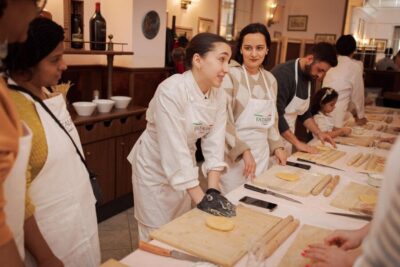
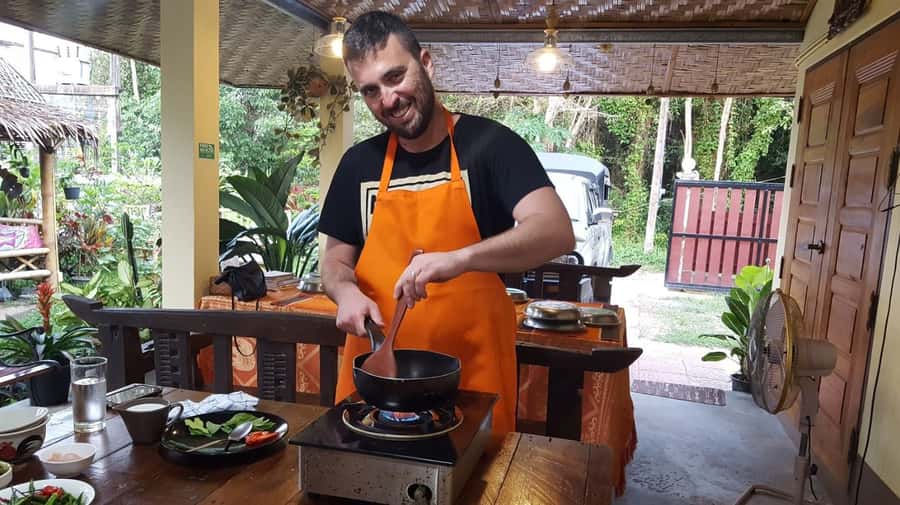
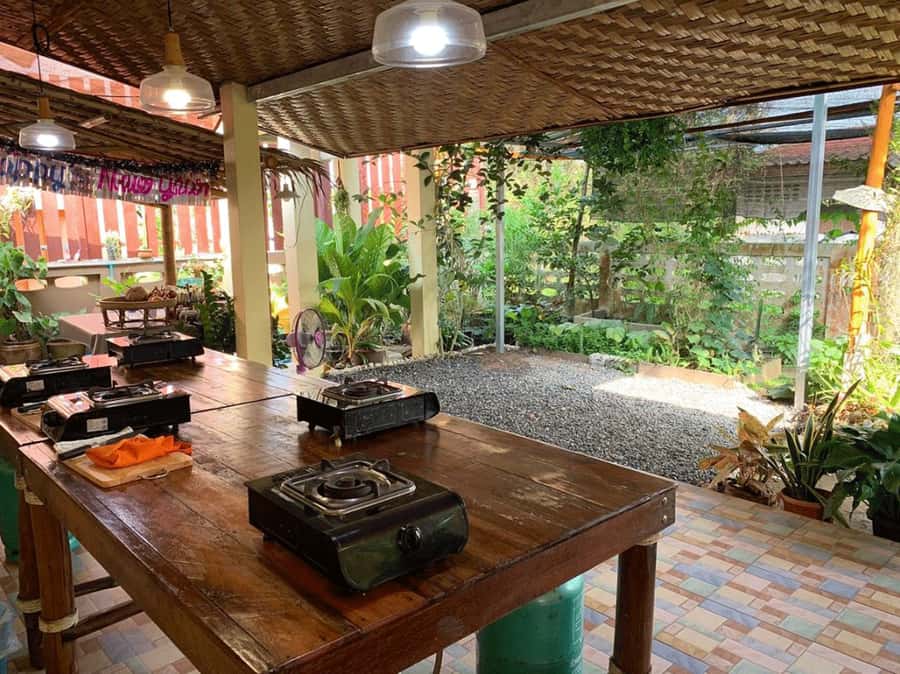
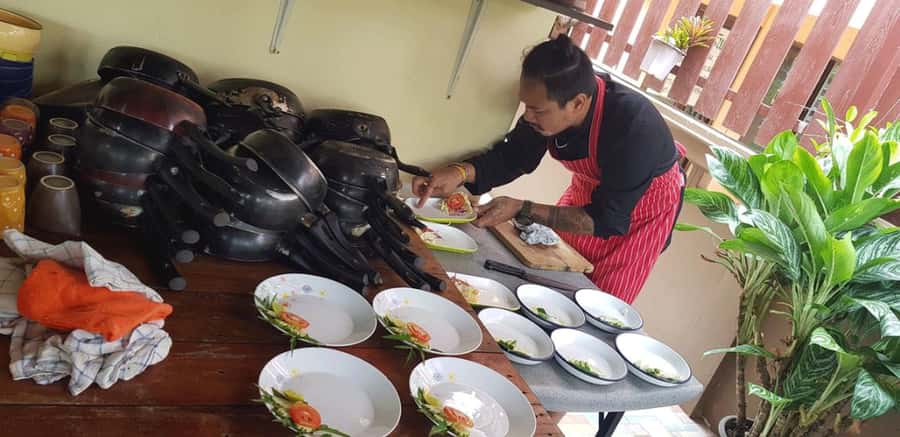
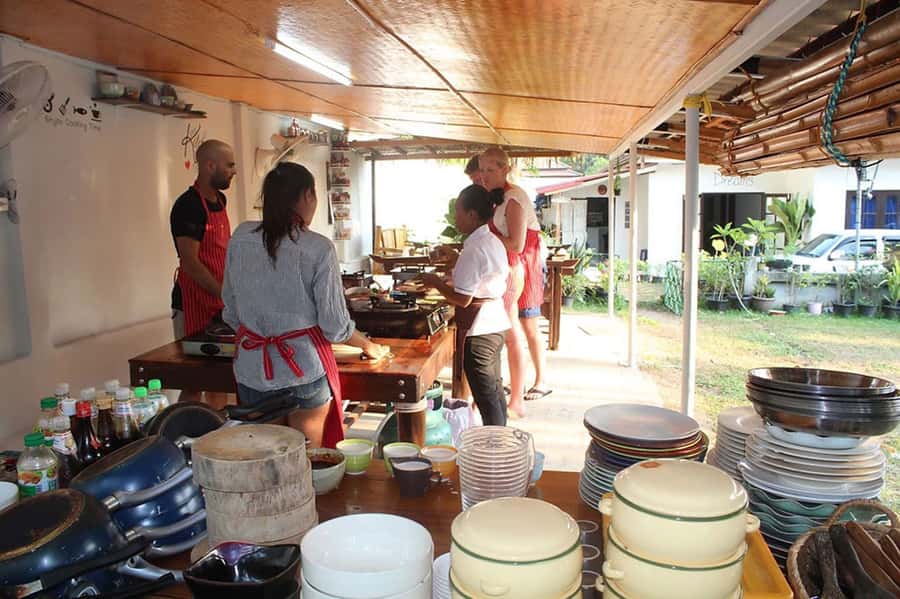
After the market, you return to the cookery school. The kitchen setup is fully-equipped and built for comfort with individual working spaces—so you’re not fighting over tools or hovering behind someone else’s shoulder.
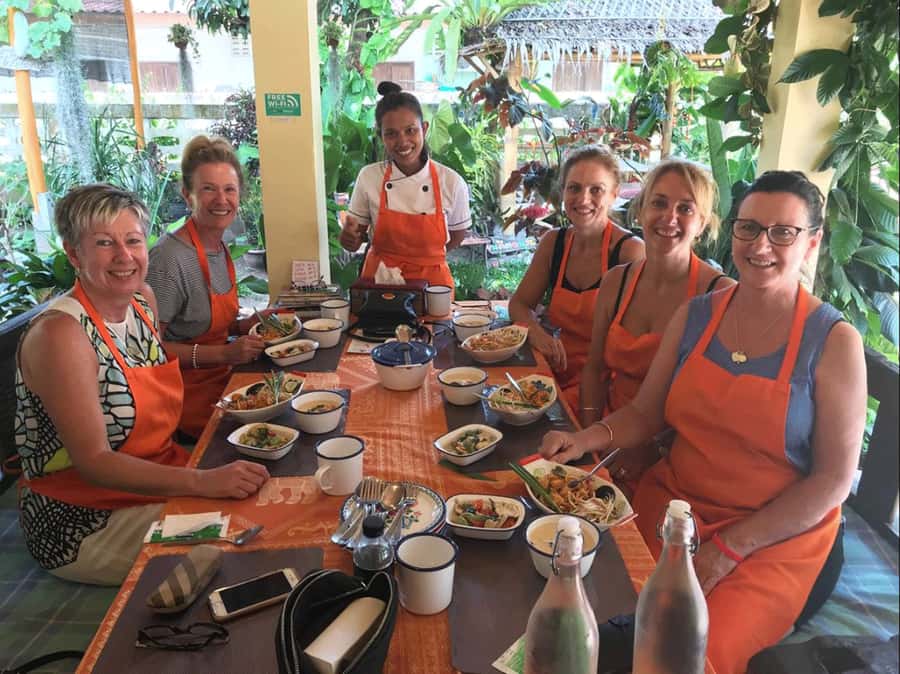
Group size is limited to 6 participants. That’s big enough for lively conversation, but small enough for the teacher to watch what you’re doing. In a cooking class, this is everything. When you’re learning stir-fry timing or soup balance, you need quick corrections.
Many classes are set in a covered outdoor-style area by a garden, which helps the space feel calm and local. You’re not stuck in a fluorescent box. You’re cooking in a place that feels like someone’s working home base.
From the way the class runs, you also get a mix of instruction and hands-on time. The teacher explains before you chop, then steps in while you cook—so you can learn the process rather than just follow steps blindly.
Cooking for Real: Four Dishes Plus Dessert, Made Step by Step
The hands-on part runs about two hours. The teacher—certified Thai chefs—guides you through making four authentic dishes and a dessert.
One reason this class works well is pacing. Multiple people cook at the same time with individual stations, and the instruction is built to handle different dish selections. That’s why choosing your dishes early is helpful: it means your station is set up for what you want to learn.
You’re not just stirring and hoping. You’ll learn key building blocks like:
- how Thai salads get their balance of sour and salty
- how curries develop flavor as you cook and combine ingredients
- how noodle dishes rely on timing and correct heat
- how aromatic herbs (like hot basil in pad ka pao) are used for fragrance
There’s also often discussion of ingredient benefits—like health-related notes tied to what you’re using. That kind of context makes the food feel less mysterious and more scientific in a friendly way.
And yes, hygiene matters here. The class runs with proper food-safety care, which makes it easier to relax and focus on learning technique.
Eating Your Work: The Best Part Is Sitting Down to What You Built
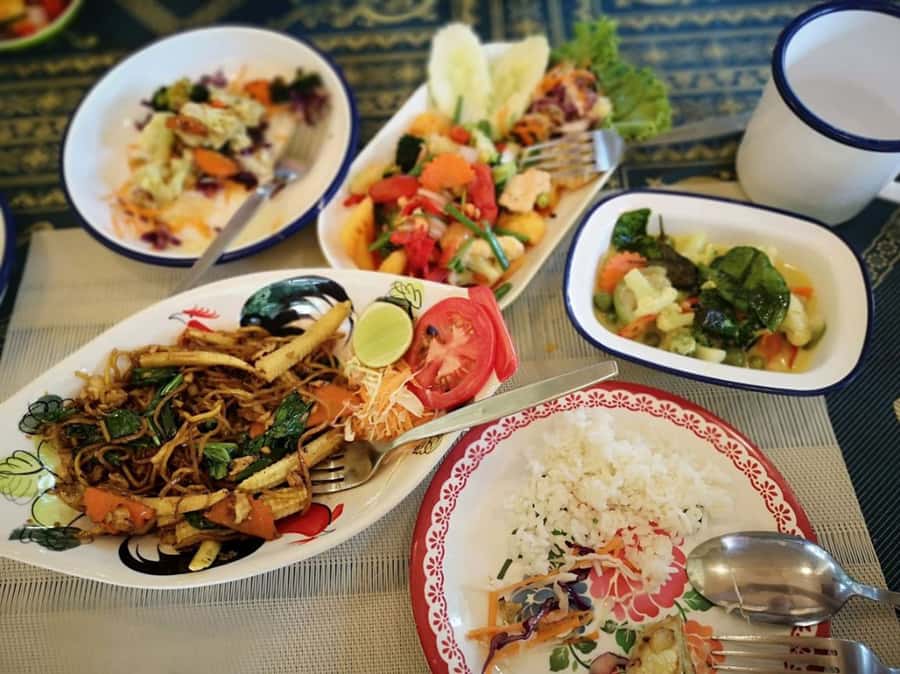
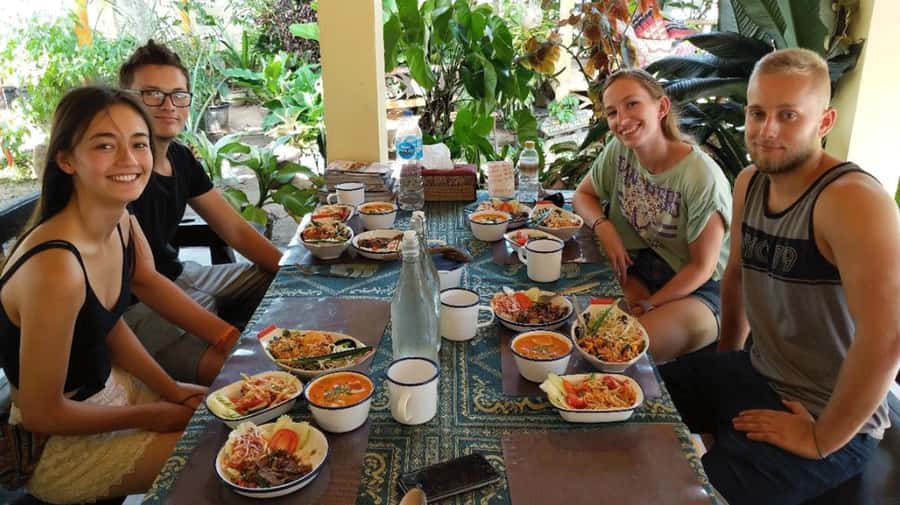
The class ends with you eating the meal you made. You’ll typically cook in stages, and you can often taste between courses, so you’re not waiting the whole time while your food smells awesome and you can’t try it yet.
This is a surprisingly emotional part of cooking classes. When you make a tom yum-style soup or a curry with your own hands, the satisfaction isn’t about novelty. It’s about competence. You taste it and think, I can do this again.
A second advantage: you get to eat while everything is still fresh and hot. That’s not guaranteed in every class, but it’s how this one is set up.
If your goal is to bring something practical home, this meal does the job. You leave with both the memory and the flavor reference point.
Price and Value: Is $93 Worth It in Koh Samui?
At $93 per person for a 3-hour experience, the value comes from what’s included. You’re paying for:
- hotel pickup (in several Koh Samui areas)
- a market tour with guided explanation
- ingredients and cooking equipment
- a small group (max 6)
- instruction from certified Thai chefs
- hands-on work at an individual station
- enough food to count as a full meal
Many cooking classes charge a similar amount, but what makes this one feel fair is the combination. You get shopping context plus cooking instruction plus the final meal, all in a short window. You’re not wasting hours traveling or waiting around.
Also, you’re not limited to one dish. You end up making four dishes and dessert, which spreads the learning across different techniques instead of repeating the same method four times.
If you’re traveling on a mid-range budget and you love food, this is the kind of activity that turns into a real skill, not just a photo stop.
Who This Class Fits Best (And Who Might Want to Choose Another Option)
This tour is a strong match if:
- you want Thai food knowledge you can use later
- you like hands-on learning more than watching
- you appreciate small group attention
- you want a family-friendly activity that stays focused and structured
It’s also a good pick for couples and solo travelers who want a social experience without the big-group energy. With up to 6 people, it’s easy to meet others, but you still get personal guidance at your station.
If you have strong dietary restrictions or you’re very sensitive to spice, you can still choose from a menu, but you’ll want to plan your dish selection carefully and communicate preferences. The menu includes several naturally spicy items (tom yum, pad kee mao, and hot basil dishes), so consider your comfort level.
Quick Tips to Make Your Cooking Day Go Smoothly
- Wear comfortable clothes you don’t mind getting splashed while cooking.
- Bring a light layer if the kitchen area feels cool under shade.
- If you have spice preferences, think about your choices early—tom yum and spicy noodle dishes can be intense.
- Arrive on time for pickup and double-check your email for the exact pick-up instructions.
Little preparation makes a big difference here because the class moves at a working pace.
Should You Book This Koh Samui Market-and-Cooking Class?
If you want more than Thai food as a background experience, book it. This is a small-group class with real instruction, a market stop that explains what you’re cooking, and a finish that lets you eat what you made—four dishes plus dessert.
I’d especially recommend it if you’re short on time in Koh Samui but still want something practical. In three hours, you go from ingredient names to actual technique, and you leave with flavors you can recreate.
If you’re purely chasing beach time and you hate the idea of shopping for ingredients, you might prefer a lighter food tour. But if you like learning by doing, this one is a smart use of your day.
FAQ
How long is the Koh Samui Thai cooking class?
The experience is 3 hours total, with a short guided market tour and about 2 hours of hands-on cooking.
Is hotel pickup included?
Yes. Pickup is included from Choeng Mon, Chaweng, and Chaweng Noi, and also from Bophut near the main road. If you’re staying on a hill, you may need to meet at a nearby hotel or meeting point.
What dishes can I choose to cook?
You can choose from options including spring roll, tom yum, tom kah, som tam, glass noodle salad, green curry, massaman curry, panang curry, pad thai, pad kee mao, fried rice, pad ka pao, and banana coconut milk.
How many dishes do I cook?
You choose dishes before the market, and the cooking portion includes making four dishes plus a dessert.
What language is the tour guide?
The live tour guide instruction is in English.
Is there free cancellation?
Yes, you can cancel up to 24 hours in advance for a full refund.