REVIEW · SURAT THANI PROVINCE
Koh Samui: Evening Thai Cooking Class with Organic Garden
Book on GetYourGuide →Operated by Jungle Kitchen · Bookable on GetYourGuide
Garden cooking in Koh Samui feels personal. I love the outdoor, open-kitchen setup and the way you cook with charcoal stoves and traditional tools, not just a demo. I also love that you make three Thai dishes from scratch, with the curry paste grounded in front of you while you take in the views. The only real drawback is that you’ll likely have extra food at the end since you each cook 3 dishes.
What really makes this class worth your time is the care put into the menu. Before you arrive, they ask about your diet restrictions and favorite dishes, then they tailor the plan and swap ingredients as needed so everyone gets a proper version of the same core menu. Just note: the garden ingredient gathering is weather permitting, so if it’s rainy, the flow still works, but you may not harvest as many items as you hoped.
In This Review
- Key things you’ll notice before you book
- Evening Thai cooking on Koh Samui: why this timing works so well
- Getting to the kitchen: Fishermans Village convenience and the “nearby” advantage
- Organic garden tour: the ingredient angle that makes the menu feel real
- From welcome drink to dinner: a realistic walkthrough of the 270 minutes
- 1) 5:00pm welcome, briefing, and garden start
- 2) The “menu decisions” happen before you cook
- 3) Your three dishes: soup or salad, curry, then noodles or stir-fry
- 4) Short break while charcoal stoves are prepped
- 5) Cooking begins, then you eat in the gardens
- The curry paste moment: why grinding spices is more than theater
- Vegetarian-friendly by design (not by accident)
- Charcoal stoves and open-air cooking: the fun part, plus the one thing to watch
- Price and value: what $125 buys you on Koh Samui
- Who this cooking class is best for
- Should you book this Koh Samui evening class?
- FAQ
- What time does the class start and how long is it?
- How many people are in the group?
- Is the class taught in English?
- Can the menu be adjusted for allergies or dietary restrictions?
- What dishes do you cook?
- Is there an ingredient harvest in the organic garden?
- What cooking equipment and tools are used?
- Do you get to eat what you cook?
- Is pickup included from all locations on Koh Samui?
- Are alcohol drinks included?
Key things you’ll notice before you book
- A 5pm start that turns cooking into dinner party mode, with soft drinks and a welcome drink to kick things off
- Small group size (max 8), so you get real hands-on time instead of watching from the sidelines
- Organic garden tour with possible ingredient harvest, then you cook what you just collected
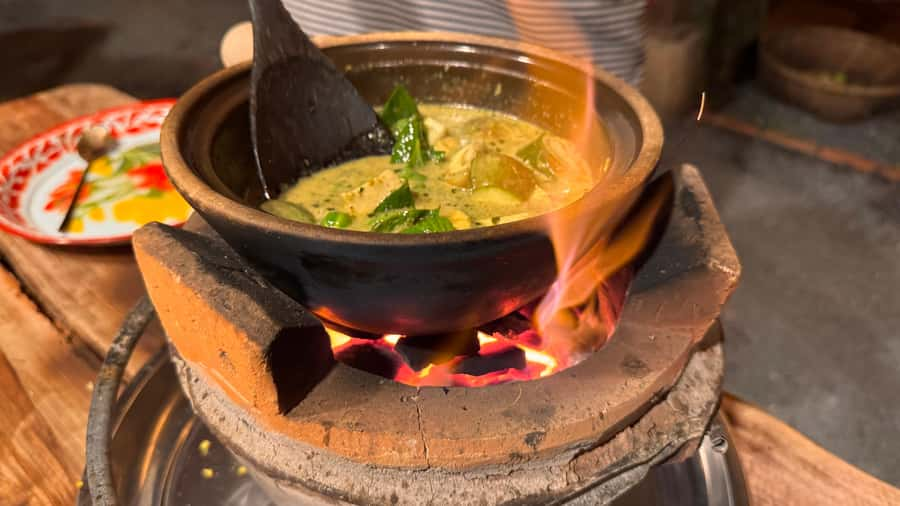
- Charcoal stoves plus traditional techniques, including grinding spices for curry paste
- A menu tailored to your group, including substitutions for vegetarian diets
Evening Thai cooking on Koh Samui: why this timing works so well
I like activities that feel like a meal, not a production. This class starts at 5:00pm, which means you’re not fighting the hottest part of the day, and you end with dinner while the light is soft. The organizers set it up so the evening feels social from minute one: you get a welcome drink, a briefing, then you head straight into the gardens.
Also, the pacing is thoughtful. You’re not stuck cooking nonstop for hours, and you do get built-in pauses—like when the staff get the charcoal stoves ready—so the heat and timing are handled. It’s a nice rhythm for a day when you might otherwise be thinking, What should I do tonight?
One more thing I really appreciate: this isn’t a “watch and taste” class. You’re hands-on for three dishes, and you’ll actually eat what you make. That’s a big quality difference on Koh Samui, where you can find lots of cooking experiences that stop short at one dish and a sampling.
Getting to the kitchen: Fishermans Village convenience and the “nearby” advantage
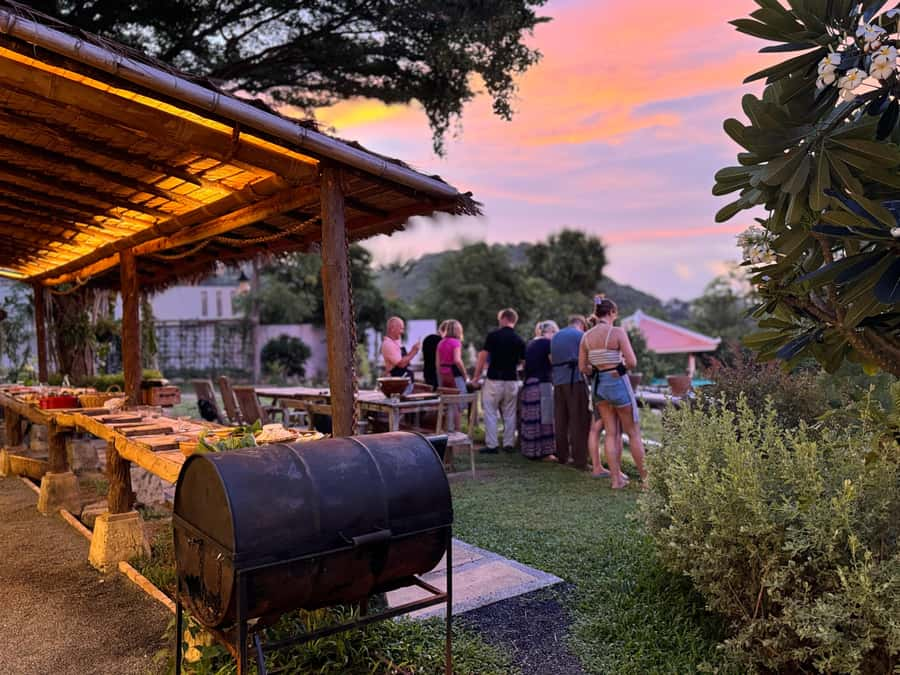
Location matters on island time. This setup is just minutes from Fisherman’s Village, and they offer a complimentary pickup from Fisherman’s Village only. If you’re staying nearby, it’s easy: you show up, and they take the first logistics task off your plate.
If you’re staying elsewhere, transport isn’t free, but they can arrange it for cost. That’s good to know because it can make or break the value for you—especially on a day you’d rather spend sightseeing than budgeting for taxis.
The class itself runs 270 minutes, so plan for a proper evening. The finishing time is around 9:00pm, which fits well if you want a late dinner without losing your whole night to travel.
What to bring is simple: comfortable shoes. You’ll be moving around during the garden tour, and you’ll want your feet to be happy while you’re standing near the cooking stations.
Organic garden tour: the ingredient angle that makes the menu feel real
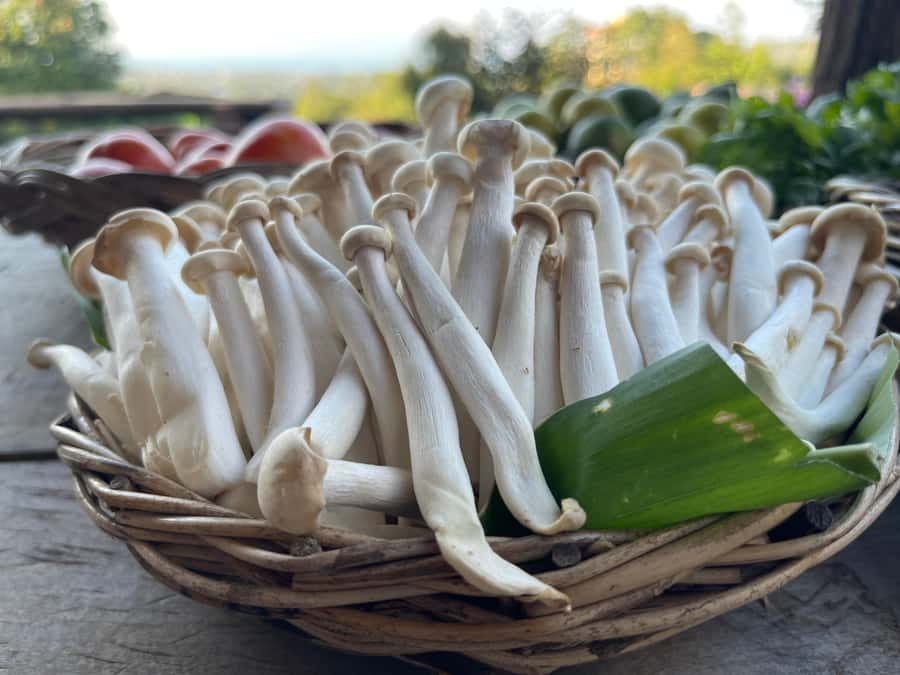
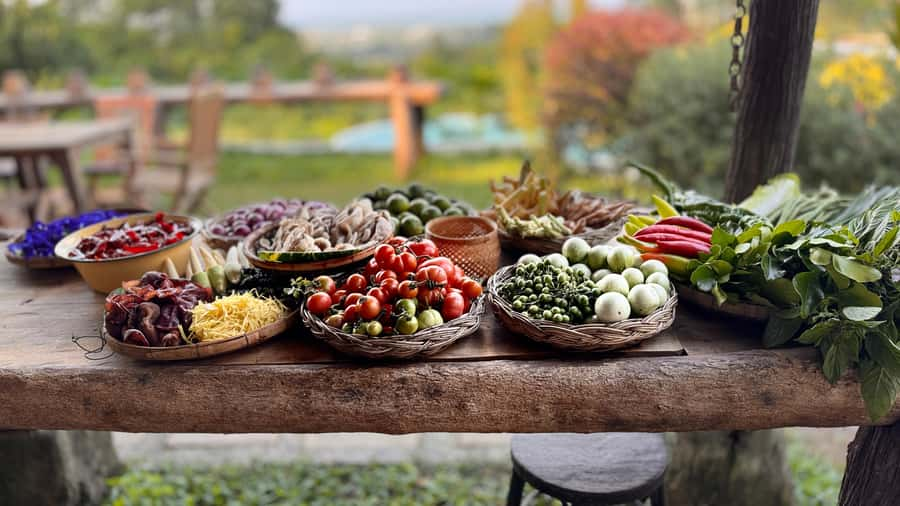
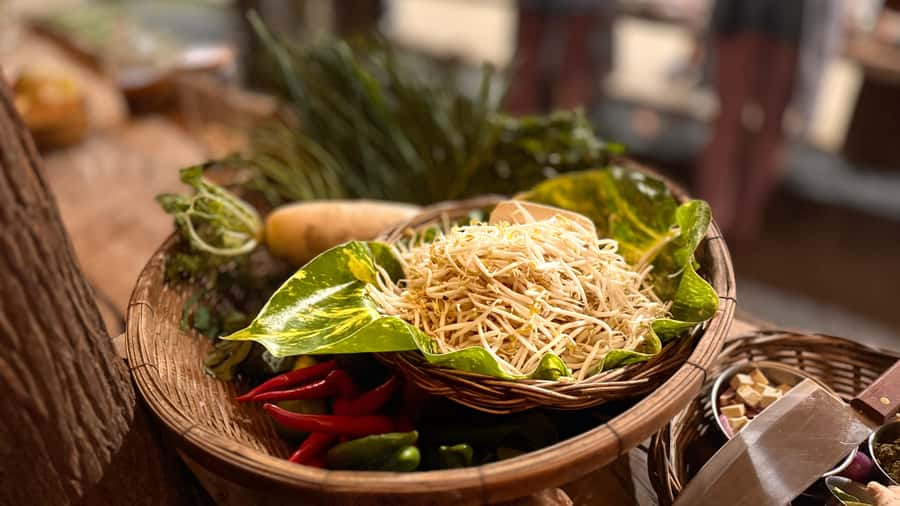
The most memorable start here is the garden section. Before you cook, you tour the extensive organic gardens and collect ingredients during the walk, if conditions allow. That matters because it turns Thai cooking from a classroom exercise into something more grounded: you’re not just reading about flavors, you’re grabbing the raw material.
Even if it’s only a portion of what you hope to harvest, the tour still gives you useful context. You learn what ingredients look like before they become paste, soup, or garnish. You also get a better feel for how Thai cuisine builds flavor in stages instead of relying on one magic sauce.
And since the menu is set based on what the group needs, this ingredient moment becomes personal. If someone requests vegetarian options, the substitutes are handled in the planning—not last-minute patchwork.
One practical note: the harvest portion is weather permitting. If it’s rainy, don’t assume the whole garden plan gets canceled; the overall flow remains, but you might not gather as many items as you’d planned.
From welcome drink to dinner: a realistic walkthrough of the 270 minutes
Here’s how the evening typically runs, and why each step is set up the way it is.
1) 5:00pm welcome, briefing, and garden start
You arrive and start with a welcome drink plus water and soda water. Then there’s a briefing and the garden tour. This part isn’t just scenery time. It’s your first look at ingredients you’ll later use, plus it sets you up for how the rest of the menu will work.
2) The “menu decisions” happen before you cook
They contact you in the days before class to ask about food allergies, diet restrictions, and favorite dishes. Then they finalize the menu no later than the morning of the class, based on what they hear from all participants.
You’ll notice something important here: you essentially cook the same dishes as everyone else, but with ingredient substitutions where needed. That keeps the group experience intact. You’re still learning the same techniques, just tailored for your diet.
3) Your three dishes: soup or salad, curry, then noodles or stir-fry
The structure is reliable, even if the exact dishes vary based on your menu:
- Usually one soup or salad
- A curry made from scratch, with its own paste-building stage
- A noodle or stir-fry dish
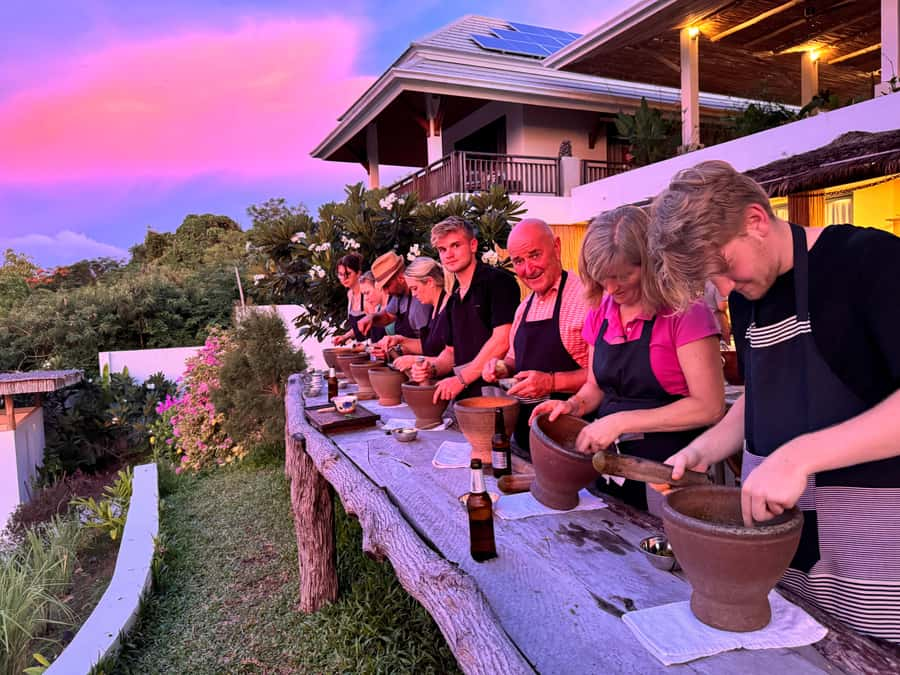
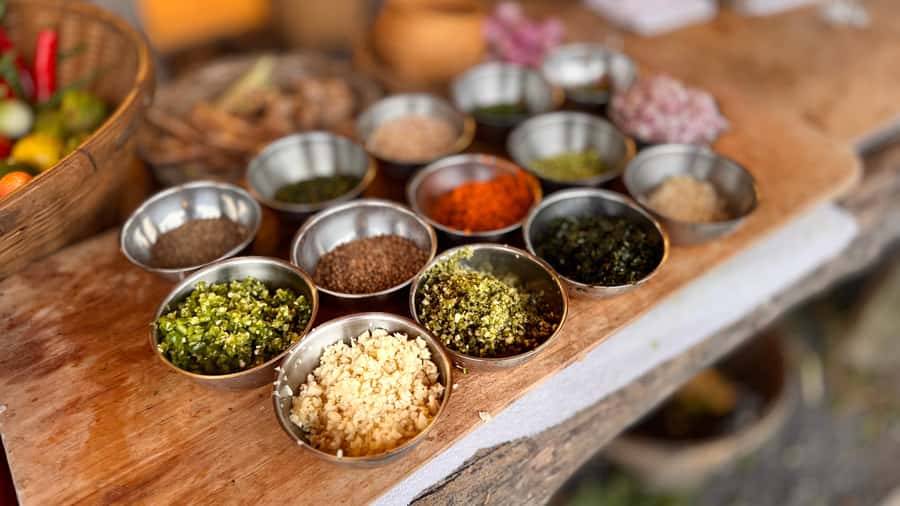
The curry is the centerpiece. You’ll grind the spices needed for your curry paste while you’re in the open kitchen area with views. It’s hands-on, and it’s the flavor moment of the night.
4) Short break while charcoal stoves are prepped
After you’ve done the early prep, there’s a break. During that downtime, the staff prepare the charcoal stoves for cooking. It’s a smart move: charcoal needs the right setup, and you don’t want to lose your momentum while heat is being sorted out.
5) Cooking begins, then you eat in the gardens
Once the stoves are ready, the cooking starts in earnest. Finally, you enjoy dinner of your own creations in the gardens, and the whole thing wraps up around 9pm.
This matters for your planning: you’re not carrying your food around town or trying to find a restaurant afterward. The class ends where the meal happens.
The curry paste moment: why grinding spices is more than theater
If you care about Thai cooking beyond taste, the curry paste stage is where you learn the most. You don’t just buy paste and heat it. You grind spices needed for your curry paste, and you do it with an actual view in front of you and a real kitchen setup around you.
Thai curry flavor doesn’t come from one ingredient. It comes from the balance built during preparation—aroma, heat, and depth coming together as you work. When you grind the spices yourself, it becomes easier to understand what you’re tasting later, even if you can’t name every spice at first.
And because this class is small (up to 8 people) with an instructor in English, you’re more likely to get questions answered while you’re working. That’s how you go home thinking, I can do this again, instead of I enjoyed it but I forgot everything.
Vegetarian-friendly by design (not by accident)
A standout detail for me is how vegetarian diets are handled. One experience here involved vegetarian participants and the class adapted the recipe with vegetarian versions of staples like fish sauce and oyster sauce. Those substitutions worked, and the point is: they plan for it.
That kind of planning changes your experience. You’re not stuck with “something close.” You get a version that’s built to match the menu’s idea, and you still follow the same cooking process.
If you’re vegetarian or have another dietary restriction, be sure to tell them during the pre-contact stage. The better they know your needs, the smoother the substitutions go during the evening.
Charcoal stoves and open-air cooking: the fun part, plus the one thing to watch
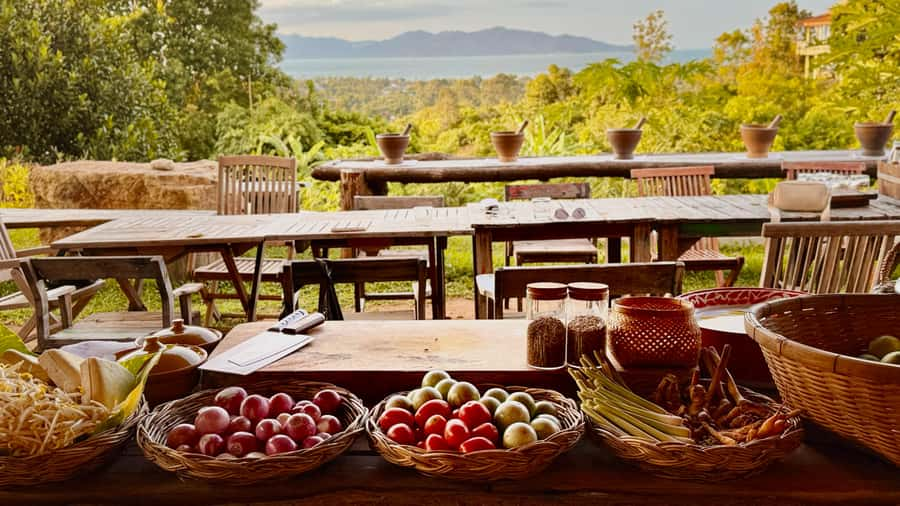
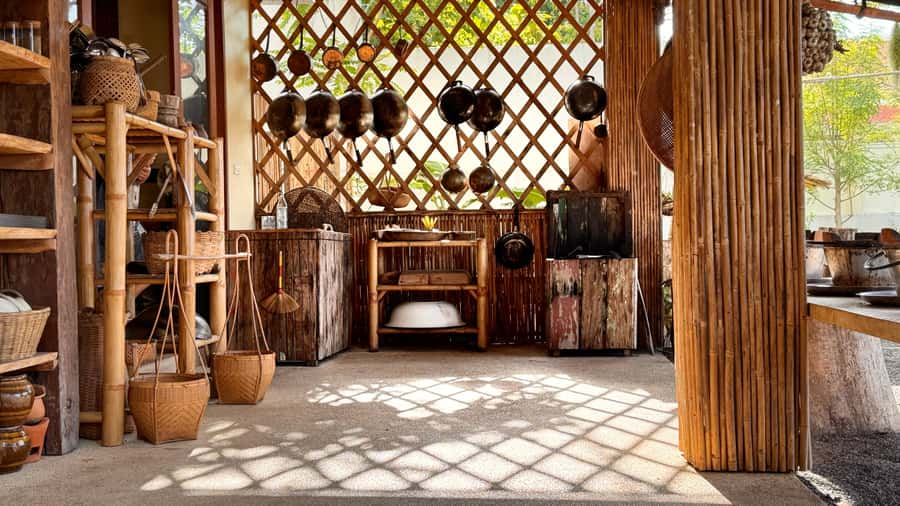
Cooking on charcoal stoves and using traditional tools is a big part of why the evening feels special. The heat behaves differently than gas or electric, and you feel that difference when you’re cooking. You also get the “open kitchen” vibe, where the kitchen is outdoors and the views are right there.
This is the kind of setting that makes the class feel like a family meal with instructions attached. One review described the hosts creating a friendly, family-style atmosphere, and that matches the overall feel: everyone stays in the same space, learning side-by-side.
The practical consideration is weather. Since the kitchen is outdoors and part of the experience involves the garden, you’ll want to dress for a humid evening and be ready for the possibility of rain. Comfortable shoes help regardless of weather, but clothing can be the difference between enjoying the night and thinking about where to stand.
Price and value: what $125 buys you on Koh Samui
At $125 per person for about 4.5 hours, you might wonder if it’s worth it. Here’s the value math I think matters:
You’re not paying only for “a lesson.” You’re paying for:
- Three dishes you make yourself from scratch
- All ingredients and cooking equipment
- A welcome drink, water, and soda water
- Dinner featuring what you cook
- An organic garden tour (with possible ingredient harvesting)
- An instructor in English
- A small group capped at 8 participants
- Optional food customization via pre-contact for allergies and preferences
Compare that to typical island meal prices plus any cooking demo you’d pay for. You’d spend money eating out, then spend money trying another activity. This bundles the meal and the activity into one evening, and it’s structured enough that you walk away with actual cooking skills, not just a full stomach.
Alcohol isn’t included, so keep that in mind if you plan to drink. But even with that consideration, the overall package is still strong because you’re getting the meal and the hands-on cooking in one ticket.
Who this cooking class is best for
This class fits best if you want Thai food you can understand and repeat later.
You’ll especially like it if:
- You want a hands-on meal experience rather than a quick tour
- You enjoy cooking curry and building flavors from scratch
- You’re traveling as a couple or small group and want a social evening
- You have dietary restrictions and want planning ahead of time
It also works for couples who like different things. One person can lean into cooking, the other can enjoy watching and chatting, since non-cooking companions are welcome for 1,500 THB cash on arrival. Companions join the garden tour, watch the cooking, and eat dinner with complimentary soft drinks. That’s a useful option if not everyone wants to chop and stir.
Should you book this Koh Samui evening class?
I’d book it if you want your night to end with dinner you made, plus a real cooking process you can take home. The curry paste element, charcoal stoves, and outdoor open kitchen setup are the kind of details that make cooking feel like a lived experience instead of a checklist.
I’d think twice only if you strongly dislike outdoor settings or you hate the idea of cooking enough food for three dishes and possibly leaving some behind. It’s not a tiny snack. It’s a full meal you build yourself.
If you’re on Koh Samui and you want one activity that’s both practical and genuinely enjoyable, this is the kind of evening that pays you back: you eat well, learn real techniques, and get a memorable backdrop in the gardens.
FAQ
What time does the class start and how long is it?
Classes start at 5pm and last about 270 minutes, finishing around 9pm.
How many people are in the group?
It’s a small group limited to 8 participants.
Is the class taught in English?
Yes. The instructor speaks English.
Can the menu be adjusted for allergies or dietary restrictions?
Yes. In the days before class, they contact guests to ask about allergies and diet restrictions, then tailor the menu accordingly.
What dishes do you cook?
You usually cook three dishes: a soup or salad, a curry made from scratch, and a noodle or stir-fry dish.
Is there an ingredient harvest in the organic garden?
There is an organic garden tour, and you may collect ingredients during the tour weather permitting.
What cooking equipment and tools are used?
You cook using traditional tools and techniques on charcoal stoves, with all ingredients and equipment provided.
Do you get to eat what you cook?
Yes. Dinner includes the dishes you prepare.
Is pickup included from all locations on Koh Samui?
Pickup is complimentary only from Fisherman’s Village. Transport from other locations can be arranged at cost.
Are alcohol drinks included?
No. Welcome drink, water, and soda water are included, but alcoholic drinks are not included.