REVIEW · HUE
Home Cooking Class in Hue City
Book on Viator →Operated by DN Tour · Bookable on Viator
Cooking in a Hue family kitchen feels personal. You’ll learn iconic regional dishes like bun bo Hue while chatting with the people who actually live the food. The small-group setup (up to 10) keeps it hands-on, not like a show.
Two things I like a lot: you get a five-dish meal that includes dishes the host preps plus two dishes you make, and the class is led by an English-speaking local chef who can answer real questions. One trade-off: there’s no hotel pickup, so you’ll need to get yourself to the meeting point in Hue.
You start at W-Factory in Thủy Xuân, Huế, then spend about four hours cooking and eating at a local home. If weather is bad, the experience may be changed or fully refunded, so keep that flexibility in mind.
In This Review
- Key highlights you should care about
- From W-Factory to a Real Home Kitchen in Hue
- What You’ll Cook in Hue (and Why Those Dishes Matter)
- Bun bo Hue: the spicy noodle soul of the region
- Banh khoai: Hue-style pancakes that teach texture
- Nem lui: lemongrass skewers with aromatic payoff
- The Flow of the Class: Cooking, Eating, and Chatting With the Family
- Your Host and the English-Speaking Chef: Why It Feels Comfortable
- Price and Value: Is $39 Fair for a 4-Hour Meal-Making Class?
- Logistics That Matter: Timing, Group Size, and What to Bring
- Who Should Book This Hue Cooking Class (and Who Might Skip It)
- Should You Book? My Take
- FAQ
- What is the price of the Hue home cooking class?
- How long does the cooking class last?
- Where do I meet for the experience?
- Is hotel pickup and drop-off included?
- How many dishes are included in the meal?
- Do I cook any dishes myself?
- Are drinks included?
- Is the chef able to speak English?
- What group size should I expect?
- What happens if the weather is bad?
- What is the cancellation policy?
Key highlights you should care about
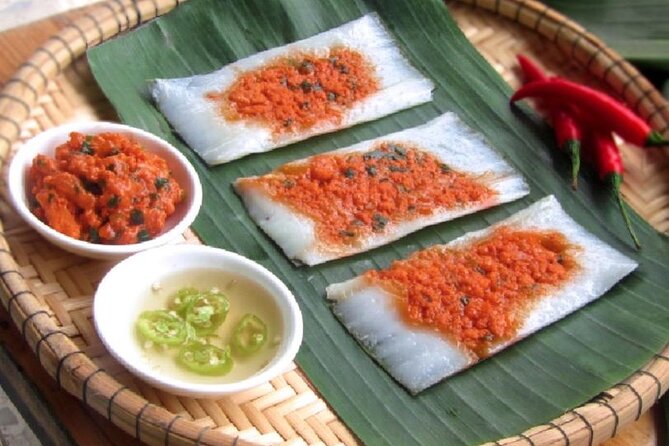
- Hands-on practice: you cook 2 dishes, not just watch
- Classic Hue menu: bun bo Hue, banh khoai, nem lui are front and center
- English support: an English-speaking local chef makes questions easy
- Small group (max 10): better pacing, more time with your host
- Meal included: you leave with a full plate, not just a tasting
From W-Factory to a Real Home Kitchen in Hue
Hue home cooking classes start with a simple plan: meet at W-Factory, 10 Võ Văn Kiệt, Thủy Xuân, Huế, and then head into a family home to cook. The whole session runs about 4 hours, so it’s long enough to learn several dishes, but short enough that you won’t feel stuck all day.
Because there’s no hotel pickup or drop-off, I treat this like a “you get yourself there” activity. If you’re staying in central Hue, plan your route ahead so you don’t burn your morning or afternoon wrestling with timing. The good part: since you’re meeting at a fixed spot and returning there, your logistics stay clean.
One more detail to watch: the class is weather-dependent. If it gets canceled due to poor weather, you’ll be offered a different date or a full refund. That’s rare comfort in Vietnam, where rain can be sudden.
You can also read our reviews of more tours and experiences in Hue.
What You’ll Cook in Hue (and Why Those Dishes Matter)
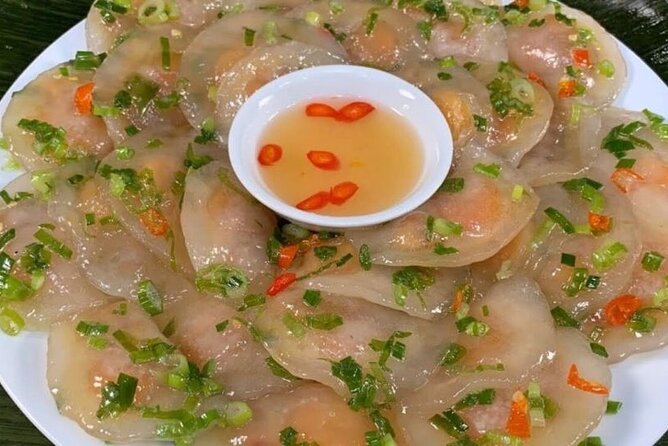
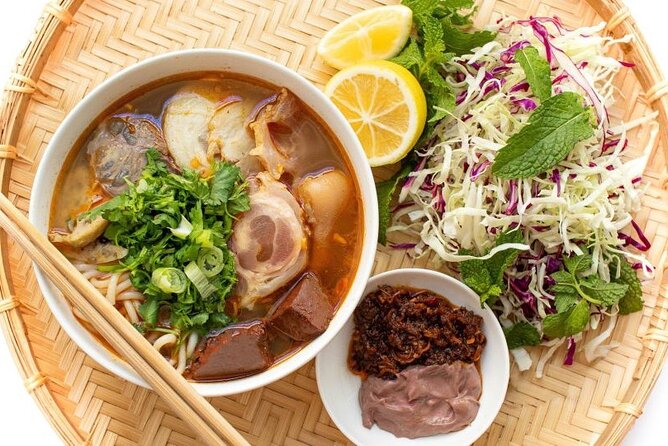
This class focuses on food that feels specifically Hue, not just generic Vietnamese cooking. You’ll learn how to prepare iconic dishes such as bun bo Hue, banh khoai, and nem lui (lemongrass skewers). You also get a meal that totals 5 local dishes.
Here’s how these dishes help you understand Hue fast:
Bun bo Hue: the spicy noodle soul of the region
Bun bo Hue is known for its bold, warming flavor and noodle comfort. In a home cooking class, what you’re really learning isn’t just ingredients—it’s how Hue balances heat, aroma, and depth. Even if you’ve had it in restaurants, cooking it gives you a better sense of why it tastes the way it does.
What to expect for your role: you’ll likely help with the parts of the process that shape flavor, since the class is designed for you to actively cook (not just take notes).
Banh khoai: Hue-style pancakes that teach texture
Banh khoai are Hue pancakes, often made with a thinner batter and toppings that create a different mouthfeel than the more familiar Vietnamese pancake style. This is the dish that can surprise you, because it tends to reward attention to thickness and cooking time.
If you like food that teaches through mistakes—adjusting, testing, trying again—this is where you’ll get that. The host preps some items in advance, but the lesson includes what guests do on the day.
Nem lui: lemongrass skewers with aromatic payoff
Nem lui (lemongrass skewers) are a favorite because the scent hits immediately. Cooking skewers at home is also a practical skill—portioning, rolling, and getting the right cook through.
This is one of those Hue dishes where your nose is part of the tasting. When you cook it yourself, you start to understand how “aroma cooking” works, not just seasoning.
The Flow of the Class: Cooking, Eating, and Chatting With the Family
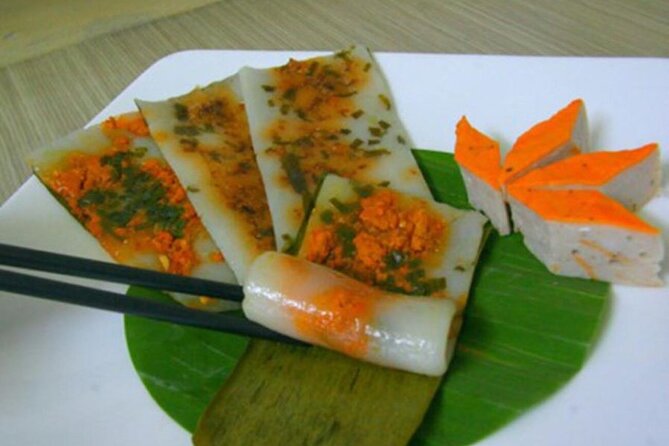
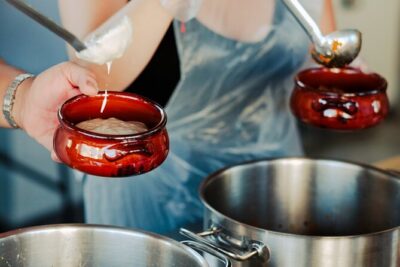
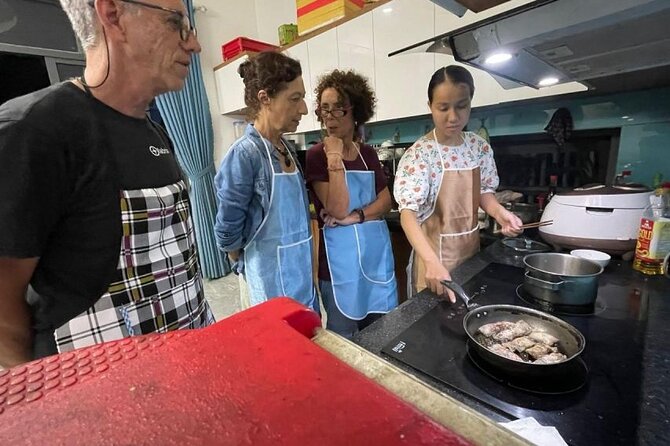
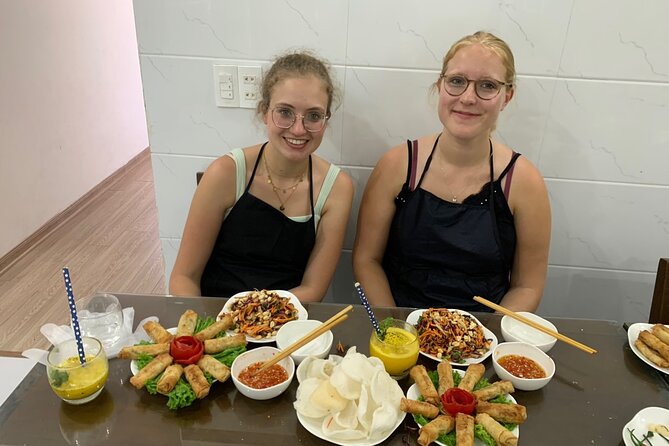
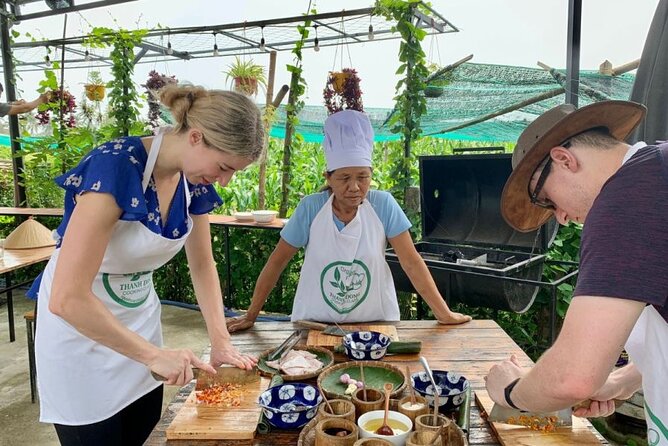
A big reason this experience works is the rhythm. The host prepares several dishes before class, and then you take over with 2 dishes you cook during the session. That keeps the pace realistic: you get hands-on time, but you also get to sit down and eat without a three-hour wait for everything to finish.
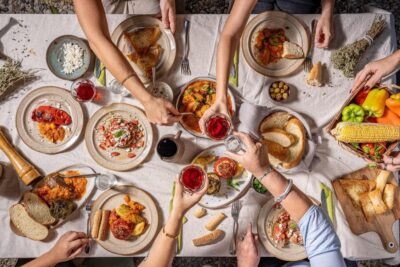
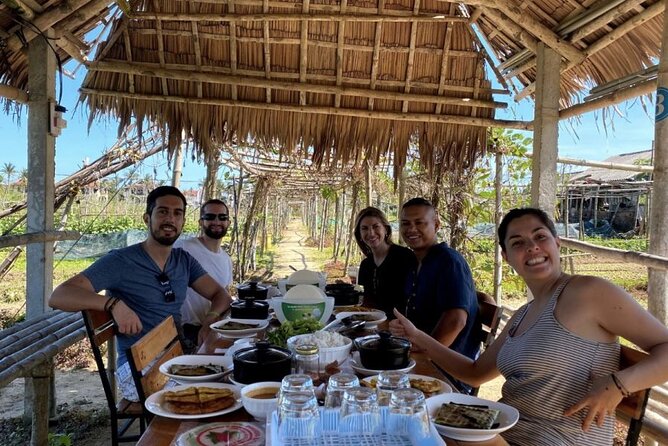
Then you eat. The meal includes 5 local dishes total, which means you’re not leaving hungry and you can taste the bigger picture of what Hue families consider a proper spread.
The cultural exchange part happens naturally while you cook. You can ask questions about local customs, family traditions, and the role of food in daily life. You’re not expected to be an expert—mostly, you’re expected to show interest and ask things like what makes their version special.
Your Host and the English-Speaking Chef: Why It Feels Comfortable
One of the most praised aspects is the welcome. In the kind of homes where classes are hosted by an English-speaking chef—one example being Rosa—expect a friendly start that may include homemade green tea. In Rosa’s case, the leaves come from the collection in the morning, then the tea is prepared at home.
Even if your host is someone else, the pattern is similar: warm hospitality, practical guidance, and a calm pace where you can ask questions without feeling rushed.
And because the group is capped at 10 travelers, you’re more likely to get direct answers instead of watching from the edge of the kitchen. For anyone who’s shy about speaking up, this smaller format helps a lot.
Price and Value: Is $39 Fair for a 4-Hour Meal-Making Class?
At $39 per person, this is priced like a budget-friendly food activity, but the content is stronger than many cheaper classes. You’re not just paying for “watching someone cook.” The package includes:
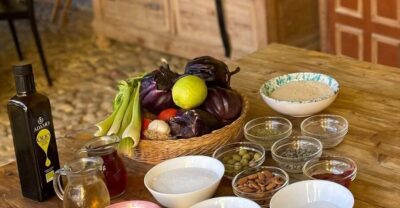
- ingredients for the cooking class
- an English-speaking local chef
- a meal with 5 local dishes
- support for 2 dishes you prepare yourself
The main things not included are drinks and hotel pickup/drop-off. Still, compared to a single sit-down meal plus a cooking experience, you’re getting real instruction and a full eating outcome in one go.
If you enjoy interactive food activities and don’t want to spend extra on lessons that barely get you cooking, this is a good value choice.
Logistics That Matter: Timing, Group Size, and What to Bring
This runs for about 4 hours. That time window matters because you can do it without turning your Hue day into a full-day project. It’s also long enough to learn and eat, so you don’t need to schedule a big dinner right after.
You’ll also get a mobile ticket, and confirmation is received when you book. With smaller group size (max 10), it’s also the type of activity that tends to sell out if you wait too long—on average it’s booked about 12 days in advance, so I’d book earlier rather than later if your dates are fixed.
What should you bring? The data doesn’t list specifics, so think practically:
- plan for a home setting (comfortable shoes help)
- bring a small amount of cash for anything not included (since drinks aren’t included)
- come ready to taste and learn, not just photograph
Who Should Book This Hue Cooking Class (and Who Might Skip It)
I think this is a great fit if you want:
- a small-group, hands-on cooking experience
- Hue-focused dishes like bun bo Hue, banh khoai, and nem lui
- real conversation with locals during the cooking and meal
It may be less ideal if you strongly need hotel pickup or if you dislike activities that depend on good weather. Otherwise, for most visitors, this is one of the clearest ways to connect food to daily life in Hue.
If you’re a solo traveler, this setup can also feel comforting. A group of up to 10 still has a social vibe, but it’s not so large that you feel lost.
Should You Book? My Take
Yes, I’d book this if you care about learning actual Hue flavors and you like a family-style pace. For $39, the mix of ingredient learning, cooking practice (you make 2 dishes), and a full 5-dish meal is a strong deal.
I’d think twice only if you don’t want to handle getting to the meeting point yourself or you’re traveling during a period where rain could disrupt plans. If you can be flexible with timing, this class is exactly the kind of Hue experience that makes the city taste like the place it is.
FAQ
What is the price of the Hue home cooking class?
The price is $39.00 per person.
How long does the cooking class last?
It lasts about 4 hours.
Where do I meet for the experience?
The meeting point is W-Factory, 10 Võ Văn Kiệt, Thủy Xuân, Huế, Thành phố Huế 53000, Vietnam.
Is hotel pickup and drop-off included?
No. Hotel pickup and drop-off are not included.
How many dishes are included in the meal?
The meal includes 5 local dishes in total.
Do I cook any dishes myself?
Yes. The host prepares some dishes before class, and you prepare 2 dishes during the cooking class.
Are drinks included?
No. Drinks are not included.
Is the chef able to speak English?
Yes. The class includes an English-speaking lady as the local chef.
What group size should I expect?
The maximum group size is 10 travelers.
What happens if the weather is bad?
The experience requires good weather. If it’s canceled due to poor weather, you’ll be offered a different date or a full refund.
What is the cancellation policy?
You can cancel for a full refund up to 24 hours before the experience starts. Canceling within 24 hours does not get a refund.