REVIEW · CHIANG RAI
Half-Day Thai Cooking Class with organic ingredients
Book on Viator →Operated by Suwannee Thai Cooking Class Chiangrai · Bookable on Viator
A good Thai meal starts at the market. This half-day class in Chiang Rai mixes an organic shopping trip with a hands-on lesson, so you’re cooking real dishes with the ingredients you picked. I love the market-to-menu flow, because it makes the flavors make sense fast, and I also like that Suwannee keeps the class hands-on and adjustable for your spice comfort. The main thing to consider is that this is a skill-focused class with chopping and cooking, so if you want zero hands-on time, you might feel a little busy.
You’ll spend about 4 hours 30 minutes total, starting near the Old Clock Tower and ending back there. You’ll tour the market for organic ingredients, then cook at your own station, and finally eat what you made with others. It’s a tight group experience (maximum 8 travelers), which helps you get help when you’re timing sauces, balancing heat, or figuring out the right texture.
One possible drawback: you’re not getting soda or alcohol drinks included. So if you like to pair meals with soft drinks or something stronger, budget extra, or plan to rely on the included water and snacks.
In This Review
- Key highlights to look for
- Meeting at Chiang Rai’s Old Clock Tower, then straight into cooking mode
- Organic market tour: how the shopping shapes your cooking
- What you might do during the market part
- Your hands-on station: the class style that keeps things fun
- Spice level adjustments are part of the plan
- Included snacks, water, and a towel
- What you’ll cook: four dishes that teach four different Thai flavor skills
- Papaya salad: the crunch, the sour, and the balance
- Tom yum soup: learning how Thai sour-spicy flavor works
- Chicken green curry: aromatics, thickness, and heat control
- Banana dessert: the sweet finish that actually closes the loop
- Eating together: why this last step matters more than you think
- Price and value: what $56.66 gets you in real terms
- Who this cooking class suits best (and who should rethink it)
- A quick planning checklist before you go
- Should you book the Suwannee Thai Cooking Class in Chiang Rai?
- FAQ
- How long is the half-day Thai cooking class?
- Does the class include a market tour?
- What dishes will I cook?
- Where does the experience start and end?
- What’s included in the price?
- Are drinks like soda or alcohol included?
- Is the group size limited?
- Is free cancellation available?
Key highlights to look for
- Organic market tour before you cook, so you understand what goes into each dish
- Hands-on cooking station with a structured lesson, not just watching from the sidelines
- Small group size (up to 8), which makes it easier to get personal help
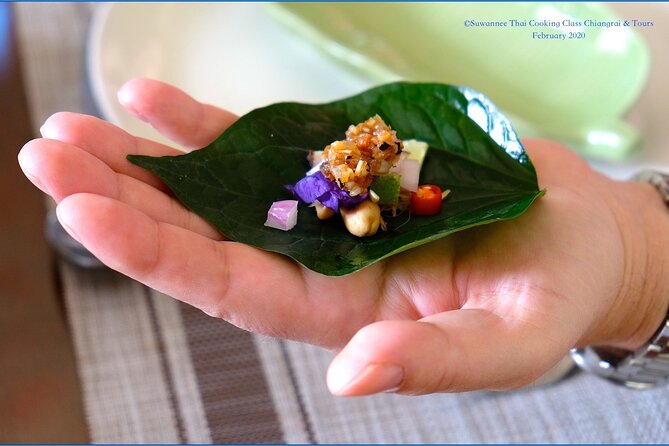
- Menu includes four signature dishes: papaya salad, tom yum soup, chicken green curry, and banana dessert
- Suwannee’s teaching style focuses on ingredients and practical timing, plus spice level adjustments
Meeting at Chiang Rai’s Old Clock Tower, then straight into cooking mode
This class is built as a half-day block, and it moves with purpose. You start at the Old Clock Tower area (WR6J+46F, Suk Sathit) and you finish back at the same meeting point. The schedule window listed for the activity is 9:30 AM to 2:00 PM, so you’ll want to choose the start time that best fits your Chiang Rai plan.
The “mobile ticket” detail matters more than it sounds. It’s one less thing to juggle on the day, especially in a busy area like downtown Chiang Rai. Also, because the group is limited to 8 travelers, it tends to feel like a small class rather than a big bus-load cooking show. That usually means you can ask questions without waiting for a gap in the instruction.
If you’re staying in town and planning other activities afterward, treat this as a true time commitment. With about 4 hours 30 minutes from start to finish, you’ll want the rest of the afternoon/evening for buffer.
You can also read our reviews of more tours and experiences in Chiang Rai.
Organic market tour: how the shopping shapes your cooking
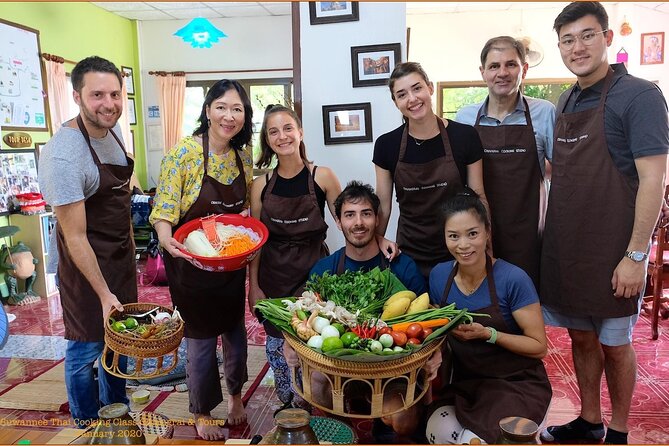
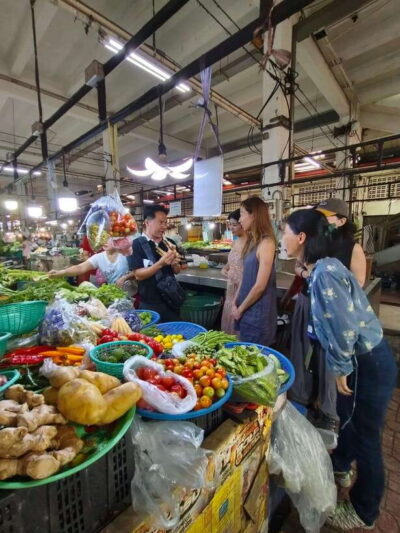
The market tour is not a “walk past stalls” add-on. It’s part of the main course, because you’re shopping for the organic ingredients that will become your dishes. Suwannee leads you around and explains what each ingredient is for, which helps your cooking stop being guesswork.
This is a big deal for value. Most cooking classes can teach technique, but they don’t always connect the dots between a raw ingredient and the final flavor. Here, the market phase gives you a mental map: what to look for, what “fresh” means in practice, and why Thai cuisine relies on specific aromatics and balancing flavors.
Practical tip: when you’re shopping, pay attention to ingredient names and what they look like. Even if you can’t find the exact same items back home, learning the “role” of each ingredient helps you substitute smarter later.
What you might do during the market part
You’ll shop for what you need for the full menu: papaya salad, tom yum soup, chicken green curry, and banana dessert. The goal is not just to buy nice produce—it’s to pick ingredients that will behave correctly in Thai cooking: herbs that perfume sauces, aromatics that carry heat and brightness, and fruit that works in a dessert.
Your hands-on station: the class style that keeps things fun
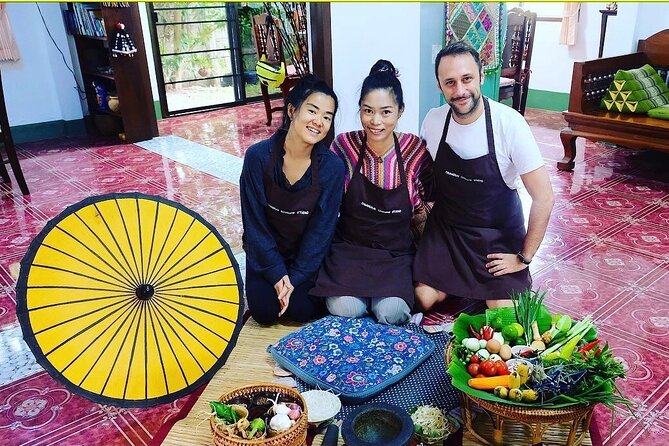
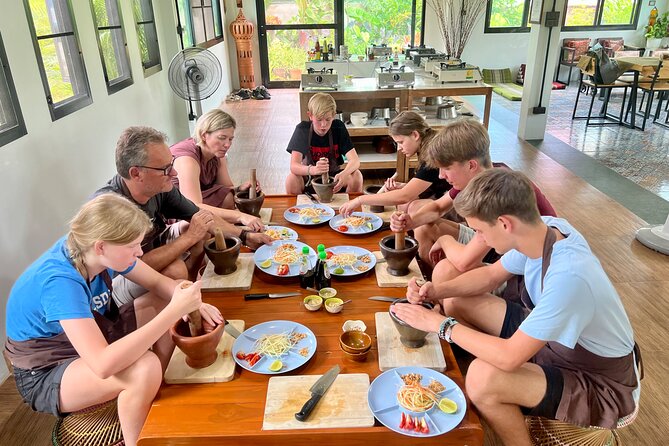
The biggest shift I notice with successful Thai cooking classes is whether they turn cooking into a team sport. This one does. You’re working at your own cooking station, and the lesson is structured so you cook in sequence rather than doing random steps at different speeds.
Suwannee’s approach is practical. The instruction isn’t just “add this, stir that.” She explains why things matter—how you plan for taste, texture, color, and timing. That teaching method helps you get consistent results even if you’re not a confident cook.
Spice level adjustments are part of the plan
One of the most useful details from the experience feedback is that Suwannee adjusts spice to match the group. That matters because Thai cooking can range from mild and bright to seriously spicy, and the difference is not just attitude—it’s ingredient and timing choices. You’ll get a class that stays fun, not stressful.
If you’re very heat-sensitive, make it clear early that you want a milder result. If you love spice, you can ask for a stronger version. Either way, you’ll cook with confidence because the kitchen targets your comfort zone.
Included snacks, water, and a towel
While you’re cooking and moving between market and kitchen, you’re not left on your own. The class includes complimentary drinking water, snacks, seasonal fruits, and a refreshing towel. That’s exactly the kind of small support that keeps the energy up during a half-day session.
What you’ll cook: four dishes that teach four different Thai flavor skills
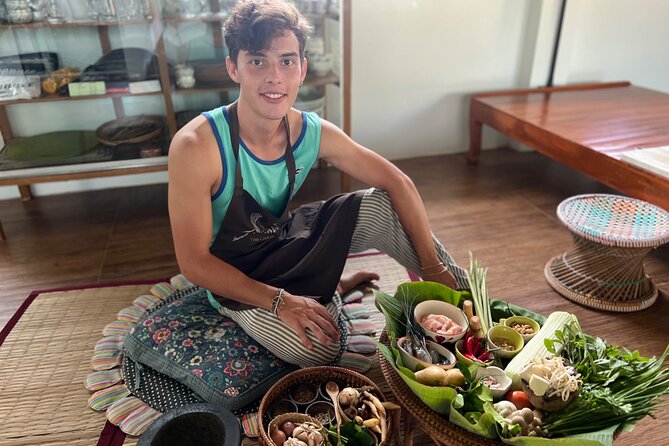
This class is built around a menu that covers a lot of Thai cooking territory. You’ll make:
1) Papaya salad
2) Tom yum soup
3) Chicken green curry
4) Banana dessert
You also sit down and enjoy what you cooked. That final meal step is not just “for fun.” It’s your feedback loop. You can taste your own work while the lesson is still fresh in your head.
Papaya salad: the crunch, the sour, and the balance
Papaya salad is one of those dishes where balance is everything. The tang needs to be bright, the sweetness has to land cleanly, and the texture should stay crisp rather than turning watery.
In a hands-on class, papaya salad is also a great entry dish because it teaches you how Thai flavors build through mixing and seasoning rather than heavy cooking. You learn how to combine ingredients so they taste layered, not flat.
Tom yum soup: learning how Thai sour-spicy flavor works
Tom yum is famous for a specific kind of sour warmth—bright, aromatic, and comforting at the same time. It also teaches timing: if you rush the steps, you can lose the delicate balance.
Because you’ll be cooking with guidance, you get a practical sense of how to build flavor and how to keep the soup balanced while it simmers. It’s a dish that helps you understand Thai cuisine as “flavor engineering,” not just adding spices.
Chicken green curry: aromatics, thickness, and heat control
Green curry can look intimidating, but the class approach makes it manageable. Curry teaches a different skill set than soup: you’re looking for aroma, body, and a consistent texture.
You’ll work through the steps that affect how the curry feels—how it thickens, how the flavors connect, and how the heat level fits the dish. Since Suwannee adjusts spice for the group, you can end up with green curry that’s flavorful and aligned with your tolerance.
A good sign for you: a class that can get a group of mixed spice preferences to a satisfying result usually means the teacher understands how to tune the ingredients, not just tell people to eat it anyway.
Banana dessert: the sweet finish that actually closes the loop
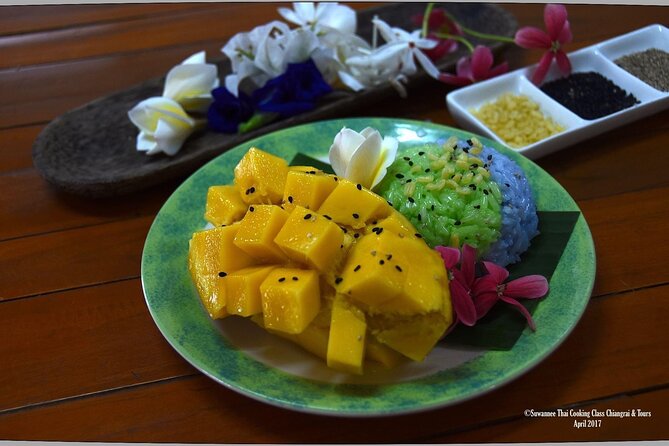
Dessert isn’t always treated seriously in cooking classes, but here it is. The banana dessert adds a Thai-style sweet ending, giving you a chance to taste how Thai sweetness behaves—often fragrant and lightly textured rather than heavy and candy-like.
This also helps your memory. If you remember just the savory dishes, you’ll forget the full menu. A dessert step makes the overall class easier to recreate later.
Eating together: why this last step matters more than you think
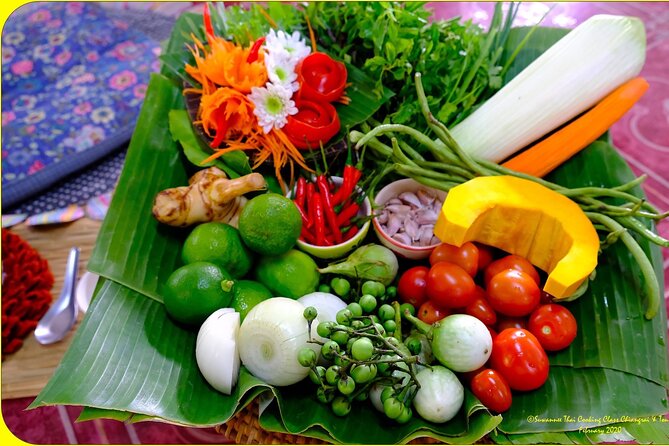
After cooking, you eat the meals with others. That sounds obvious, but it’s a key part of how you learn. You taste your own papaya salad, your own tom yum, and your curry while the flavors are still being discussed and compared.
This also makes the experience more social without becoming awkward. With a small group of up to 8 travelers, there’s enough time and space for conversation, but it still feels like a structured class day.
If you’re a “plan-to-learn” person, this is also where you’ll catch what you might adjust next time. Maybe you want your salad more sour, or you’d like your curry thicker, or you want the soup more fragrant. The meal gives you instant direction.
Price and value: what $56.66 gets you in real terms
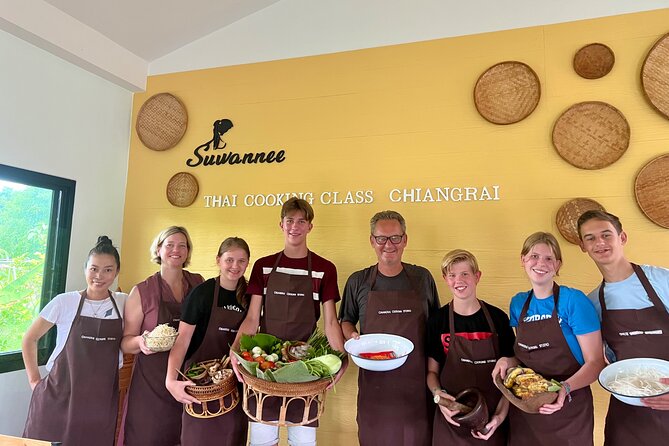
At $56.66 per person, this half-day class can be a very fair deal—mainly because you’re not paying only for cooking instruction. You’re paying for:
- an organic market tour (ingredient education included)
- a hands-on class at your own station
- instruction from Suwannee, including spice adjustments
- a full menu of four dishes, plus snacks, water, seasonal fruits, and a towel
You’re also getting small-group attention, and that changes the whole experience. In a bigger class, you can spend more time waiting and less time learning the “why.” With up to 8 travelers, it’s easier to correct a mistake immediately—especially with timing in soups and curry.
One cost consideration: soda and alcohol drinks are not included. If you’re the type who expects a drink with the meal, keep that in mind so you don’t get surprised at the end.
If you’re comparing options in Chiang Rai, ask yourself a simple question: will you walk away with four workable recipes plus the ingredient knowledge to repeat them? This class is designed to do that.
Who this cooking class suits best (and who should rethink it)
This is a strong fit if you want real Thai cooking skills, not just a fun activity. It’s also great if you enjoy markets and want to shop with purpose, because the organic ingredient tour is central to the lesson.
It’s also ideal for people who are nervous about cooking. The feedback around the class includes the idea that even non-cooks can feel like they’re capable by the end. The structure, the station setup, and the spice adjustments help first-timers avoid the most common cooking-class problem: feeling lost.
Who might rethink it: if you want a purely observational experience—no chopping, mixing, or hands-on steps—this class is likely more active than what you’re looking for.
If you’re traveling with dietary restrictions, your best move is to ask ahead. The provided details confirm the dishes and organic focus, but they don’t list specific dietary adaptations, so you’ll want clarity before booking.
A quick planning checklist before you go
Here’s how to set yourself up for success:
- Wear comfortable shoes you don’t mind getting a little food-splashed.
- Bring a sense of humor and patience. Cooking classes are timing games.
- Tell Suwannee your spice preference early so the whole menu matches your comfort level.
- Come hungry. You’ll snack during the class, but you’ll also eat what you cook.
- Remember soda and alcohol are not included, so plan accordingly.
Should you book the Suwannee Thai Cooking Class in Chiang Rai?
Yes, I’d book it if you want a half-day that’s both tasty and educational. The organic market tour gives your cooking context, and the hands-on station format means you’re not just watching. The small group size also supports better coaching, which matters when you’re learning dishes like papaya salad, tom yum soup, green curry, and banana dessert in one session.
Skip it only if you want a low-effort, mostly observational experience or if you’re counting on included drinks beyond water and snacks. Otherwise, this is a straightforward way to learn Thai cooking in Chiang Rai with a menu you’ll actually use again.
FAQ
How long is the half-day Thai cooking class?
It runs for about 4 hours 30 minutes (approx.).
Does the class include a market tour?
Yes. The class includes a market tour where you shop for the organic ingredients used in the cooking.
What dishes will I cook?
The class menu includes papaya salad, tom yum soup, chicken green curry, and a banana dessert.
Where does the experience start and end?
It starts at the Old Clock Tower area (WR6J+46F, Suk Sathit, Tambon Wiang, Amphoe Mueang Chiang Rai, Chang Wat Chiang Rai 57000) and ends back at the meeting point.
What’s included in the price?
Included items are complimentary drinking water, snacks, seasonal fruits, and a refreshing towel.
Are drinks like soda or alcohol included?
No. Soda and alcohol drinks are not included.
Is the group size limited?
Yes. The experience has a maximum of 8 travelers.
Is free cancellation available?
Yes. You can cancel for a full refund up to 24 hours in advance of the experience start time.