REVIEW · FREIXO
Douro Valley: Traditional Cooking Class, Farm Tour & Lunch
Book on GetYourGuide →Operated by Quinta de Louredo · Bookable on GetYourGuide
A farm lunch with a real story. At Quinta de Louredo in Portugal’s Norte, you taste organic green wine, tour the family farm, and cook a traditional meal together, guided by Fabio and family. I especially like the farm-to-table setup where you handle ingredients yourself, and the small-group vibe where the day feels personal rather than staged.
This is also the kind of experience where you learn something you can’t Google: how a family rebuilds after losing nearly everything to wildfire. The one thing to factor in is getting there—transportation isn’t included, and the farmhouse sits at the end of a long, steep road, so you’ll want to plan your ride (or parking) with that in mind.
In This Review
- Key Points You’ll Care About
- Quinta de Louredo: a family farm tour that turns into cooking and meaning
- Before You Cook: the welcome spread of wine, olive oil, cheeses, and bread
- Getting to the farmhouse: parking by car, or train plus taxi
- Walking the farm and harvesting: animals, orchard time, and ingredient picking
- The cooking class: three-course Portuguese comfort food, made together
- What if you want recipes?
- Lunch at the family table: you cook, you eat, you hear the rebuilding story
- Why this day feels different from a standard “wine + lunch” tour
- The timing and group size: 4 hours, max 10, and lots of table time
- Who should book Quinta de Louredo (and who might not)
- Price and value: is $169 per person worth it?
- Should you book? My straight answer
- FAQ
- How long is the cooking class and farm tour?
- What’s included in the price?
- How many people are in the group?
- What languages are available for the tour and cooking lesson?
- Is transportation included?
- What’s the meeting point and how do I get there?
Key Points You’ll Care About
- Organic food and drink up front, from green vinho verde to olive oil, plus local cheeses, olives, and bread
- Hands-on farm time, including meeting animals and harvesting ingredients for your cooking
- A cooking class that feels like family food, with a three-course Portuguese menu and shared table time
- Rebuilding support is built into the day, since your visit helps the farm recover after wildfire
- Small group (max 10) with instruction in multiple languages: Portuguese, English, French, Spanish
Quinta de Louredo: a family farm tour that turns into cooking and meaning
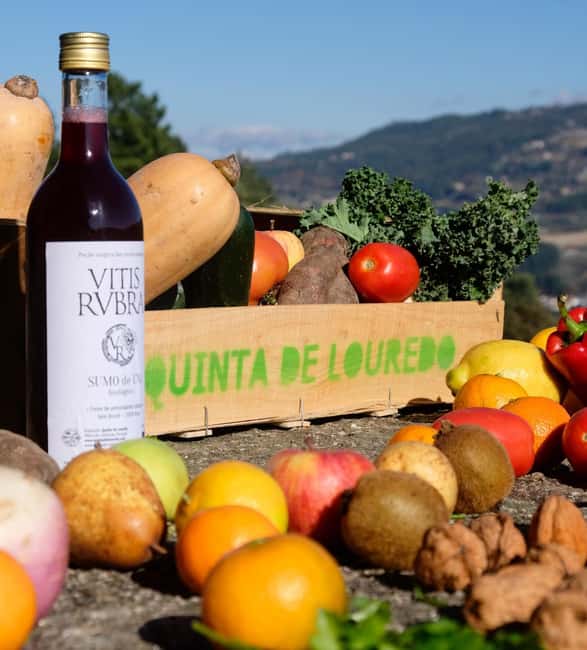
Quinta de Louredo isn’t a themed “class.” It’s a working farm and a household legacy—so the day moves at a human pace. You start with tasting, then you walk the land, then you cook, then you eat. All of it is framed as “come as guests, leave as family,” because you’re not just consuming a tour; you’re participating in daily life on the farm.
The other big reason this hits: resilience. There was a wildfire a year earlier that caused major losses, and the family has been rebuilding since. That context turns the lunch into something more than tasty food. You’re helping keep a dream alive, one table at a time.
Before You Cook: the welcome spread of wine, olive oil, cheeses, and bread
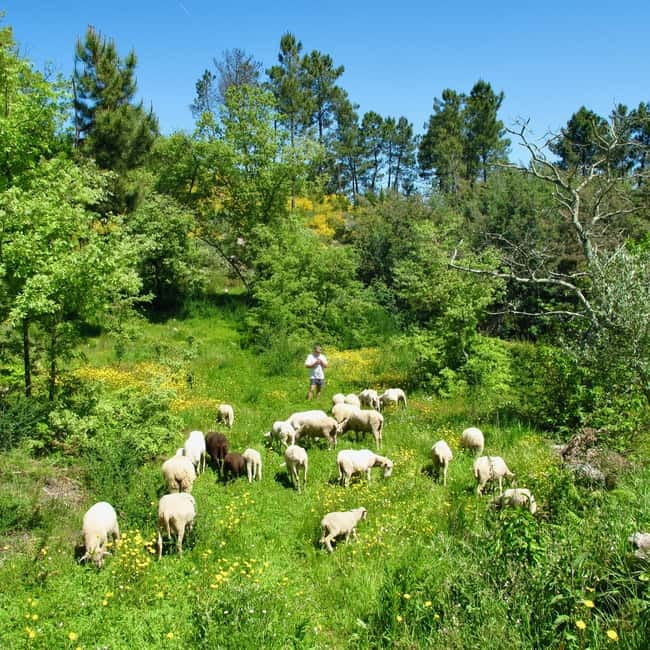
The best parts of many Portuguese meals happen before the first course, and this day starts there. When you arrive, you’re welcomed with an organic tasting setup, typically featuring green vinho verde and olive oil, plus local cheeses, olives, fresh juices, and artisanal bread.
One detail I like here: it’s not just wine-and-snacks. It’s a gentle on-ramp to Portuguese flavors and ingredients you’ll likely cook with later. You’ll also hear the farm story early, so the rest of the day makes more sense as you go—from the orchard to the animals to the table.
If you’re the type who likes to eat and learn at the same time, this opening is a win. It gives you a base so the cooking class doesn’t feel like jumping in at full speed.
Getting to the farmhouse: parking by car, or train plus taxi
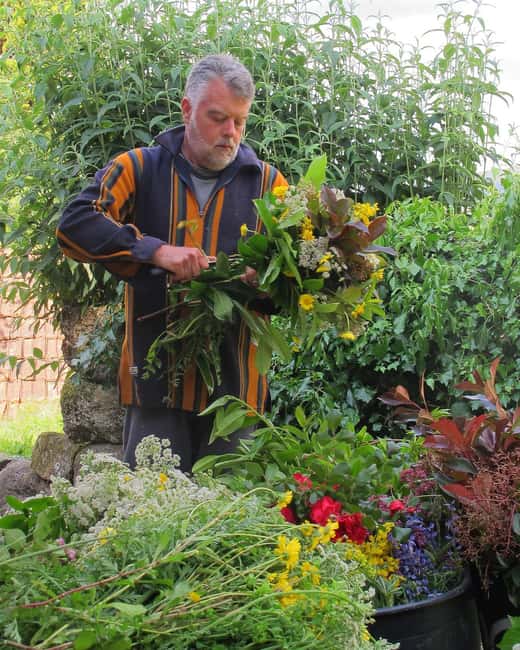
Transportation isn’t included, so your plan for the last stretch matters. If you’re driving, you can park right at the bottom of the hill in front of the farmhouse, and the host will meet you outside.
If you prefer public transit, you can take the train to Marco de Canaveses (about a one-hour scenic ride), then do a short taxi segment. The farm can arrange that taxi for you at your cost. This is helpful if you don’t want to deal with local cab hailing after the train.
Either way, plan for a bit of “slow and steady.” The farmhouse is reached via a long, steep road, and you’ll want to arrive with the mindset that part of the day is the journey into quieter rural life.
Walking the farm and harvesting: animals, orchard time, and ingredient picking
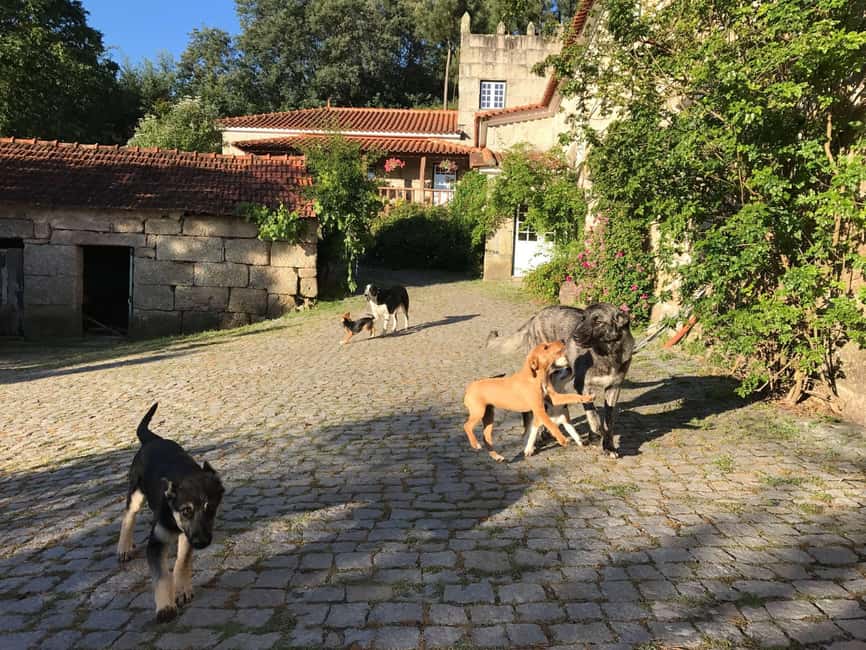
After the tasting, you head out around the property for the farm tour. This is where the experience shifts from eating to learning how food actually gets made.
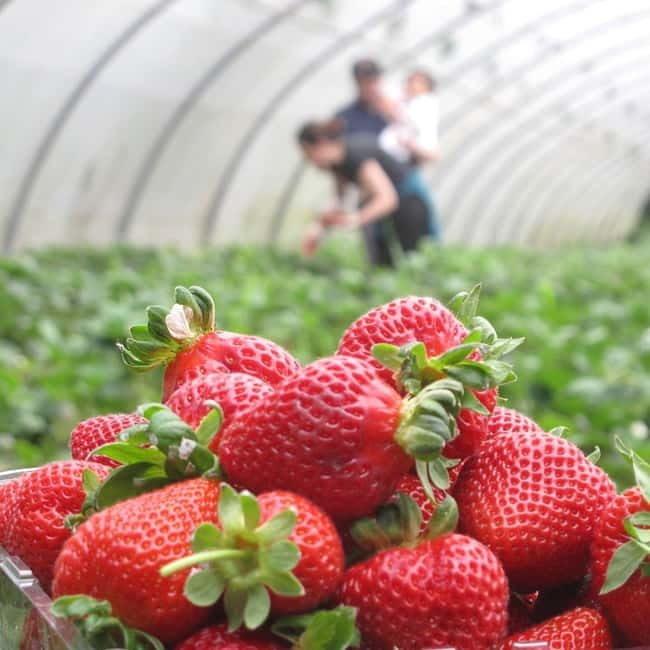
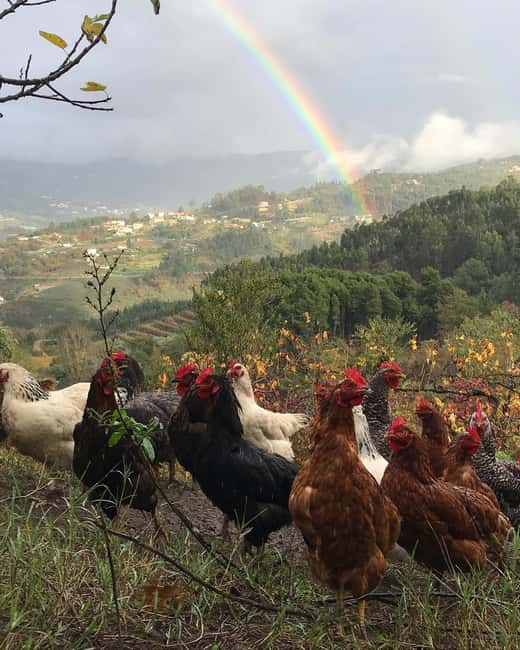
You’ll meet resident animals and wander through the farm areas, with opportunities to pick fresh ingredients for the meal. Some people get fruit involved in the process—like picking lemons for dessert—and you might also collect ingredients from the farm itself, such as eggs gathered from the chicken area.
A couple of things to keep in mind:
- This is not a fast “walk past a couple spots” tour. It’s hands-on and conversational, which is exactly why it works.
- If you’re visiting with kids, this section is often the highlight. They get to run around a bit, meet animals, and participate instead of just watching.
In practice, the harvesting part matters because it changes how you cook. You’re not just following steps; you’re cooking with ingredients that already have context: where they grew, who takes care of them, and why they matter on this farm.
The cooking class: three-course Portuguese comfort food, made together
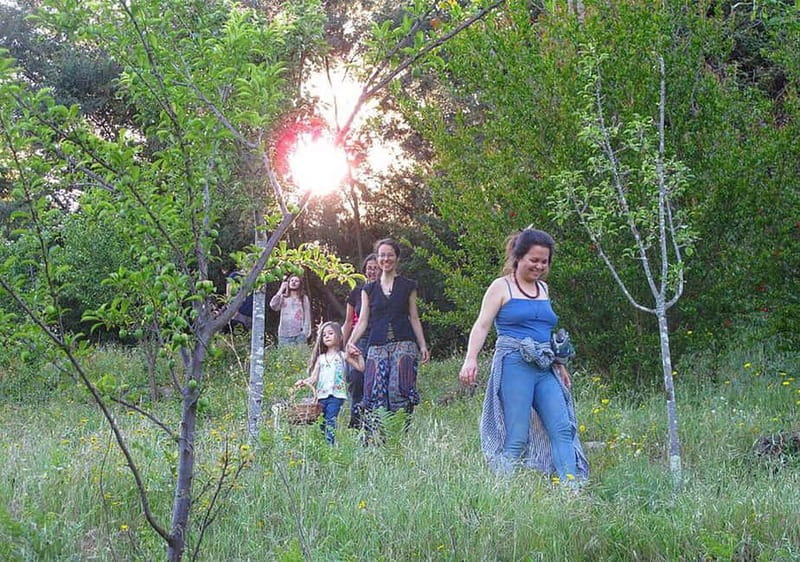
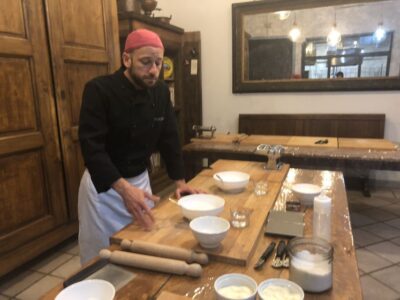
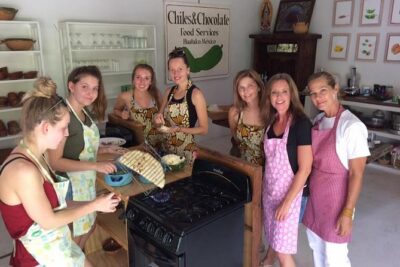
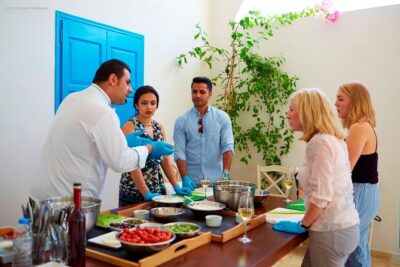
Now comes the part most people remember: cooking side-by-side with the host and family. The menu is described as a traditional three-course Portuguese meal, and the instruction is practical and relaxed. You’ll chop, prep, and assemble, not just stand around.
Based on what’s shared from past menus, expect Portuguese dishes that feel like home cooking—think things like tomato soup and a main dish featuring cod with a potato side, plus traditional desserts where eggs are used. One common hands-on moment is separating eggs for custard-style sweets.
Two things I like about this cooking setup:
- You get enough structure to feel confident, even if your Portuguese kitchen skills are limited.
- The host’s storytelling is tied to the recipes, so you’re learning culture through food, not through lecture.
Languages are also a plus. Instruction is offered in Portuguese, English, French, and Spanish, which keeps the whole table moving without awkward language gaps.
What if you want recipes?
You might not get printed recipes. In at least one experience, the host explained there aren’t written recipes—food knowledge lives in the doing. If that bothers you, you can still take notes during the cooking and ask for any ingredient or technique guidance you want to recreate later.
Lunch at the family table: you cook, you eat, you hear the rebuilding story
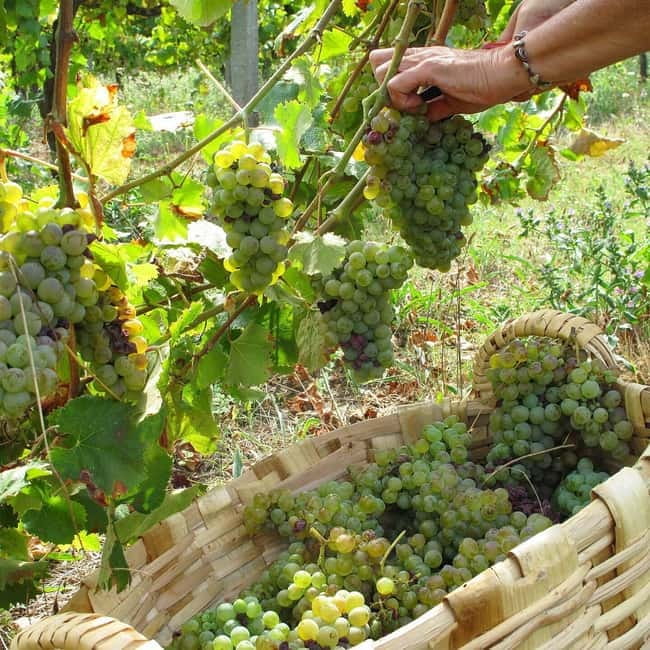
After cooking, you sit down and enjoy what you made. This is the shared meal portion, and it’s genuinely the heart of the day: warm, welcoming, and built for conversation.
The family story comes through clearly here. You’ll hear how the wildfire affected the farm and what has happened since—how they’ve accomplished a lot in a relatively short time. That framing keeps the day from feeling like charity tourism. Instead, it feels like community support tied to real labor, real animals, and real crops.
And yes, the food is the point. The lunch is traditional, and because you cooked it yourself (and often used ingredients you picked), it tastes like more than a restaurant meal.
Why this day feels different from a standard “wine + lunch” tour
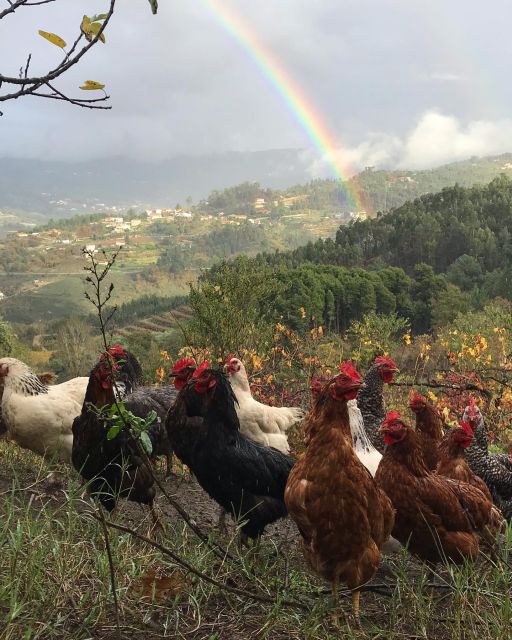
There are plenty of Portuguese experiences that combine wine and food. This one works because it adds three layers that make it stick:
- Participation beats observation. You’re not just watching someone cook; you’re chopping and assembling as part of the flow.
- Food connects to land. The ingredients and animals aren’t a backdrop. They’re part of the meal.
- The story is active, not decorative. Your visit helps rebuild after wildfire loss, so your presence supports the farm’s next steps.
Small details reinforce that authenticity. One person noted the host’s view of life and how much he cares for the animals. Another noted the day felt completely natural—like being in someone’s home while also learning practical farm realities.
The timing and group size: 4 hours, max 10, and lots of table time
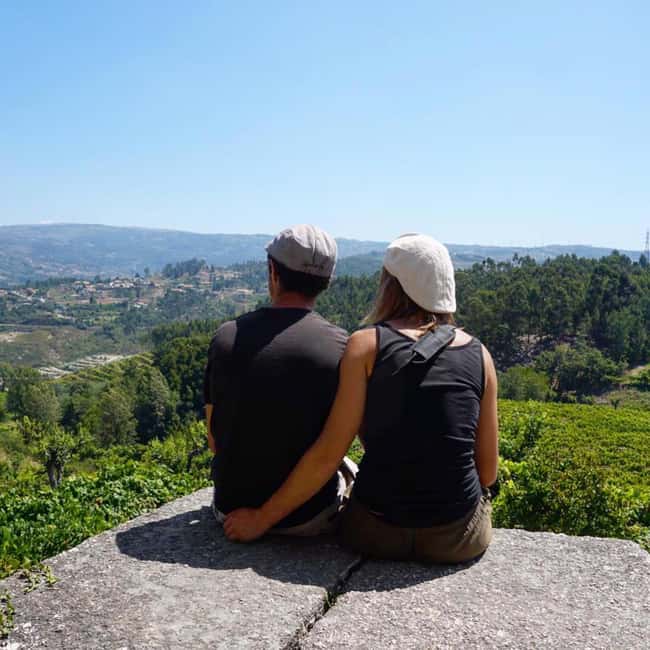
The duration is about 4 hours, with starting times varying by availability. You’re not stuck for a full day, and that matters in a region like the Norte where you might also want time for other stops.
The group size is limited to 10 participants, which is a big deal for a cooking class. With fewer people, the host can explain more clearly and check in while you’re working. It also helps the day stay social without becoming chaotic.
If you’re trying to fit this into an itinerary, think of it as a half-day that doubles as both cultural education and a practical meal experience. That’s strong value for the time.
Who should book Quinta de Louredo (and who might not)
This experience is best for people who want hands-on travel. If you like farm life, cooking, and learning where food comes from, you’ll be in your element.
It’s also a good fit if:
- you’re traveling in a small group or as a couple and want a less crowded setting
- you have kids who will enjoy meeting animals and helping with basic tasks
- you like Portuguese cuisine and want it in an honest, family style—not a polished show
It may not be ideal if:
- you need transportation included
- you dislike steep roads or don’t want to manage the last-mile getting there
- you want a strictly “recipes only” cooking class with lots of written documentation
Price and value: is $169 per person worth it?
At $169 per person for about 4 hours, you’re paying for more than a meal. You’re getting:
- instructor-led cooking instruction
- a farm tour with animal time and ingredient harvesting
- a traditional three-course lunch (plus desserts, depending on the menu day)
- wine tasting
- small-group attention (max 10)
That adds up, especially because you’re not just eating; you’re actively participating and learning, with wine and food included. And the rebuilding context means your money supports continued work on the farm rather than simply funding someone else’s overhead.
If you’re choosing between this and a generic tasting-and-eat stop, this tends to win when you value participation and story as much as taste.
Should you book? My straight answer
Book it if you want an authentic Portuguese day with real farm life, hands-on cooking, and a lunch that’s tied to something bigger than a tasting menu. The family-led feel, the small group limit, and the ingredient harvesting turn it into a memorable half-day.
Skip it if you don’t want to handle transportation or if you’d rather keep your schedule rigid and low-effort. The steep road to the farmhouse and the lack of included transport are real practical considerations.
If you’re flexible and curious, Quinta de Louredo is the kind of experience that makes Portugal feel personal fast.
FAQ
How long is the cooking class and farm tour?
The experience lasts about 4 hours. Starting times depend on availability.
What’s included in the price?
It includes an instructor, the farm tour, the cooking lesson, a traditional three-course meal, and wine.
How many people are in the group?
The group is limited to 10 participants, keeping it small and more interactive.
What languages are available for the tour and cooking lesson?
Instruction is offered in Portuguese, English, French, and Spanish.
Is transportation included?
No. You’ll need to arrange your own transportation to the meeting point.
What’s the meeting point and how do I get there?
By car, park at the bottom of the hill in front of the farmhouse and the host will meet you outside. By train, take the train to Marco de Canaveses and then do a short taxi ride, which the host can arrange at your cost.