REVIEW · PEMUTERAN
Cooking Class 3 Courses Balinese Dishes
Book on GetYourGuide →Operated by Menjangan Bali Trip · Bookable on GetYourGuide
Spices, garden herbs, and a shared lunch. This 2-hour Balinese cooking class in Bali takes you from a backyard organic garden to the stove, where local chefs guide you step-by-step through flavorful dishes and the whole meal you cook yourself. I especially love the ingredient-picking walk before class and the way the chefs keep things friendly and patient, including Dewi and Melai.
You’ll cook three recipes—vegetable spring rolls, chicken curry, and dadar bali—and then sit down to enjoy what you made. The one thing to consider is timing: it runs at 11:00 for lunch prep or 17:00 for dinner prep, so you’ll want your day to match the start time rather than trying to squeeze it in after other plans.
In This Review
- Key things I’d bet you’ll like
- A 2-Hour Balinese Cooking Class That Fits Lunch or Dinner
- From Backyard Garden to Your Cooking Station
- Vegetable Spring Rolls: Where Texture and Flavor Start
- Chicken Curry: The Core Dish and the Big Take-Home Skill
- Dadar Bali Dessert: Learning Balinese Sweetness the Hands-On Way
- How the Chefs Teach: Patient, Practical, and Often Funny
- The Meal You Cook: Filling, Worth It, and Part of the Value
- Price and Logistics: Why $24 Can Work in Bali
- What to Bring and How to Prepare
- Who Should Book This Cooking Class (and Who Might Not)
- Should You Book This Cooking Class?
- FAQ
- What time does the class start?
- How long is the cooking class?
- What dishes will I cook?
- Is pickup included?
- Is the class taught in English?
- What’s included in the price?
- Do I eat the food I cook?
- What should I bring?
- Is there a cancellation policy?
- Is it suitable for babies?
Key things I’d bet you’ll like
- Backyard organic farm start: You pick fresh ingredients right where the kitchen sources them.
- Real hands-on cooking: You don’t just watch; you practice the steps under a local chef’s eye.
- The full menu is included: Appetizer (spring rolls), main (chicken curry), and dessert (dadar bali).
- Chefs that teach with patience: The class vibe is calm and encouraging, with plenty of help.
- You eat your work: Lunch or dinner is part of the value, not an afterthought.
- Take-home recipe book: You get written guidance so you can repeat the dishes later.
A 2-Hour Balinese Cooking Class That Fits Lunch or Dinner
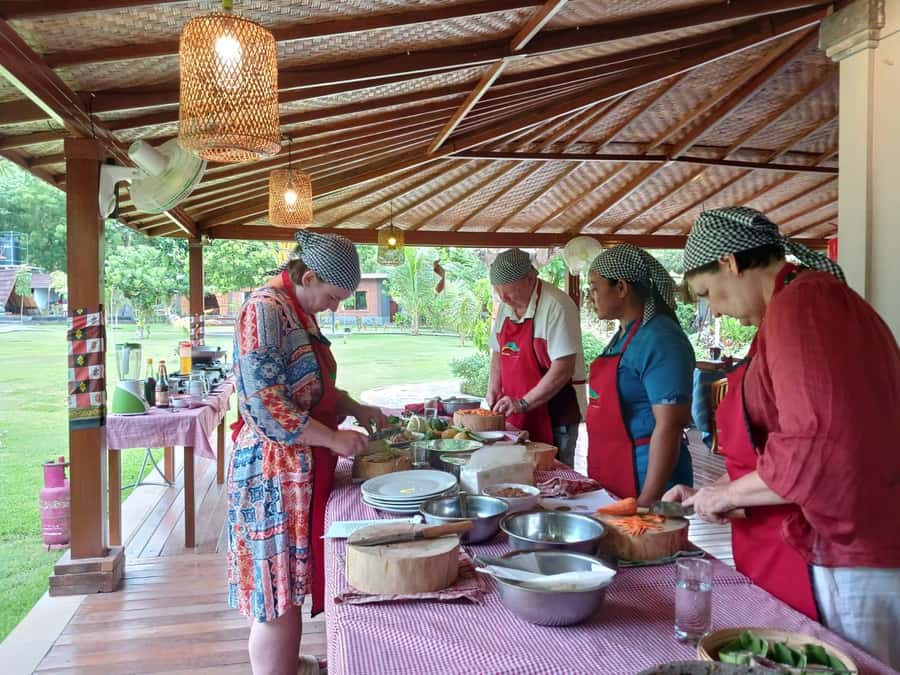
This is a straightforward, no-nonsense cooking experience: you show up, you cook, and you eat. The class is scheduled at either 11:00 am (for lunch) or 17:00 (for dinner), and it runs about 2 hours, which makes it a solid choice if you’re trying to use Bali time efficiently.
The schedule matters because the dishes are built around that rhythm. When you start at 11:00, you’re working toward a midday meal. When you start at 17:00, you’re aiming for dinner timing, which often feels easier if your day has been full of sightseeing. Either way, you’re not just learning techniques—you’re planning your day around a finished plate.
Also, you get pickup included. You meet in the hotel lobby or villa, and it’s best to be ready about 10 minutes before the pickup window. That small detail helps a lot in Bali, where traffic and route timing can shift. For a $24 price point, the “class + meal + ingredient/equipment support” combo is the real hook.
From Backyard Garden to Your Cooking Station
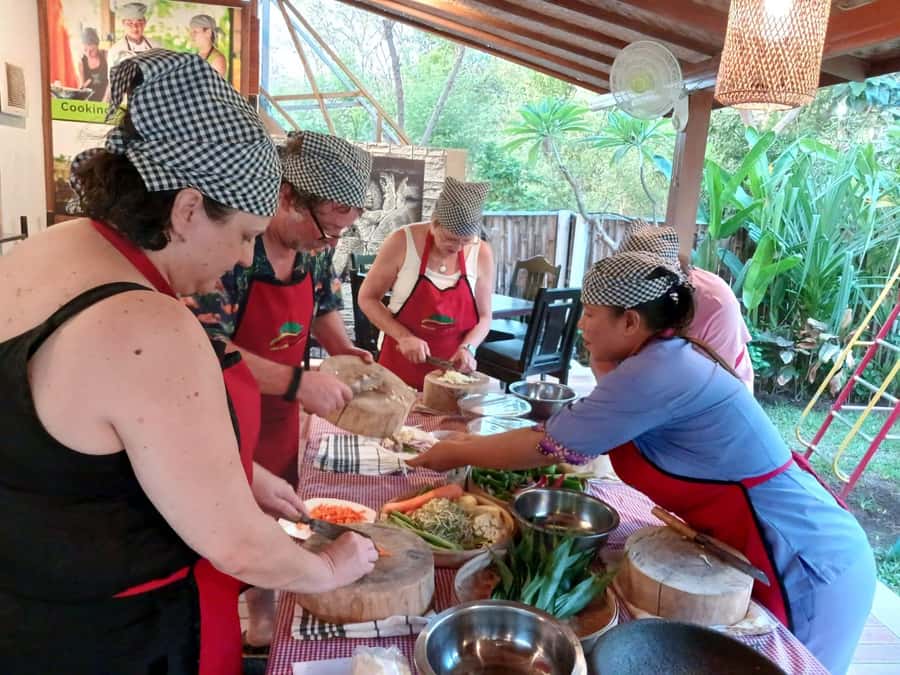
One of the best parts is the warm-up: before you cook, you walk through the garden area tied to the restaurant and accommodation. The idea is simple—see the source, then pick the ingredients you’ll cook with. Even if you’ve used herbs and spices before, you’ll often spot new faces here, and you’ll understand why some flavors show up in multiple dishes.
This garden time isn’t just for aesthetics. It sets you up to cook with more confidence. You’ll be more likely to recognize ingredients later when you see them on the chopping board. And you’ll probably pay closer attention when the chef explains which herbs or spices are used for the day’s recipes and why.
After the garden, you move into the kitchen portion where the chefs introduce the recipe menu and guide you through what happens next. Some parts of the prep may be done already (for example, ingredients may be cut ahead of time), but you still get meaningful hands-on time during cooking. That balance is important: you get the learning without feeling like you’re doing everything from scratch.
If you like the feeling of starting with real produce and then learning how it becomes a meal, this structure hits the sweet spot.
Vegetable Spring Rolls: Where Texture and Flavor Start
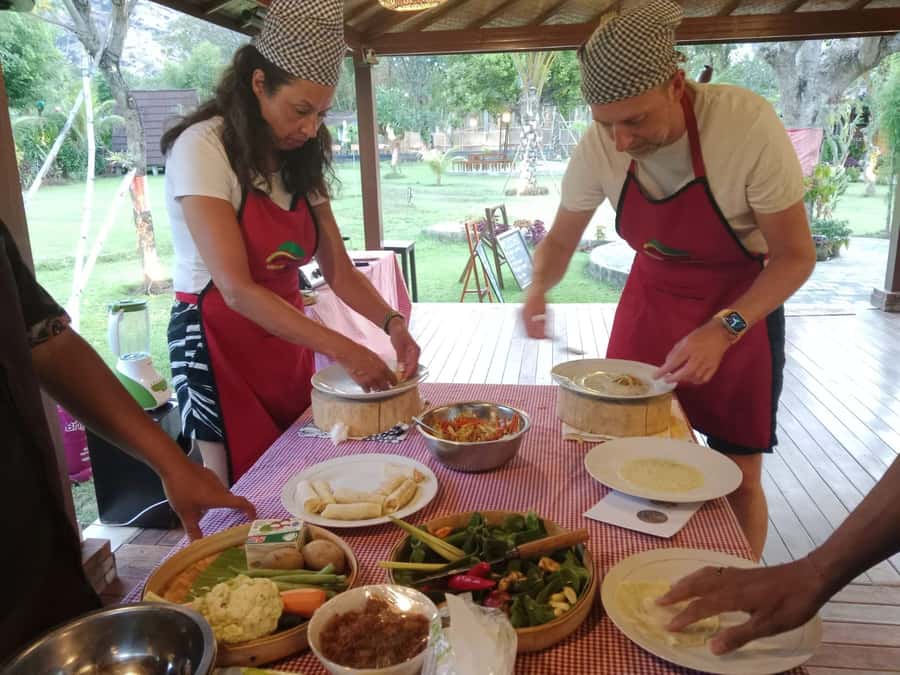
Your appetizer is vegetable spring rolls. This is a great choice for a first course because it teaches you something practical: how to build a filling that stays flavorful and cooks evenly.
Expect your chef to show you how the ingredients work together as a mixture, and then you’ll practice the steps. Spring rolls can be fiddly if the filling is too wet or if the roll isn’t tight. The benefit here is that the chef is supervising, so you can adjust as you go instead of guessing and hoping.
You’ll also start learning Balinese-style flavor logic: spices and herbs don’t just add heat or aroma; they build a layered taste. Even if you’re not an experienced cook, you’ll probably understand the idea quickly because you can smell the spices and taste the difference.
One small consideration: if you’re the kind of person who hates sticky hands or careful rolling tasks, spring rolls are exactly that kind of cooking. Still, the class environment tends to be relaxed, and the chefs are patient—so you’re not expected to be perfect on your first try.
Chicken Curry: The Core Dish and the Big Take-Home Skill
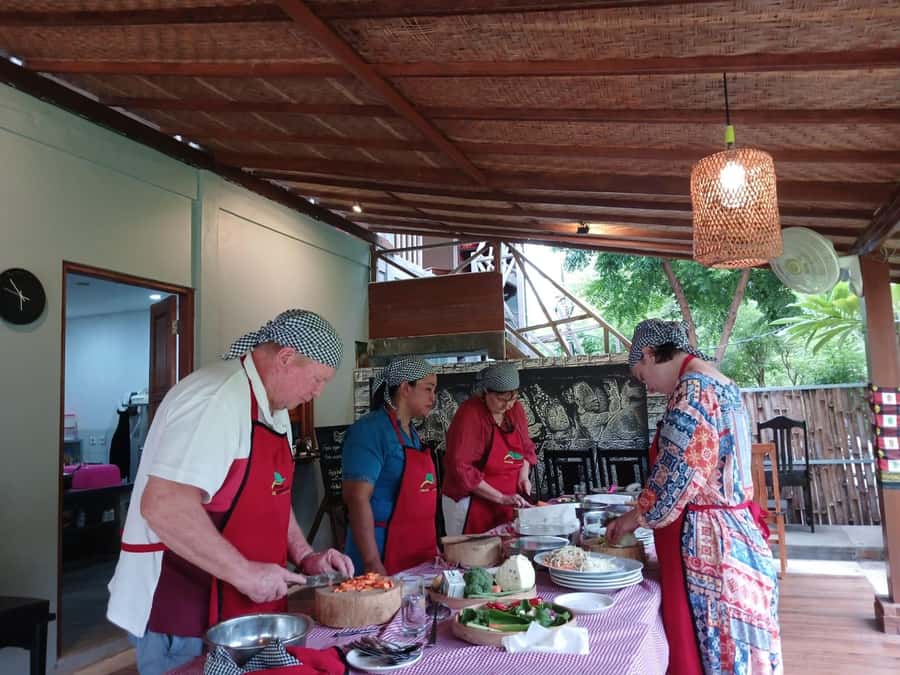
The main course is chicken curry. This is where the class becomes more than a fun activity and turns into real, repeatable technique.
Chicken curry is also forgiving in a learning context. You can taste and adjust. You can see how the dish changes as ingredients cook. And because this is a local chef-run class, you’re not stuck with a vague instruction—someone is there to steer you while you’re working.
When you cook curry in Bali, you’ll likely notice how herbs and spices blend into a sauce rather than sitting as separate flavors. That’s the practical takeaway: you’re learning how to get a cohesive flavor base. In other words, you’re not just adding spices. You’re building a system.
Even if your curry isn’t identical to the chef’s on the first round, you can still learn what matters: how you handle the timing, how the flavors develop, and what the final texture should look like. That’s what makes the recipe book later more useful—your notes connect directly to what you did with your hands.
And yes, you get to eat what you cooked. That matters because curry takes a while to be right, and waiting for that final taste is part of the payoff.
Dadar Bali Dessert: Learning Balinese Sweetness the Hands-On Way
For dessert, you’ll cook dadar bali. This is a great contrast to the savory dishes because it shifts you into a different set of skills and flavors.
Dadar bali can feel intimidating on paper because you’re dealing with a sweet, herb-forward component and the shape/rolling process. But the advantage of doing it in a guided class is that the chef can coach you through technique in real time. You learn what to look for, not just what to do.
Why this dessert is worth your attention: it’s the kind of dish that makes people feel like they truly learned something local. Anyone can make a basic curry or reheat a packaged spring roll. Dadar bali is more identity-driven. It’s a Balinese dessert that signals the “this isn’t generic cooking” side of the experience.
If you want a souvenir you can taste (not just a photo), dessert is often the best memory-maker. And because you’re cooking it yourself, you’ll remember the steps when you try to recreate it later.
How the Chefs Teach: Patient, Practical, and Often Funny
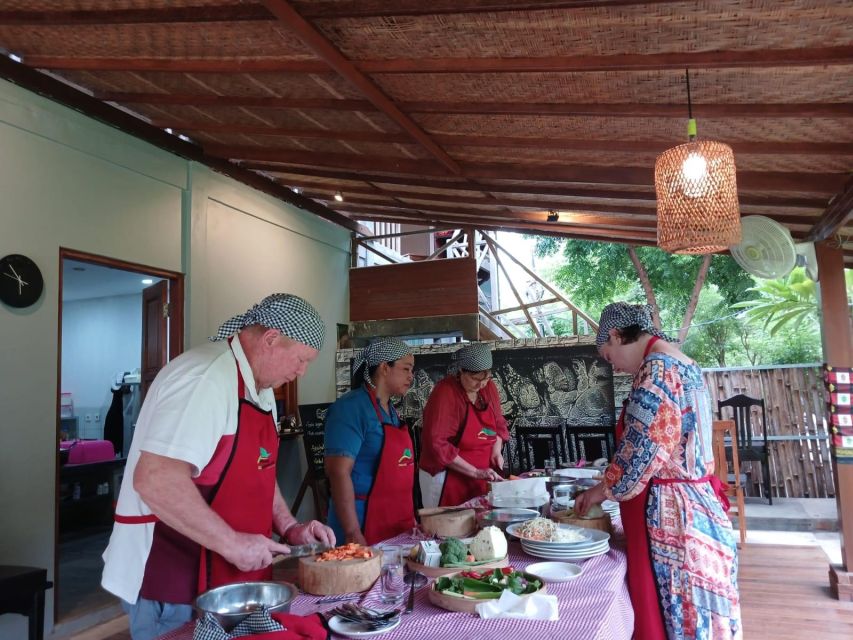
The teaching style is one of the biggest reasons people leave happy. The class is instructor-led, and the instruction is in English, which is a big deal if you’re not fluent in Indonesian. You’ll get what you need without the confusion spiral that can happen in some cooking classes.
The chefs focus on clarity and corrections. In practice, that means you’re not just following steps blindly. You ask questions, the chef adjusts your technique, and you move forward. That’s also why the experience can feel fun rather than stressful.
I also like that the atmosphere tends to be calm. You’re cooking in a setting connected to the garden and the accommodation area, and it doesn’t feel rushed. The pace lets you ask basic questions without feeling like you’re holding everyone up.
And if you want a little “why do we do it this way” context, you’re likely to get it when herbs and spices are introduced for each recipe. That’s where you learn Bali flavor thinking, not just Bali food names.
The Meal You Cook: Filling, Worth It, and Part of the Value
At the end, you eat what you cooked. That turns the class into more than a skill workshop—it becomes your lunch or dinner. For a $24 price, the value really comes from combining five things in one stop: ingredients, cooking equipment, a local chef, an instructor who explains in English, and the meal itself.
Also, you don’t leave empty-handed. You get a recipe book, and some participants have received a printout of what they cooked. Either way, having a written reference makes it easier to recreate the dishes later instead of relying on memory.
A meal-at-the-end structure is important for two reasons:
- It gives you a clear finish line for the cooking process.
- It helps you learn by tasting the end result right after you make it.
If you’re the type who likes to travel with purpose, this is a good use of time: you spend it learning, then you eat the reward.
Price and Logistics: Why $24 Can Work in Bali
Let’s talk value without fluff. This isn’t a “watch a chef perform” experience. You’re cooking a full menu—appetizer, main, and dessert—using ingredients and equipment provided, with local chefs guiding you. Add in the recipe book, mineral water, and hotel pickup and drop-off, and the $24 price starts to make more sense.
What you should watch for is fit, not just cost. If your schedule can’t match 11:00 or 17:00, the class may not be the best match for your day. If you want a hands-on experience, great—this works. If you want a purely food-photo experience with zero cooking involvement, you might find the hands-on parts less appealing.
That said, for most visitors who want an authentic activity that doesn’t eat your whole day, this is a strong option.
What to Bring and How to Prepare
This class is friendly to first-timers, but you still want to come prepared. Bring a camera if you want to capture the garden start and your finished plate. Wear comfortable clothes, because you’ll be standing, mixing, and cooking.
A couple of small practical tips:
- If you’re wearing anything you mind getting stained, skip it. Sauces and spice smells are part of the deal.
- Keep your expectations simple: your goal isn’t restaurant perfection. Your goal is learning flavor patterns and techniques you can repeat.
Also note: it’s not suitable for babies under 1 year. If you’re traveling with infants, plan accordingly.
Who Should Book This Cooking Class (and Who Might Not)
This class is a great fit if you:
- Want a true taste of Balinese dishes beyond what you’d get from a typical restaurant meal.
- Like learning with your hands, not just reading or watching.
- Prefer a calm setting with supportive chefs rather than a high-energy workshop.
- Want a clear, contained experience that still ends with a real meal.
You might think twice if you:
- Can’t handle the messiness of hands-on cooking (spring rolls especially).
- Are very schedule-sensitive and can’t fit the 11:00 or 17:00 start times.
- Are hoping for a longer, deep technique-focused course. This is short by design—about two hours—so it’s more practical than academic.
That said, short and practical is often exactly what travelers want when Bali already has plenty of plans.
Should You Book This Cooking Class?
I’d book this if you want a reliable Bali experience that’s interactive, local, and value-driven. The garden ingredient start gives context you don’t usually get in typical cooking tours. The three-dish menu is balanced—savory appetizer, main comfort, and a dessert that feels unmistakably Balinese. And the combination of English instruction, patient local chefs (including Dewi and Melai), pickup included, and eating what you cooked makes the whole thing feel complete.
If you’re on the fence, use this quick test: do you want to leave with skills you can repeat at home? If yes, this is the kind of class that gives you that confidence.
FAQ
What time does the class start?
It starts at 11:00 am for preparing lunch or at 17:00 for preparing dinner.
How long is the cooking class?
The duration is 2 hours.
What dishes will I cook?
You’ll cook vegetable spring rolls, chicken curry, and dadar bali.
Is pickup included?
Yes. Pickup is included from your hotel lobby or villa, and you should wait about 10 minutes before the scheduled pickup time.
Is the class taught in English?
Yes, the instructor is English-speaking.
What’s included in the price?
The class includes cooking ingredients, cooking equipment, a recipe book, mineral water, and a local chef.
Do I eat the food I cook?
Yes. You enjoy the meal you cooked during the class.
What should I bring?
Bring a camera and comfortable clothes.
Is there a cancellation policy?
You can cancel up to 24 hours in advance for a full refund.
Is it suitable for babies?
No. It is not suitable for babies under 1 year.