REVIEW · ANKARA
Ankara: Baklava Cooking Class
Book on GetYourGuide →Operated by Lokal Bond · Bookable on GetYourGuide
Ankara does not usually feel this personal. This home-hosted baklava cooking class in Dikmen has you making the real deal, not just watching. What I like most is that you do the work end to end, and you also leave with a savory börek and a fresh meze to balance out the sweetness. One consideration: this is hands-on cooking in a home kitchen, so you should be ready for mess, heat, and getting involved.
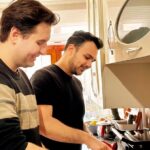
For 4 hours, you’ll knead dough, roll out yufka, layer walnut filling, then pour over simmered syrup and melted clarified butter. While the baklava bakes, you’ll switch gears to make a savory börek and a meze such as kısır or mercimek köftesi, and you’ll eat everything with strong Turkish coffee and warm conversation. The overall vibe is family-style: small group, limited to 6 people, and led by your host, Sercan, with Hatice also helping out in the kitchen.
If you’re looking for a quick, hands-off food stop, this won’t be that. But if you want a practical skill you can repeat at home, this is one of the better ways to learn Turkish pastries without guessing your technique later.
In This Review
- Key things that make this class worth your time
- A home kitchen in Dikmen: the setting that changes everything
- Baklava, properly: kneading, yufka, walnuts, syrup, and clarified butter
- While it bakes: börek and meze that keep the meal balanced
- The best part: eating together with strong Turkish coffee
- Price and value: what $82 covers (and why it adds up)
- Who should book this baklava class in Ankara?
- Practical tips to get the most from your 4 hours
- Should you book the Ankara baklava cooking class?
- FAQ
- How long is the Ankara baklava cooking class?
- Is the class hands-on?
- What dishes will I make besides baklava?
- Does the class include Turkish coffee?
- What languages are used during the class?
- What’s the group size?
- Will I get recipes to take home?
Key things that make this class worth your time
- From-scratch baklava: you’ll handle the dough, filling, syrup, and butter steps, not just assemble pieces
- A full Turkish spread: börek plus meze (kısır or mercimek köftesi) so the meal feels complete
- Small group energy: limited to 6 participants, so questions actually get answered
- Real kitchen hospitality: Sercan and his family set the tone with welcoming conversation and table time
- Recipes to take home: you’ll leave with a plan for making this again
A home kitchen in Dikmen: the setting that changes everything
This class takes place in a cozy home kitchen in Ankara’s Dikmen neighborhood. That matters, because the rhythm is different than a big cooking studio. You’re not just learning a recipe; you’re learning how a Turkish household treats cooking as something social—part craft, part sharing.
The meeting point is Dayanışma Cad. No: 34. When you arrive, you’ll check in and the host lets you in. Expect a small group setup from the start. With only up to 6 participants, you’re less likely to feel like you’re waiting your turn or watching while others do the hands-on work.
I also appreciate the language pairing: Turkish and English. Sercan teaches in both, and based on his past hosting, his English is strong even though he started teaching recently. That’s a big deal in cooking classes—if you can’t fully follow the reasoning behind the steps, it’s harder to reproduce the results at home.
You can also read our reviews of more tours and experiences in Ankara.
Baklava, properly: kneading, yufka, walnuts, syrup, and clarified butter
Baklava is the star here, and the course doesn’t cheat. You’ll make it from scratch, which means you learn the sequence that makes baklava what it is.
Here’s what you’ll go through during the class:
1) Dough work and kneading
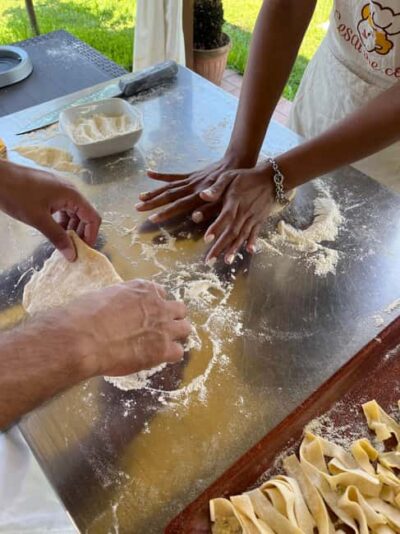
You’ll start with the dough and learn how it should feel before you move on. The goal is not just to shape it, but to understand the texture stage where the dough becomes workable. In practical terms, that’s what helps you roll yufka later without fighting it.
2) Rolling out yufka
Yufka is layered thin, and the rolling technique affects everything: how the layers separate, how they bake, and how the dessert cuts. You’ll get hands-on practice here, not a vague overview.
3) Layering walnut filling
You’ll layer the dough with a walnut filling. This is where baklava stops being a single pastry and turns into a structured, layered dessert. You’ll learn how to distribute the filling so you don’t end up with a dry center or overly thick layers.
4) Baking until golden
Once layered, the baklava goes into the oven. While it bakes, you’ll keep the momentum by moving to savory cooking.
5) Syrup and clarified butter
After the baklava turns golden, you’ll simmer syrup and then pour it over. Then comes melted clarified butter. This part is key for that classic baklava finish—sticky, fragrant, and rich without being chaotic. You’ll see how timing and pouring affect the final texture.
If you care about making desserts at home that actually work, learning the syrup and butter steps is where the class earns its keep. Many baklava classes stop at rolling and stuffing. This one treats the finishing process as part of the craft.
While it bakes: börek and meze that keep the meal balanced
Baklava is rich. If the class ended there, you’d feel it by hour two. Instead, you make a savory course alongside it: a börek and a fresh meze.
Börek
You’ll prepare a savory börek while the baklava is in the oven. Even though you’re making different items at the same time, the energy stays steady because börek gives you a totally different skill set—handling a savory dough, shaping, and focusing on salt-forward flavor rather than sweetness.
Meze: kısır or mercimek köftesi
Then you’ll make a fresh meze option such as kısır or mercimek köftesi. Both are popular Turkish staples, and either one helps you cut through the heaviness of baklava. They also make the meal feel more authentic: you’re eating like someone actually lives this way, not like you’re collecting separate foods.
I like that the menu trains your palate. Sweet, savory, fresh, and hearty all show up in one session. When you eat at the end, the flavors make sense together, which is exactly how you’ll want to serve this at home too.
The best part: eating together with strong Turkish coffee
After cooking, you’ll gather around the table and eat the food you made. You’ll enjoy a strong cup of Turkish coffee alongside your baklava, börek, and meze.
This is not a rushed tasting. It’s a sit-down moment that turns the class into something warmer than a workshop. The tone is family-style—Sercan and his family welcome you into their home kitchen rhythm, and that changes how you remember the steps. When you’re eating the results, the technique clicks into place.
Two details stand out from the way the experience is run:
- You’ll have leftovers packed so you can take a piece of the meal home.
- You’ll get recipes to take home, which is where the class becomes practical for your kitchen back in your city.
If you’re the type who forgets recipes the second you get home, this matters. The class gives you a written way to repeat the work, instead of relying on memory.
Price and value: what $82 covers (and why it adds up)
At $82 per person for a 4-hour class, the value comes from more than just the food. You’re paying for:
- hands-on instruction through multiple Turkish dishes,
- cooking from scratch (not assembly),
- a small group size that supports questions,
- Turkish coffee included,
- and take-home recipes.
When you calculate it that way, it’s not just a meal. It’s an education in technique plus a full meal outcome. You’re also getting both sweet and savory skills—baklava, börek, and meze—so you’re not walking away with one cookie-cutter recipe.
Also, the home kitchen format reduces the feeling of being rushed or processed. A smaller group means you can clarify details that matter in pastry and syrup work, like dough texture and pouring timing.
Who should book this baklava class in Ankara?
This class is a strong fit if you want to learn a real Turkish pastry process and you enjoy cooking alongside someone who explains as you go. Since the class is suitable for all skill levels, you don’t need to already know your way around dough.
I’d especially recommend it if:
- you love Turkish food and want more than a tasting tour,
- you like learning techniques you can recreate at home,
- you’re traveling with a friend and want something interactive,
- you want a cultural exchange that feels less staged and more human.
One group that might struggle: people who get overwhelmed by hands-on cooking. You’ll be kneading and shaping and doing active steps. If you want a purely observational food outing, you’d likely find this tiring.
Practical tips to get the most from your 4 hours
You’ll have a lot to do in one sitting, so a few smart moves help.
Go in hungry, but pace yourself. You’ll end up with a full spread, so eat lightly before you arrive. During cooking, it’s easy to snack absentmindedly and then find yourself too full to enjoy the final table meal.
Ask about texture, not just steps. In pastry, the process matters because outcomes depend on dough feel. If you hear advice you don’t fully understand, ask the meaning behind it. That’s where you get long-term results at home.
Take a quick note plan for later. Even if recipes are provided, write down anything that feels like a turning point—what “right” looks like for yufka thickness or how syrup changes when poured. It takes 2 minutes and saves you frustration later.
Plan for take-home food. The class is set up so you can bring leftovers home. If you’re traveling light, think ahead about how you’ll carry it safely afterward.
Should you book the Ankara baklava cooking class?
Yes, if you want a hands-on skill experience in an actual home kitchen, this is the kind of activity that turns into a memory you can recreate. The value is strong because you’re not just learning baklava—you’re also making börek and a fresh meze, then sitting down with Turkish coffee to eat what you made.
Book it especially if you care about technique and you want the confidence to repeat it later. Skip it only if you prefer passive sightseeing or you know you don’t do well with active cooking tasks in a small kitchen.
FAQ
How long is the Ankara baklava cooking class?
The class lasts 4 hours.
Is the class hands-on?
Yes. Participants are involved in hands-on cooking throughout the session.
What dishes will I make besides baklava?
You’ll prepare baklava from scratch, plus a savory börek and a fresh meze such as kısır or mercimek köftesi.
Does the class include Turkish coffee?
Yes. Turkish coffee is included with your meal.
What languages are used during the class?
The instructor teaches in Turkish and English.
What’s the group size?
It’s a small group limited to 6 participants.
Will I get recipes to take home?
Yes. You’ll receive recipes to take home, along with the food you make (leftovers are packed).