REVIEW · PECCIOLI
Tuscany: Traditional Cooking Class with Lunch or Dinner
Book on GetYourGuide →Operated by Relais Podere Borgaruccio · Bookable on GetYourGuide
Fresh pasta in two hours can feel real. At Relais Podere Borgaruccio in Tuscany, you’ll go hands-on with egg pasta from flour and eggs and then eat what you make with a glass of Bianco dell’Era Borgaruccio. The main thing to consider: in warm months, the room can get hot and the pace may feel a bit fast if you’re hoping for a super relaxed rhythm.
This is built for small groups (10 max) and you leave with a certificate of participation. You’ll also get an apron and equipment, plus the chance to ask the chef questions in Italian or English while you cook.
In This Review
- Key things to know before you go
- A Two-Hour Tuscan Cooking Class in a Real Farm Stay Setting
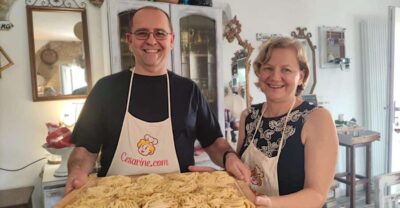
- Handmade Fresh Pasta: Ravioli, Tagliatelle, Malfatti, and Sauces
- Lasagna Course: Homemade Egg Pasta and Béchamel Layering
- Gnocchi Lessons: Classic Tuscan Plus the Chef’s Variation
- Pizza Dough Workshop: Quick-Rise vs Sourdough Starter
- Dessert Choices: Tiramisu, Cantuccini, Panna Cotta, or Ricciarelli
- Lunch or Dinner with Your Own Cooking: Wine and Crostini Included
- Price and Value: What $88 Really Buys You
- Who Should Book (and Who Should Skip It)
- Should You Book This Tuscan Cooking Class?
- FAQ
- How long is the cooking class?
- What dishes will I learn to make?
- Is lunch or dinner included?
- Is wine tasting included?
- Do I get a participation certificate?
- How big is the group?
- What language is the instructor?
- Is the activity wheelchair accessible?
- Can vegans or people with gluten intolerance attend?
- Is transportation included?
- What is the cancellation policy?
Key things to know before you go
- Handmade pasta basics start from flour and eggs, then you shape multiple Tuscan styles like ravioli and tagliatelle
- You cook, then sit down immediately to lunch or dinner using the dishes you prepared
- Wine tasting is included with Bianco dell’Era Borgaruccio and you’ll also get crostini
- Pizza gets two dough methods: quick-rise and sourdough starter technique
- Dessert is choice-based, including tiramisu, cantuccini, panna cotta, or ricciarelli cookies
- Dietary limits are real, so you’ll want to confirm any gluten/vegan needs ahead of time
A Two-Hour Tuscan Cooking Class in a Real Farm Stay Setting
This class runs about 2 hours, and it’s hosted inside the Relais Podere Borgaruccio property—more “Tuscan villa experience” than kitchen classroom. That matters because the setting helps you feel the tradition behind the food, not just follow steps on a screen.
You’ll be cooking with a chef who teaches in Italian and English, and you’re not stuck in a giant group. With a maximum of 10 participants, you should be able to get hands-on help when dough gets sticky or when you’re figuring out the right thickness for pasta.
One practical note: it’s not a full-day food tour. You’ll cover a lot—multiple courses, multiple dough types—so expect a focused pace rather than leisurely wandering and long explanations.
Handmade Fresh Pasta: Ravioli, Tagliatelle, Malfatti, and Sauces
The pasta portion is the heart of the experience. You’ll make three traditional Tuscan pasta types: ravioli (stuffed pasta), tagliatelle, and malfatti. You’ll learn handmade egg pasta technique using local flours, then pair each pasta with a sauce built to match.
What I like about this approach is that you don’t just “watch pasta being made.” You learn how dough changes in your hands. Even if you’ve never rolled pasta before, this format pushes you to try the process—mix, knead, roll, shape—so you understand why the final texture matters.
You also get a strong sauce foundation in the flow of the class, which helps you avoid the common mistake of thinking pasta is only about the shape. It’s also about the sauce choice and how the pasta holds onto it.
Lasagna Course: Homemade Egg Pasta and Béchamel Layering
Next up is lasagna, and it’s not the shortcut version. You’ll prepare homemade egg pasta specifically for lasagna, then build two sauces—including béchamel—to layer correctly.
The useful lesson here is timing and consistency. Béchamel can go wrong if it’s too thin or too thick, and lasagna is only as good as its layers. You’ll learn how to assemble so the pasta holds up and the sauces distribute well instead of pooling.
If you’re the kind of traveler who loves to bring skills home (not just photos), this is one of the highest-value parts. Once you know the logic of layering béchamel with the other sauce, you can repeat it later with your own ingredients.
Gnocchi Lessons: Classic Tuscan Plus the Chef’s Variation
You’ll master two types of gnocchi: a classic Tuscan recipe and the chef’s special variation. Gnocchi training is important because it’s all about proportion and texture—too much flour can make them heavy, and too little can make them fall apart.
This is also where a short class can feel like a tradeoff. You may move quickly from one style to the next, so go in with the mindset of learning the method more than memorizing every tiny detail. If you ask questions while you work, you’ll get way more out of it.
What you’ll likely leave with is a clearer idea of how gnocchi should feel before they cook: tender but shaped, not mushy. That’s the kind of knowledge you can actually use later.
Pizza Dough Workshop: Quick-Rise vs Sourdough Starter
Then it’s pizza time—and it’s more interesting than a single dough recipe. You’ll make pizza dough using both a quick-rise method and a sourdough starter approach, then practice traditional kneading.
This is a practical, hands-on way to understand fermentation without overcomplicating it. You’ll see how different rise methods affect texture and handling, which is exactly what you need if you want to try pizza at home.
After the dough work, you’ll create your own pizza using seasonal, local ingredients. That part is where the class stops being purely technical and becomes genuinely fun—because you get to assemble something you’ll actually eat.
Dessert Choices: Tiramisu, Cantuccini, Panna Cotta, or Ricciarelli
You’ll finish with dessert, with classic options such as tiramisu, cantuccini, panna cotta, or festive ricciarelli cookies. The chef also teaches professional garnishing techniques and how to think about flavor pairings.
I like this end section because it makes dessert feel like a craft, not just a recipe. Instead of only measuring ingredients, you’ll learn how to present and balance flavors so the sweet part works with everything you ate before it.
Since the class runs only two hours, you should expect portions and steps to be efficient. Still, the goal is that you come away with usable knowledge you can replicate at home—especially for desserts like tiramisu where technique matters.
Lunch or Dinner with Your Own Cooking: Wine and Crostini Included
After you cook, you sit down to enjoy the meal you prepared. Your lunch or dinner includes dishes made in class, plus a glass of white wine and crostini.
Wine and food pairing is part of what makes this work as a full experience. It’s not just a tasting lecture; you eat what you learned, so the flavors connect immediately.
Also, the setting helps. When you’re dining after making your own pasta, the meal feels like closure instead of an extra step. And you’re not leaving hungry—you’re leaving satisfied, with a certificate of participation as a neat keepsake.
Price and Value: What $88 Really Buys You
At $88 per person for a 2-hour class, the value depends on what you expect from “a cooking class.” Here, your money covers a lot beyond instruction: lunch or dinner, wine tasting (with Bianco dell’Era Borgaruccio), crostini, apron, and equipment, plus a certificate.
That package is why I think it can be a good deal—especially if you like hands-on learning and you’d otherwise spend money on a meal anyway. You also get small-group attention, which typically makes a short class more effective.
That said, one thing to double-check before you go: sometimes wine service can involve additional purchases depending on how much is consumed. If you want to keep costs predictable, ask what’s included in the wine portion and whether extra glasses are ever offered for purchase.
Another seasonal consideration: if you book in summer, bring a plan for heat. One recent experience highlighted that the room can run warm and the pacing can feel rushed when everyone’s battling the temperature.
Who Should Book (and Who Should Skip It)
This class is a great fit if you want a fast, practical Tuscan food skill set: pasta shaping, lasagna layering, gnocchi technique, two pizza dough methods, and classic desserts. It also works well for couples or friends who like learning together and then eating immediately.
It’s not ideal for everyone. The experience is not suitable for children under 15, people with gluten intolerance, or vegans. You can request dietary customization, but since the activity lists vegan and gluten-intolerance limits, you should confirm your situation directly before committing.
If you’re comfortable with regular ingredients and you’re excited to cook, this is the kind of activity that makes your Tuscany trip feel personal—because you’ll take home real technique, not just a memory.
Should You Book This Tuscan Cooking Class?
If you want an enjoyable way to learn Tuscan cooking in a short time—hands-on, small group, and with lunch or dinner included—yes, it’s worth booking. The best reason is simple: you cook multiple iconic dishes and then eat them right away.
I’d be more cautious if you’re sensitive to warm indoor rooms, if you need super-slow pacing, or if you have strict dietary requirements (especially gluten intolerance or vegan needs). If that’s you, message ahead and confirm what can be customized.
FAQ
How long is the cooking class?
The class lasts about 2 hours. You’ll cook, then sit down to eat the meal you prepared.
What dishes will I learn to make?
You’ll learn how to make fresh pasta (including ravioli, tagliatelle, and malfatti), lasagna with homemade egg pasta and sauces, two types of gnocchi, pizza dough with both quick-rise and sourdough starter methods, and a Tuscan dessert such as tiramisu.
Is lunch or dinner included?
Yes. Your lunch or dinner is included and you eat the dishes you prepare in class.
Is wine tasting included?
Yes. You’ll have wine tasting with Bianco dell’Era Borgaruccio, and you also get a glass of white wine with your meal, along with crostini.
Do I get a participation certificate?
Yes. You receive a certificate of participation at the end of the experience.
How big is the group?
It’s a small group limited to 10 participants.
What language is the instructor?
The instructor teaches in Italian and English.
Is the activity wheelchair accessible?
Yes, it is listed as wheelchair accessible.
Can vegans or people with gluten intolerance attend?
The experience is listed as not suitable for vegans and for people with gluten intolerance. Dietary courses can be customized upon request, so you should confirm your needs directly before booking.
Is transportation included?
No. Transportation to and from the venue is not included.
What is the cancellation policy?
Free cancellation is available up to 24 hours in advance for a full refund.