REVIEW · LAGOS
Home-Style Portuguese Cooking Class in Portimao with Pedro
Book on Viator →Operated by Traveling Spoon · Bookable on Viator
A dinner class can be a great memory, but this one is different: you cook in a local home kitchen in Portimão. You’ll learn Algarvian flavors and techniques from Pedro, with conversation that turns food into stories about culture, family, and even his own roots. It’s private (no mixing with strangers) and you eat what you make, with local wine.
What I like most is the hands-on rhythm. Pedro walks you through making two dishes from scratch, and you finish by sitting down together to enjoy the meal with wine and dessert. I also like the variety of what’s on the table, from a Porto tonic welcome to Carob and almond mousse or sweet milky rice, plus seasonal fruit.
One consideration: Pedro does some prep ahead, so if you want every minute to be cooking from the first minute, you may wish for a bit more hands-on time than a typical step-by-step class. Still, the structure keeps you moving and learning, not just watching.
In This Review
- Key highlights at a glance
- Why Pedro’s home kitchen in Portimão feels so personal
- The 3-hour arc: from Porto tonic to sweet milky rice
- Welcome moment and appetizers
- The cooking class: step-by-step, not sink-or-swim
- Rooftop time (season and weather dependent)
- Dinner together and dessert finish
- What you’ll cook in Portimão: cataplana and friends
- Main dish options (the Algarve classics)
- Appetizer or dessert: where Pedro teaches Portuguese sweet and savory balance
- Ingredients, markets, and the seasonal logic behind Portuguese cooking
- Dietary needs: lactose free, gluten free, vegetarian, and vegan
- Wine and the dinner table: included local flavors
- Summer terrace BBQ option: June to September on request
- Price and value: is $179 worth it?
- Who should book this class, and who might pass
- This is a great match if you:
- You might think twice if you:
- Practical tips so you get the most out of your night
- Should you book this Portimão cooking class with Pedro?
- FAQ
- Is this cooking class private?
- How long is the activity?
- Is the class offered in English?
- What dietary options can Pedro accommodate?
- What’s included with the meal?
- Where do we meet and where does it end?
Key highlights at a glance
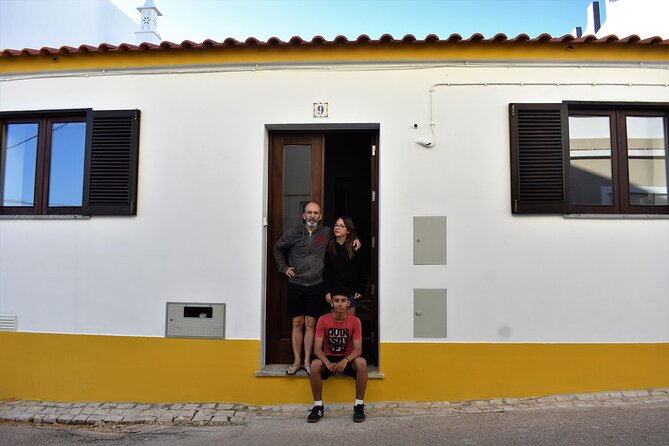
- Private at Pedro’s home kitchen: 100% your group, designed around a real family meal
- Two-dish cooking lesson: appetizer/dessert plus a main, with step-by-step guidance
- Algarve ingredients and Portuguese stories: seasonal produce and cooking context, not just recipes
- Wine and dessert included: local wine with dinner, plus carob/almond or arroz doce
- Dietary needs handled on request: lactose free, gluten free, vegetarian, vegan options
- Optional summer rooftop BBQ: June–September charcoal sardines and peppers, by request
Why Pedro’s home kitchen in Portimão feels so personal
This is the kind of cooking class that makes sense the moment you arrive. You’re not in a studio. You’re in Pedro’s space, and he designed his kitchen himself, with the goal of hosting people and teaching in a comfortable flow. That matters because good cooking instruction is part technique, part confidence. When you feel at ease, you ask better questions, and you follow directions more closely.
Two other things make this feel authentic. First, the food is tied to the Algarve and Portuguese everyday life: ingredients, seasonal choices, and the logic behind Portuguese cooking. Second, the conversation is part of the package. One evening can include cooking technique and a story about Pedro’s background and his mother’s cooking, plus chatting about the area. Even the rooftop time (when the weather allows) has a social feel, not a tourist show.
You can also read our reviews of more tours and experiences in Lagos.
The 3-hour arc: from Porto tonic to sweet milky rice
The total experience runs about 3 hours, and it follows a simple, satisfying plan: greet, cook, eat, and finish with dessert. You’ll meet at Vila Lisa, R. Francisco Bívar 55, 8500-132, Portugal, and the activity ends back there.
Welcome moment and appetizers
You start with a welcome drink: a Porto tonic. It’s a small detail, but it sets the tone. Portugal doesn’t treat drinks as an afterthought, and a Porto tonic also fits the coastal mood of the Algarve.
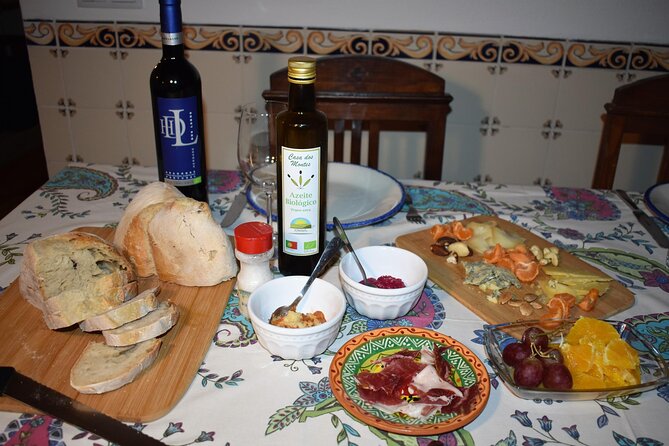
Then you move into appetizers. You’ll see a mix that can include Portuguese cheese, carrots Algarve style, seasoned olives, pate, chouriço or cold meats, and freshly baked bread from a local bakery. The point isn’t just variety. It gives you flavors and textures to notice before you cook the main course.
The cooking class: step-by-step, not sink-or-swim
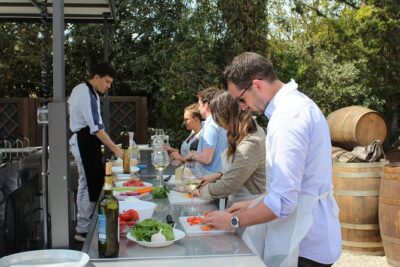
The cooking class portion is about 1 hour Algarve cooking time, inside the full 3-hour visit. Pedro preps a few elements in advance, then guides you through the rest step by step. You’ll learn to make two dishes from scratch, which usually breaks down to:
- one appetizer or dessert, and
- one main dish.
If you’re traveling solo, or you just want a focused evening, this format is efficient. You get real instruction without feeling rushed, and you still end up at the table with a full meal.
Rooftop time (season and weather dependent)
In some cases, you’ll also get time on Pedro’s rooftop while you prep items or enjoy the moment with a cocktail. That rooftop add-on is especially nice because the Algarve climate can make the whole experience feel outdoors, even when you’re cooking inside.
Dinner together and dessert finish
After cooking, you eat your meal. Wine is included, typically white, rosé, or red, and you also get fruits in season. Dessert is one of the classic Portuguese-style endings you’ll want to remember:
- Carob and almond mousse
- Arroz doce (sweet milky rice)
- Carob and almond chia mousse (vegan option)
One more built-in sweet detail: there’s often something plant-forward (carob, almonds, seasonal fruit). It’s a pleasant break from heavy, purely chocolate-based desserts you see elsewhere.
What you’ll cook in Portimão: cataplana and friends
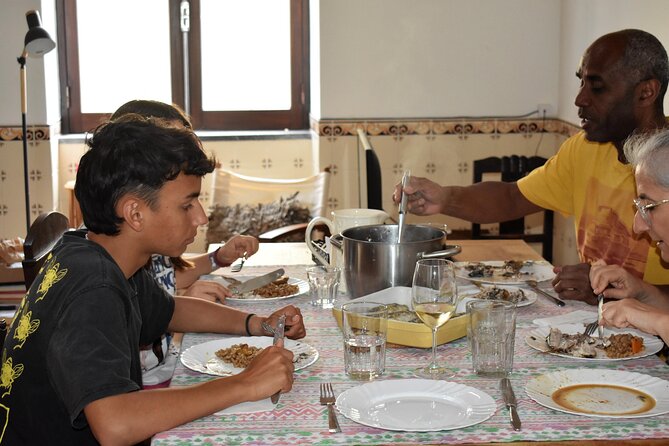
You’re not guaranteed one single menu every time. The menu can vary with the season, but the cooking plan stays the same: two dishes, guided instruction, and you eat what you make.
Main dish options (the Algarve classics)
For the main course, you might cook something from this list:
- Cataplana (either vegan or fish)
- Bacalhau à Gomes de Sá (codfish)
- Carne de Porco à Portuguesa (fried pork)
- Bochechas de Porco Estufadas (stewed pork)
Cataplana is the signature favorite here. It’s also the kind of dish that teaches technique, because it’s not just about throwing ingredients together. It’s about understanding cooking method and timing so flavors stay balanced.
Appetizer or dessert: where Pedro teaches Portuguese sweet and savory balance
For the second dish, you’ll usually tackle an appetizer or dessert. Dessert options include carob-based mousse or arroz doce, and there are vegan paths too.
From one full evening described, carrot-based Algarve flavors also show up as part of the experience (carrots Algarve style). If you like learning through familiar ingredients, this kind of menu teaches you how Portuguese cooks treat produce: not as side items, but as central flavors.
Ingredients, markets, and the seasonal logic behind Portuguese cooking
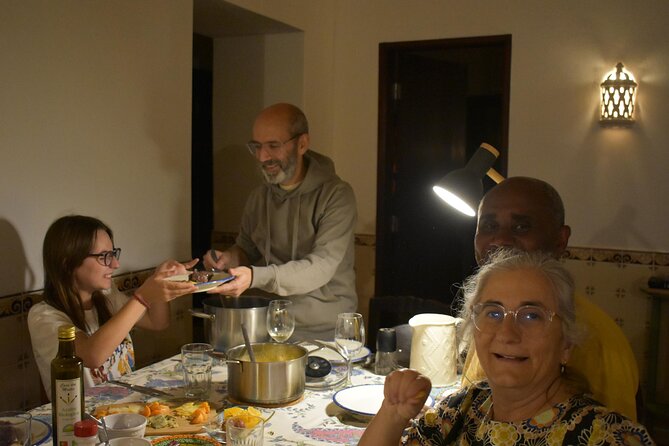
One of the best parts of this class is how it trains your senses. Pedro pays attention to local, seasonal ingredients, and you’ll hear why certain choices work in Algarve cooking. That matters because Portuguese food often depends on the quality of simple elements: olives, bread, vegetables, fish, and dairy substitutes when needed.
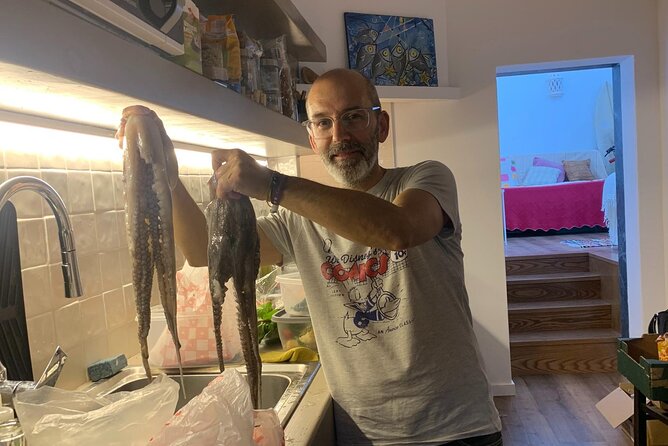
In at least one example evening, Pedro used fresh organic produce from his own market. Even if your specific menu shifts, the teaching approach is the same: you learn how to think like a cook in the region. You get practical context for things like:
- how flavors change with roasting versus raw seasoning,
- how to balance savory plates with sweet finishes like arroz doce,
- why Portuguese desserts often use ingredients such as carob, almonds, and seasonal fruit.
This is also where you’ll pick up the cultural layer. Pedro talks about ingredients and techniques and connects them to his own life and memories. That’s what turns a cooking class into a small cultural education you can taste.
Dietary needs: lactose free, gluten free, vegetarian, and vegan
If you’re traveling with dietary restrictions, this matters more than most classes. Pedro can accommodate lactose free, gluten free, vegetarian, and vegan diets, as long as you tell him your needs in advance.
Practically, it changes both what you cook and what you serve at the table. For example, vegan options exist for the cataplana path and for desserts like carob and almond chia mousse. If you’re avoiding dairy or gluten, this is the kind of class where you want clear communication up front, and the good news is that the host explicitly handles requests.
Two tips for you:
- Share restrictions at booking so Pedro can shape the menu, not just swap ingredients at the last second.
- If you have allergies, mention them directly, not just a general category. This kind of cooking involves several ingredients that may look similar but behave differently in the kitchen.
Wine and the dinner table: included local flavors
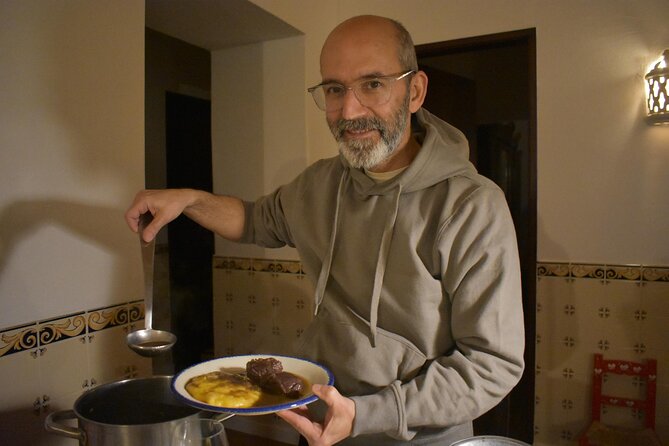
The package includes local wine, and you should expect about 1–2 glasses of it. You can get white, rosé, or red depending on the meal flow.
Wine can be a marketing add-on in some classes. Here it fits the meal, because you’re eating traditional Portuguese dishes you helped make. It also keeps the evening social. You’re not just learning and leaving. You’re sitting down long enough to taste, chat, and ask what you might want to make again at home.
Summer terrace BBQ option: June to September on request
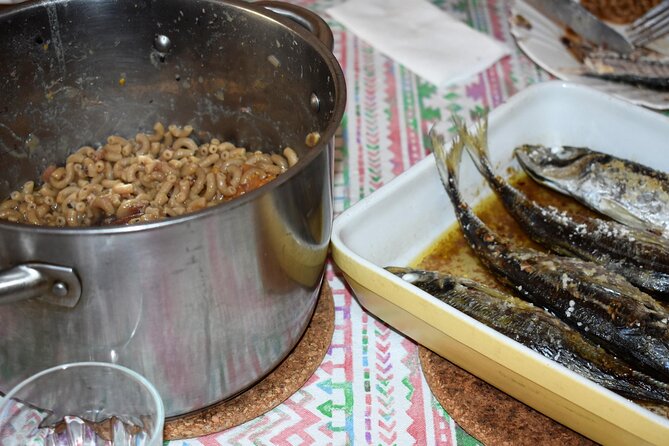
From June to September, Pedro can host an outdoor barbeque on his terrace, but you have to request it in advance. When this happens, you’ll cook and eat:
- sardinhada (charcoal grilled sardines with potatoes)
- pimentos assados (charcoal roast peppers)
- salada algarvia (Algarve style salad)
This option is great if you want Algarve food in its most casual setting. It’s also helpful if you’re planning a summer trip and want something that feels warmer than indoor cooking classes. Just remember that the terrace BBQ is not automatic. If you want it, ask early and align it with your dietary needs too.
Price and value: is $179 worth it?
At $179 per person for about 3 hours, the price isn’t low. But this setup is also not a basic cooking demo.
Here’s why it can feel like good value for the right traveler:
- It’s private. You’re not sharing kitchen time with strangers, and instruction can stay focused.
- You get a complete meal: appetizers, your main, and dessert.
- Wine is included, plus a welcome drink.
- Dietary accommodations are built into the planning when you request them.
- You’re getting a home-hosted cultural evening, not just a recipe list.
If you compare this kind of experience to paying for a nice private dinner plus cooking instruction elsewhere, the value becomes clearer. You’re paying for the combination: the kitchen teaching, the meal, and the host-led cultural context.
So ask yourself: do you want an activity that gives you both food and a story you can talk about at breakfast the next day? If yes, the price fits the style.
Who should book this class, and who might pass
This is a great match if you:
- want a local-family meal vibe, not a commercial classroom
- like Portuguese food and want to learn the method behind it
- enjoy conversation with the host while you cook and eat
- need lactose free, gluten free, vegetarian, or vegan options
- prefer a private experience where you can ask questions
You might think twice if you:
- want maximum hands-on involvement at every second
- Pedro does some prep in advance, and instruction is structured, not chaotic
- prefer a class that is purely technical and fast-paced
- this one includes culture and time at the table as part of the value
Practical tips so you get the most out of your night
A few small choices make a big difference.
- Arrive on time. The whole flow depends on starting the kitchen work smoothly.
- Tell Pedro your preferences early, including dietary needs and what style you’d enjoy cooking (cataplana route, cod, pork, or vegan options).
- If you’re curious about the region, ask about the ingredients he uses and why. Portuguese cooking often has a logic tied to season and availability.
- Go hungry. You’re not just tasting. You’re eating a full home-style meal with dessert.
Also, since you’ll be meeting at a specific address and ending back there, plan your evening around it. No need to sprint to another event right after.
Should you book this Portimão cooking class with Pedro?
Yes, if you want an authentic Portuguese dinner that you help make, in a real home kitchen, with local wine and seasonal dessert. The biggest win is the mix of hands-on instruction and cultural conversation, all wrapped into a private meal experience.
I’d book it especially if you:
- like Portugal’s classics like cataplana and bacalhau,
- need dietary options handled well in advance,
- want a quieter, more personal night in the Algarve than the usual tour shuffle.
If you’re the type who wants every minute to be purely hands-on, message Pedro (or ask in advance) about how much active cooking time to expect. But even then, the overall structure is designed to teach you enough to recreate the flavors later.
FAQ
Is this cooking class private?
Yes. It’s listed as a private, personalized experience. Only your group participates.
How long is the activity?
It runs for about 3 hours (approx.).
Is the class offered in English?
Yes, it’s offered in English.
What dietary options can Pedro accommodate?
Pedro can accommodate lactose free, gluten free, vegetarian, and vegan diets if you request them in advance. If you have allergies, you should advise him at booking.
What’s included with the meal?
You’ll get the private cooking class, a homecooked Portuguese meal, and local alcoholic beverages (including a welcome drink and wine). Dessert is included as well.
Where do we meet and where does it end?
You meet at Vila Lisa, R. Francisco Bívar 55, 8500-132, Portugal. The activity ends back at the meeting point.