REVIEW · AOMORI PREFECTURE
Culinary Home Cooking with Grandmothers – Vegan Friendly
Book on Viator →Operated by BASAMA's Kitchen · Bookable on Viator
A warm home table is the real highlight here. In Aomori, you cook side by side with local grandmothers, then eat what you make together, no matter your dietary style. I especially love the hands-on cooking and the way the day turns into story time at one shared table, not a stiff class.
One thing to consider is logistics: you’ll need to make your own way to Mutsu-Tsuruta Station (JR Gono Line), and the experience starts from the Maeda Tsuruta area. If you like everything handled for you from door to door, this won’t feel that way.
In This Review
- Key things you’ll notice right away
- A warm table in Aomori: what this 3-hour class is really about
- Getting there: Maeda Tsuruta start point and station timing
- Aomori geography and seasons: why you get the lesson before the cutting board
- Hands-on cooking with grandmothers: keno-jiru, onigiri, and seasonal sides
- The vegan-friendly part: what makes it work for more diets
- Lunch at one shared table: the cultural exchange isn’t a side quest
- Price and value: $78.04 for a home-cooked lesson
- Who should book this, and who might not
- Should you book Culinary Home Cooking with Grandmothers?
- FAQ
- How long is Culinary Home Cooking with Grandmothers?
- What dietary needs does the menu support?
- Is lunch included?
- Do I need to speak Japanese to join?
- Where do I meet and what time does it start?
- Do I need to arrange public transportation to the station?
Key things you’ll notice right away
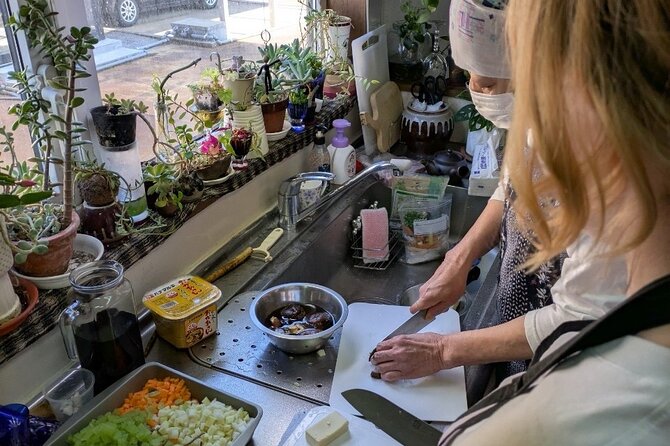
- Grandmothers lead the cooking and share family recipes plus stories as you work
- Plant-based menu is designed to fit vegan, vegetarian (including Oriental Vegetarian), and gluten-free needs
- Aomori climate first, then food: you learn how snowy winters and lush summers shape local dishes
- Keno-jiru and onigiri are part of the hands-on cooking, plus seasonal sides that change by ingredients
- English-speaking guide support is included, and it helps a lot if your Japanese is rusty
A warm table in Aomori: what this 3-hour class is really about
This isn’t a studio cooking show. It’s a home-kitchen experience where the main event is simple: you make Japanese comfort food, then sit down as one group to eat it together. You’ll feel the difference right away because the grandmothers are teaching you the way they cook at home, with patience and real conversation.
I love that the experience is built around connection first. Cooking together forces everyone to slow down, laugh at little mistakes, and learn by doing. And when you finally gather at one table, the meal lands as the payoff, not an afterthought.
The vegan-friendly angle matters too. The menu is naturally plant-based and described as suitable for vegan and vegetarian diets (including Oriental Vegetarian) plus gluten-free needs. That means you can focus on learning how Japanese home cooking works, instead of spending the class worrying about substitutions.
Getting there: Maeda Tsuruta start point and station timing
The tour starts at Maeda Tsuruta, Kitatsugaru District, Aomori 038-3503, Japan, with a start time of 11:00 am. It ends back at the meeting point after about 3 hours (approx.).
Transportation is the one place you should plan ahead. The experience does not include public transport to Mutsu-Tsuruta Station (JR Gono Line), so you need to handle your own ride there. The good news is that the meeting area is described as near public transportation, and the tour includes an English-speaking host or guide who can help you get oriented once you arrive.
If you’re traveling independently in Aomori, I’d treat Mutsu-Tsuruta Station as your anchor point for timing. Arriving a little early will reduce stress, especially if you’re pairing this with other plans.
Aomori geography and seasons: why you get the lesson before the cutting board
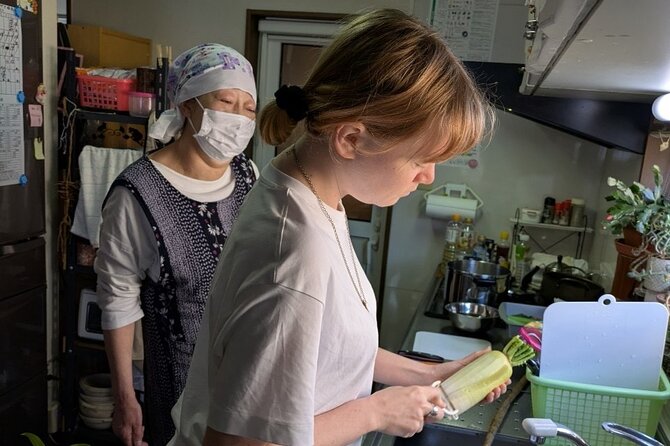
Before you start cooking, you get a short introduction to Aomori’s geography, climate, and traditions. It’s not trivia for trivia’s sake. The point is to show you why certain foods and flavors make sense here, especially across the seasons.
Aomori is shaped by extremes: snowy winters and lush summers. That kind of weather affects what ingredients are available, what dishes feel comforting, and how people think about food for everyday life. Even if you never learned the vocabulary for it, you’ll feel the logic once you’re hands-on in the kitchen.
This setup is a quiet advantage. When you understand why the class is focused on seasonal dishes, you’re more likely to recreate the results at home. You’re not just memorizing steps.
Hands-on cooking with grandmothers: keno-jiru, onigiri, and seasonal sides
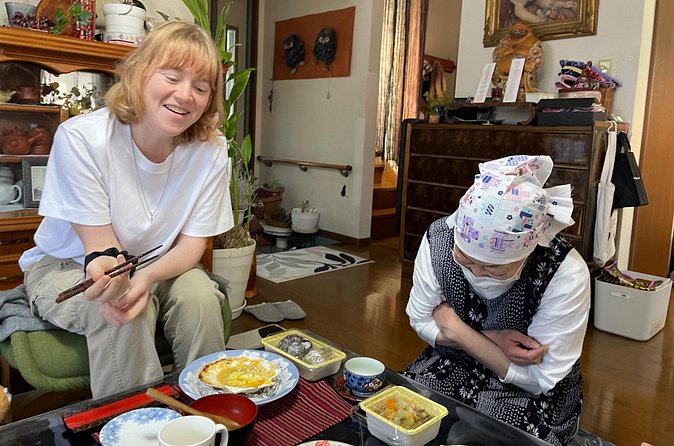
After the introduction, you roll up your sleeves and cook with local grandmothers. The class is described as hands-on throughout, and the grandmothers guide you with family-style recipes and stories as you go.
You’ll work on practical prep tasks, like washing, cutting, and seasoning ingredients using Japanese home-cooking techniques. The focus is on simple methods you can repeat later, not fancy moves that only work with expensive tools.
From the menu, you can expect items such as:
- Keno-jiru, a vegetable miso soup (a comforting, grounding dish in colder seasons)
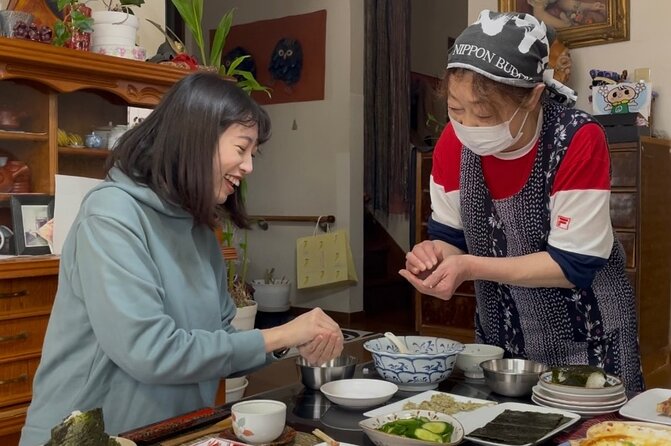
- Onigiri rice balls
- Seasonal sides, which can change depending on what’s available
Because the menu may vary by season and ingredients, think of it as a window into how Aomori cooks, not a guarantee of one exact set of dishes year-round. If you’re hoping to eat and learn specific dishes, it’s worth booking with the expectation of seasonal variation.
The biggest value here isn’t just what you eat. It’s that you’re learning technique in a real kitchen with real teachers. That means you get a sense of timing, texture, and seasoning that you usually can’t get from a recipe alone.
The vegan-friendly part: what makes it work for more diets
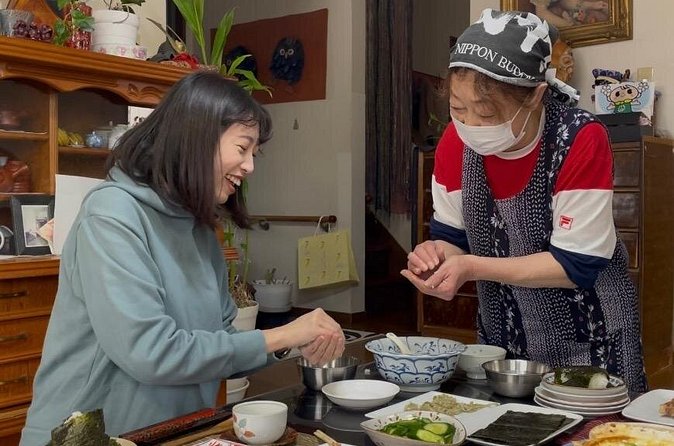
This meal is built to be inclusive. The class is described as naturally plant-based and suitable for vegan and vegetarian diets (including Oriental Vegetarian), as well as gluten-free needs. In other words, it’s not just “vegetarian with a few tweaks.” It’s planned as a Japanese home meal that fits common restrictions.
For you, that’s a big deal because it changes how the experience feels. You can cook without constantly asking whether you need to swap or avoid something. You also get to experience Japanese flavor-building with plant ingredients, which helps if your goal is learning how to cook at home, not just collecting a photo-worthy lunch.
One practical tip: since the menu is seasonal and ingredient availability can change, be ready for some ingredients you don’t usually buy. That’s part of the fun, especially in Aomori. If you have very specific dietary needs, it’s smart to confirm them when booking, because the exact seasonal sides may differ.
Lunch at one shared table: the cultural exchange isn’t a side quest
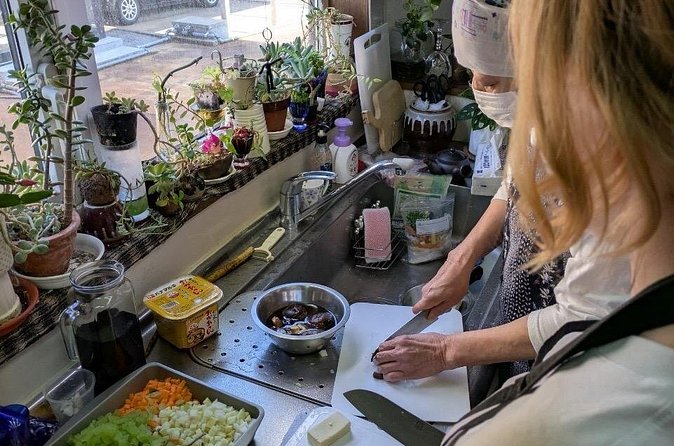
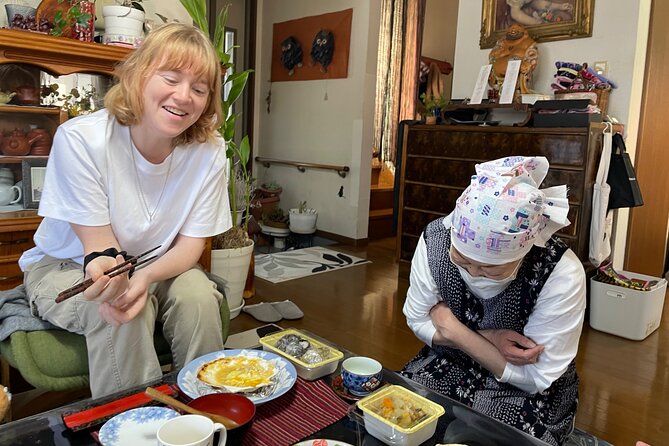
After cooking, everyone gathers around one table to eat the lunch you prepared. This is where the experience becomes more than food.
The reviews emphasize warmth and conversation: people describe the grandmothers as kind, patient, and welcoming, sometimes feeling almost like family. That matches the way the class is set up: you cook together, talk while you work, and then share the meal in the same space. It’s hard for that kind of connection to happen in a quick restaurant meal.
Food does the connecting here. You’re not just tasting; you’re learning each dish’s purpose in context, then experiencing it with the people who made it. That’s why the stories matter as much as the cooking steps.
Also, there’s a welcome drink upon arrival, which helps you settle in. Small touch, but it makes the whole thing feel like an actual visit, not a transaction.
Price and value: $78.04 for a home-cooked lesson
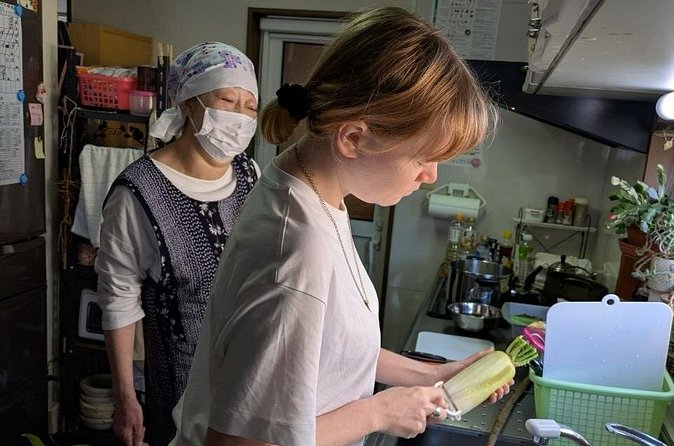
At $78.04 per person for about three hours, this price can look high if you’re comparing it to a regular meal. But it’s closer to the cost of a guided, taught experience plus lunch, with ingredients handled and an English-speaking guide included.
Here’s why it feels like value for the right traveler:
- You’re getting hands-on instruction from grandmothers, not just watching
- The meal is the lunch you cook, which saves you time and adds meaning
- The menu is designed for vegan/vegetarian and gluten-free needs, which can be hard to find at normal classes
- The class is private for your group, so you’re not squeezed into a larger schedule
If you’re the type who likes practical skills you can repeat, this is the kind of class that pays off later. You’ll leave with ideas, technique, and a mental picture of how Japanese home cooking flows.
If, on the other hand, you mostly want sightseeing photos and lots of variety, this won’t replace a day out exploring Aomori. Think of it as a high-quality slice of local life.
Who should book this, and who might not
You should book if you want:
- A Japanese home-cooking experience in Aomori with real people, not a showroom
- A meal that’s clearly built to be vegan-friendly and gluten-free
- Practical cooking skills like seasoning, shaping onigiri, and making miso soup with vegetables
- An English-speaking guide presence so you don’t feel lost
You might skip it if:
- You strongly prefer transportation and logistics to be handled start-to-finish (you’ll need to get to Mutsu-Tsuruta Station area on your own)
- You dislike hands-on cooking and prefer only eating
One more honest note: since the menu can change with the season, the class is best for people who enjoy the idea of learning how a local kitchen works, rather than expecting a fixed list of dishes every time.
Should you book Culinary Home Cooking with Grandmothers?
If you’re choosing between another food experience and this one, I’d lean toward booking if your goal is learning and connecting. The grandmother-led approach, the shared table meal, and the inclusive plant-based menu are a strong mix. Plus, the fact that you get English support while doing real cooking is a comfort for many people.
If you want a simple, meaningful way to experience Aomori beyond restaurants, this is the kind of class that sticks with you.
FAQ
How long is Culinary Home Cooking with Grandmothers?
It runs for about 3 hours.
What dietary needs does the menu support?
The menu is naturally plant-based and described as suitable for vegan, vegetarian (including Oriental Vegetarian), and gluten-free.
Is lunch included?
Yes. Your lunch is included, and it’s a homemade meal made with the dishes you cook.
Do I need to speak Japanese to join?
No. The experience includes an English-speaking host or guide, and the cooking lesson includes explanations while you work.
Where do I meet and what time does it start?
You start at Maeda Tsuruta, Kitatsugaru District, Aomori 038-3503, Japan, at 11:00 am. The activity ends back at the meeting point.
Do I need to arrange public transportation to the station?
Yes. Public transportation to Mutsu-Tsuruta Station (JR Gono Line) is not included, so you’ll need to get yourself there.