REVIEW · BRESCIA
Cooking class in a garden: handmade pasta
Book on Viator →Operated by eatwith · Bookable on Viator
Fresh pasta in a real Italian home beats a studio class.
I love the small group feel and the chance to work hands-on with Mariolina, who teaches with patience and fixes the details as you go. I also love how the garden-veranda aperitifs set a relaxed, friendly tone before you start rolling dough. One thing to consider: this is a 3-hour, do-the-work class, so if you want a mostly eat-and-watch experience, you may find it a little active.
Expect fresh shapes, good conversation, and a sweet finish that you can sometimes take with you.
That combination is what makes this one memorable—food as a social event, not just a meal. If you have food restrictions, you’ll need to communicate them ahead of time.
In This Review
- Key highlights you’ll actually care about
- A garden-veranda start in Desenzano del Garda (near Brescia)
- The 10:00 am flow: aperitifs, then pasta dough
- Rolling pasta the right way: thickness, folding, and patience
- Tagliatelle, ravioli, gnocchi, crêpes, malfatti: how the shapes fit together
- Eating what you make: local wine and a real table moment
- Dessert is the point: tiramisu (and sweet extras)
- Price and value: what $123.02 buys you (and why it feels fair)
- Who this class suits best (and who should skip it)
- Should you book Mariolina’s garden pasta class?
- FAQ
- What time does the cooking class start?
- How long is the experience?
- Where is the meeting point?
- What language is the class offered in?
- How many people are in the group?
- What pasta do you make?
- What’s included in the price?
- Is there a dessert option?
- Do I need to tell the host about food restrictions?
- Can I cancel for a full refund?
Key highlights you’ll actually care about
- Max group size of 4 means you get real attention while your dough rests and rolls
- English offered, so you won’t feel stuck when questions come up
- Aperitifs plus prosecco kick things off before you start cooking
- Multiple pasta styles are part of the lesson (tagliatelle, ravioli, gnocchi, crêpes, and sometimes malfatti)
- Tiramisu as a true ending, and in at least one version you may get it to go
- Mariolina’s teaching style focuses on thickness and even folding so your sheets stay consistent
A garden-veranda start in Desenzano del Garda (near Brescia)
This class is based in the Brescia area, with the meeting point in Desenzano del Garda BS at Via Montesuello, 25015. The start time is 10:00 am, and the whole thing runs about 3 hours, then you return to the same meeting point.
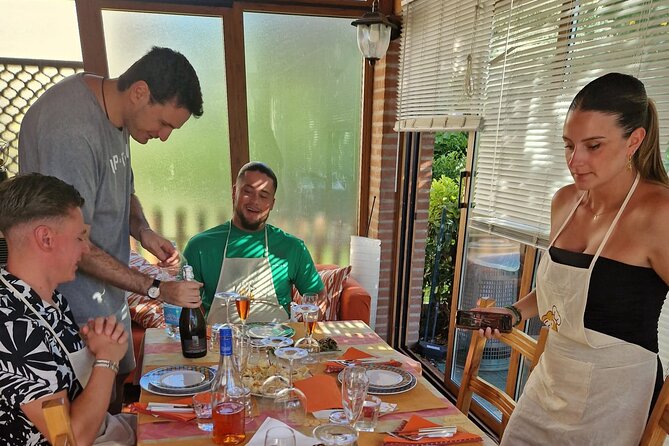
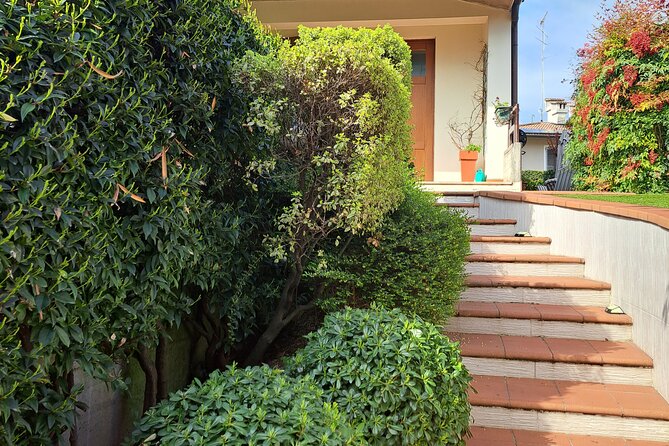
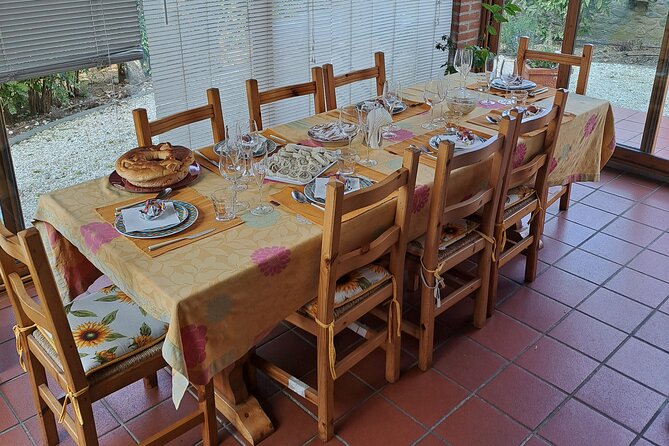
What I like right away is the mood. You’re not walking into a formal kitchen. You’re arriving to a home setup with a veranda overlooking the garden, where you can ease into the day instead of jumping straight into flour math. The format keeps it social, because you start with a proper pre-cooking ritual: a trio of aperitifs and a glass of Prosecco.
And it’s not just for show. The aperitif part comes with conversation. You’ll find it’s easier to relax, learn names, and ask questions when you’re not operating under a strict, silent-kitchen rule. One review specifically calls out the host’s stories and personality, and that matches what this kind of small, home-led cooking workshop is built for.
You can also read our reviews of more tours and experiences in Brescia.
The 10:00 am flow: aperitifs, then pasta dough
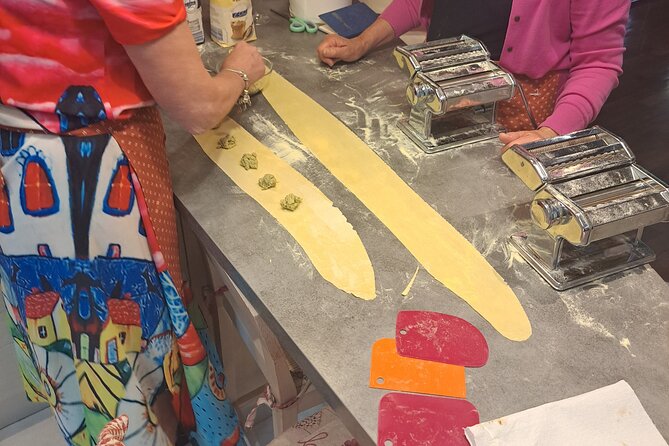
Here’s the rhythm of the day, in plain terms.
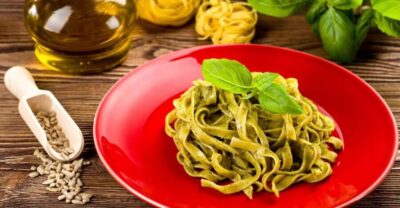
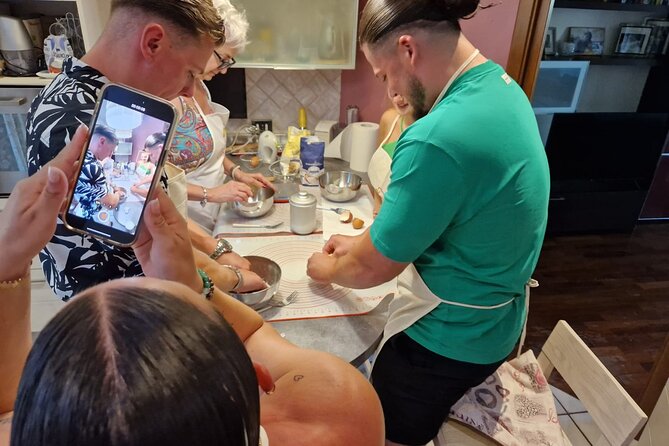
First comes the starter round: three appetizers plus a glass of Prosecco. Then you move into the hands-on pasta part, where the class turns from eating to doing. You’ll make fresh pasta shapes such as tagliatelle and ravioli, plus other options like gnocchi and crêpes (and the overview also mentions malfatti).
The practical reason this sequence works is simple: when you’re well-fed and relaxed, you don’t get stressed about timing. Rolling dough is physical work. Cutting and filling is detail work. A calm start helps you focus on technique instead of rushing.
Also, the group size matters. This experience caps at 4 people, and at least one past group had only 2 students. That’s a big deal for learning, because Mariolina can watch your specific issues—like dough thickness—rather than just making sure everyone is moving “in the right direction.”
Rolling pasta the right way: thickness, folding, and patience
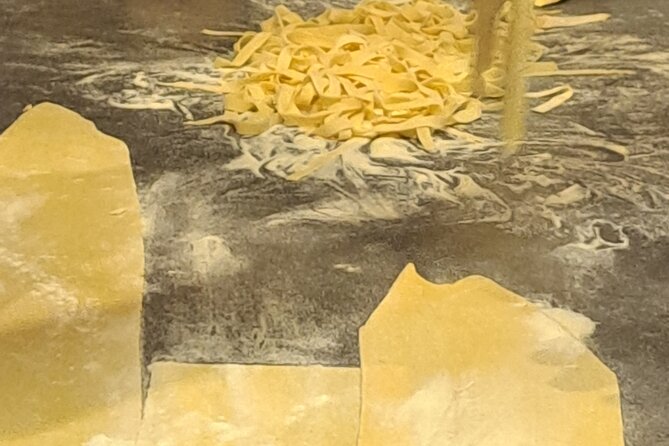
If you’ve ever tried making fresh pasta at home, you know the most common problem: the sheets end up uneven, too thick in spots, or too thin where you don’t want them. That’s exactly the kind of detail Mariolina zeroes in on.
One review describes realizing the dough was turning out too thick, and how the host’s folding method helped keep the sheets even. That is the kind of practical instruction you can actually use again later, not just a fun one-time activity.
Here’s what you’re likely to experience during the pasta-making segment:
- You’ll work dough through the process of resting and handling, so it’s workable and smooth.
- You’ll shape the pasta—either into strips (tagliatelle) or pockets (ravioli), depending on the day’s flow.
- You’ll learn the small technique moves that keep the final texture right.
Even if you’ve made pasta before, you may still learn something. Reviews describe the class as informative, with the teacher correcting technique in real time. And since the group is so small, those corrections can be personal.
Tagliatelle, ravioli, gnocchi, crêpes, malfatti: how the shapes fit together
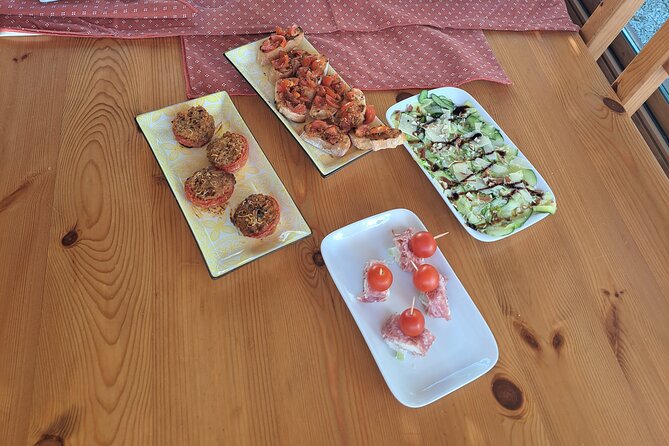
The menu and description list several pasta forms, so the day is designed around learning fresh pasta in more than one style. You’ll see options like:
- Tagliatelle
- Ravioli
- Gnocchi
- Crêpes with seasonal flavors
- Malfatti (mentioned in the experience description)
One thing I’d suggest: go in with the mindset that you’re learning process, not chasing one perfect final dish. The real value is how the class teaches you to handle dough, manage thickness, and form shapes that cook evenly.
If you care about one specific pasta style, plan to ask early which ones you’ll focus on. The sample menu lists choices for the main course portion—tagliatelle, ravioli, gnocchi, or crêpes—so the day’s exact selection can depend on what’s being taught.
Also, don’t underestimate crêpes here. Fresh pasta-style crêpes can feel similar in technique (thin sheets, careful folding/handling), and learning that approach can make you a better all-around cook later.
Eating what you make: local wine and a real table moment
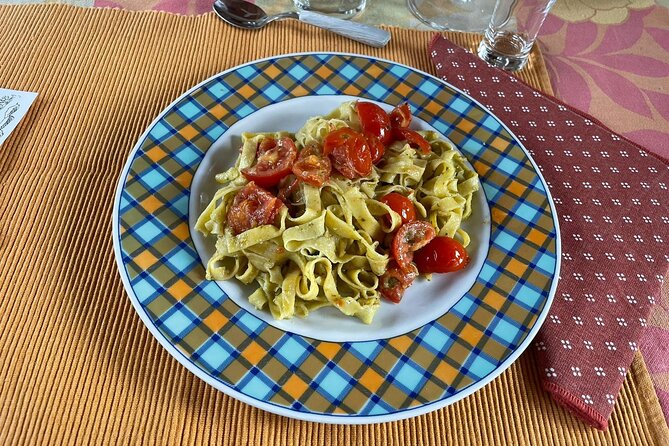
After the shaping work comes the best reward: you eat the pasta you made. The setup is not rushed. You’ll sit down for the meal portion, and in at least one version of the experience you’re served local wine alongside the pasta.
This matters more than it sounds. Cooking classes often end with a plate that tastes fine but feels like a checkbox. Here, the class is structured like a shared meal in someone’s home. You get food, you get wine, and you get the chat that makes it feel like you actually joined a table for the afternoon.
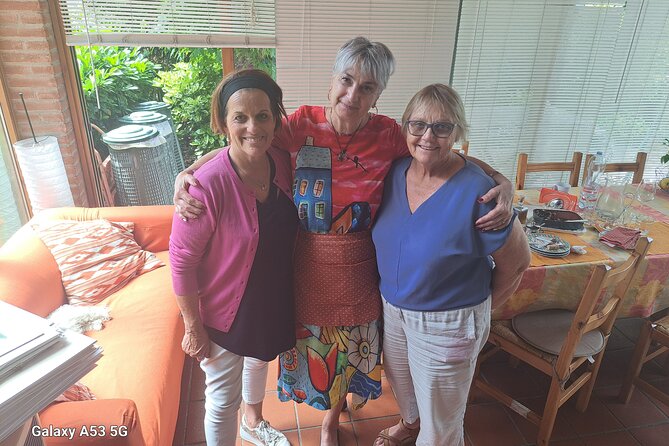
One more detail I like: the host sets a gorgeous table and keeps the energy friendly. In other words, the experience is designed to be remembered as a social day, not just a cooking session.
Dessert is the point: tiramisu (and sweet extras)
You finish with dessert: tiramisu is the centerpiece in the description, and it gets a lot of praise. Multiple reviews highlight the tiramisu as a standout. One review even says the host made what they describe as the best tiramisu, first as a lesson-style focus and later as the clear finish.
What you might choose for dessert can vary by the menu options listed for the experience. The sample menu notes you can choose one: tiramisu, caprese cake, or apple cake. Still, the overall tone from the experience description is clear: tiramisu is a big moment.
There’s also a fun possibility. One review specifically mentions getting tiramisu to go, plus mention of homemade limoncello at the end. That combination makes the closing feel like a real celebration, and it’s the kind of detail that turns a class into a story you can tell later.
Even if you end up choosing a different dessert option, the structure is the same: you’re not leaving hungry, and you’re not just watching dessert happen.
Price and value: what $123.02 buys you (and why it feels fair)
The price is $123.02 per person for about 3 hours. At first glance, that might sound like a lot for “just a cooking class.”
But here’s what you’re actually getting value from, based on the format:
- Hands-on instruction from Mariolina, not a pass-through demo
- A small maximum group size of 4, which typically increases attention and teaching quality
- Drinks included at the start: a trio of appetizers plus a glass of Prosecco
- Meal included: you eat the pasta you make, and in at least one version local wine is part of it
- Dessert included, with tiramisu emphasized and options listed
- Extras that can matter: keepsakes, and in at least one review tiramisu to go and homemade limoncello
So yes, you’re paying for food plus teaching plus hospitality. What makes it feel like good value is the combination: you’re not just eating, and you’re not just learning theory. You’re doing both in a tight group with a host who clearly cares about the details.
Who this class suits best (and who should skip it)
This experience is a great fit if you want:
- A small group cooking day with real interaction
- Hands-on pasta making with technique help
- A warm, conversation-driven meal format
- A dessert finish that feels special, not generic
It might be less ideal if you prefer:
- A large group where you can just mingle without focusing on technique
- A purely observational class where you do minimal work
- A strictly quiet, no-conversation setting
You’ll also want to think ahead if you have dietary needs. The experience notes that you should communicate food restrictions (allergy or special diet, etc.) when booking.
Should you book Mariolina’s garden pasta class?
If you’re in the Brescia area and you want a cooking experience that feels personal, this is an easy yes. The biggest selling points are the host-led teaching, the small group size, and the way the day mixes aperitifs, pasta, and dessert into one friendly afternoon.
Book it if you:
- Like learning by doing
- Want the comfort of an English-friendly experience
- Care about getting technique guidance you can reuse later
- Enjoy social meals, not just cooking stations
Skip it if you want a long sightseeing day or a hands-off food show. This is a work-and-eat class. The upside is that the work ends with pasta you made and dessert you’ll remember.
FAQ
What time does the cooking class start?
It starts at 10:00 am.
How long is the experience?
The duration is about 3 hours.
Where is the meeting point?
You meet at Via Montesuello, 25015 Desenzano del Garda BS, Italy.
What language is the class offered in?
The experience is offered in English.
How many people are in the group?
The experience has a maximum of 4 travelers.
What pasta do you make?
You’ll make homemade pasta in forms such as tagliatelle, ravioli, gnocchi, crêpes, and malfatti.
What’s included in the price?
The class includes a trio of appetizers with a glass of Prosecco, the homemade pasta meal, and dessert (with dessert choices listed).
Is there a dessert option?
Yes. Dessert can be tiramisu, caprese cake, or apple cake.
Do I need to tell the host about food restrictions?
Yes. The experience asks you to communicate any allergies or special diets.
Can I cancel for a full refund?
Yes. Free cancellation is available up to 24 hours before the experience’s start time.